




A Strong Run, A New Year, and a Big Question
After three consecutive years of strong market returns, investors are heading into 2026 with a mix of optimism and uncertainty. The headlines look encouraging – corporate earnings are growing, artificial intelligence continues to reshape industries, and consumers are still spending. But beneath the surface, risks are quietly building.
Markets don’t move in straight lines forever. Periods of strong performance are often followed by slower growth, increased volatility, or shifts in leadership that catch investors off guard. That’s especially important for individuals approaching retirement or already retired, where protecting progress matters just as much as pursuing returns.
On the first Dollars & Sense episode of 2026, Joel Garris delivers his annual Fearless Forecast – a long-running tradition that blends historical perspective, market analysis, and realism. Rather than making bold predictions for headlines, the conversation focuses on understanding trends, identifying risks, and aligning portfolios with long-term goals.
This article expands on that discussion, incorporating market data, economic research, and behavioral finance insights to explain why 2026 may reward diversification more than market chasing—and what that means for your financial plan.
Key Takeaways at a Glance
- Three straight years of double-digit market returns are historically rare
- AI continues to drive earnings growth – but leadership remains highly concentrated
- Market indexes may not reflect what most portfolios actually experience
- Fewer Federal Reserve rate cuts are likely than markets expect
- Inflation, labor dynamics, and government debt remain long-term pressures
- Diversification may outperform indexes in a “pause year”
- Financial discipline – not perfect timing – drives long-term success
Looking Back at 2025: Why Consistency Mattered More Than Headlines
The year 2025 tested investor discipline early. Markets fell nearly 20% in the first few months – enough to shake confidence and trigger emotional decisions. Yet by year-end, markets had not only recovered but delivered a third straight year of double-digit gains.
Joel summed it up clearly on the show:
“If you focused only on that early decline, you missed what happened in the rest of the year.”
This pattern is not unusual. According to data from Morningstar, investors who attempt to time markets often underperform those who remain invested, largely due to missing recovery periods.
Consistency – not prediction – proved to be the real driver of success in 2025. That lesson becomes even more important heading into 2026.
What the 2025 Forecast Got Right – and Where It Fell Short
Every Fearless Forecast starts with accountability. Last year’s outlook correctly anticipated:
- Continued deregulation
- Significant tax reform
- Interest rate cuts – eventually
Where expectations missed the mark was the speed and scale of AI’s impact.
AI didn’t just improve efficiencies – it reshaped earnings growth. Corporate profits among large companies grew approximately 12% in 2025, exceeding expectations and driving markets higher.
As Joel explained:
“AI had been around for years, but it hit the mainstream in a way that surprised just about everyone.”
That surprise matters because it highlights how market leadership can change faster than forecasts, reinforcing the danger of overconfidence.
Artificial Intelligence: A Powerful Tailwind – with a Catch
AI is expected to remain a major economic force in 2026. Analysts project corporate earnings growth closer to 14% this year, driven largely by productivity gains and cost reductions tied to automation and data analytics.
However, this growth has been unevenly distributed.
According to analysis from S&P Global, just eight mega-cap companies accounted for more than 40% of the S&P 500’s total return in 2025. That level of concentration exceeds even the late-1990s tech bubble.
This matters because:
- Index performance may look strong while most stocks lag
- Portfolios tied too closely to indexes inherit concentration risk
- Market pullbacks can be sharper when leadership narrows
AI remains a tailwind – but relying on it exclusively introduces vulnerability.
Why Market Indexes and Portfolios are Not the Same Thing
One of the most important distinctions Joel makes is between the market and your portfolio.
Indexes like the S&P 500 are market-cap weighted. That means the largest companies dominate performance. When those companies struggle, the index feels it – even if hundreds of other companies are performing reasonably well.
Joel put it this way:
“The market is not your portfolio – and treating it like it is can be a costly mistake.”
A diversified portfolio, by contrast, spreads exposure across:
- Asset classes
- Sectors
- Company sizes
- Investment styles
That diversification can reduce volatility and help smooth returns – especially in years when indexes stall.
Taxes, Deregulation, and Economic Momentum in 2026
Tax reform remains a supporting factor, but its impact may be more subtle than headlines suggest. Much of the recent legislation focused on extending existing lower tax rates rather than introducing dramatic new changes.
For individuals, benefits may include:
- Standard deduction adjustments
- Social Security-related tax relief
- Incremental cash-flow improvements
For businesses, accelerated depreciation provisions may encourage capital spending—supporting economic activity in the short term.
Research from Congressional Budget Office suggests tax policy can influence growth, but rarely changes long-term outcomes without coordinated planning.
Interest Rates: Why Fewer Cuts May Be Healthier
Markets entered 2026 expecting aggressive Federal Reserve rate cuts. Joel takes a more measured view.
Despite inflation easing, consumer spending remains strong, and corporate profits are healthy. Cutting rates too quickly risks reigniting inflation – something policymakers are keen to avoid.
“We may see two or three cuts,” Joel noted, “but five or six is probably too optimistic.”
For retirees, this environment reinforces the importance of:
- Balanced income strategies
- Inflation-aware planning
- Avoiding overreliance on any single rate scenario
The Quiet Risks Investors Can’t Ignore
Beyond AI and interest rates, several structural risks remain:
Market Valuations
Stocks are expensive by many historical measures, particularly when viewed through price-to-earnings ratios.
Labor Market Shifts
Automation and demographic changes continue to reshape employment trends, affecting wages and consumer behavior.
Government Debt
The U.S. national debt continues to grow, with U.S. Treasury projecting long-term fiscal pressure that may influence future policy decisions.
Political Uncertainty
2026 is a midterm election year – often associated with slower legislative progress and market volatility.
Individually, these risks may seem manageable. Collectively, they reinforce the case for diversification.
The 2026 Fearless Forecast: A “Pause Year” with Opportunity
With the Dow starting near 48,000, Joel’s forecast projects a year-end level of approximately 51,000.
That implies modest growth – not a downturn, but not a repeat of recent years either.
“Three years of double-digit returns is a lot to ask for a fourth time,” Joel explained.
The key insight isn’t the number itself – it’s what it represents:
- Index returns may flatten
- Volatility may increase
- Diversified portfolios may outperform
In other words, how you’re invested may matter more than how the market performs.
Financial Resolutions: Why Most Fail – and How to Beat the Odds
The episode closes by shifting from markets to mindset. Roughly 80% of New Year’s resolutions fail by mid-January, according to research cited by The Wall Street Journal.
Why?
- Goals are vague
- Expectations are unrealistic
- Progress isn’t measured
Joel emphasizes the SMART framework:
- Specific
- Measurable
- Achievable
- Relevant
- Time-based
Automation is also critical. Automatically saving or investing removes emotion from the process and improves consistency.
“This isn’t about perfection – it’s about building good habits.”
What This Means for You
If 2026 is a transition year, preparation matters.
This may be a good time to:
- Review portfolio diversification
- Rebalance risk exposure
- Stress-test retirement income
- Align goals with realistic expectations
Working with a fiduciary advisor can help ensure decisions are grounded in planning – not headlines.
2026 Market Outlook FAQs
Is 2026 expected to be a good year for the stock market?
2026 may be a more muted year compared to the strong returns investors experienced over the past three years. While corporate earnings are expected to grow – largely driven by AI – markets don’t typically deliver double-digit returns indefinitely. This environment may favor disciplined investors who focus on diversification rather than chasing recent winners.
Why is market concentration considered a risk in 2026?
Market concentration occurs when a small number of large companies drive a disproportionate share of index performance. In 2025, roughly eight stocks accounted for more than 40% of the S&P 500’s gains. If those companies stumble, market indexes could decline sharply – even if many other companies are performing reasonably well. Diversification helps reduce this risk.
What does diversification really mean for investors nearing retirement?
Diversification goes beyond owning multiple stocks. For retirees and pre-retirees, it often includes balancing growth assets with income-producing investments, managing risk across sectors and asset classes, and avoiding overexposure to any single theme like technology or AI. The goal is smoother performance – not maximum returns at all costs.
Will interest rates come down significantly in 2026?
Interest rates may decline, but likely not as aggressively as some forecasts suggest. While modest rate cuts could occur, inflation pressures, consumer spending, and labor market dynamics may limit how far and how fast rates fall. This makes careful planning around fixed income, cash flow, and borrowing costs especially important.
How does AI impact my investment portfolio?
AI has already boosted productivity and corporate profitability, particularly among large companies. However, much of that benefit has been concentrated in a narrow group of stocks. Investors should be cautious about assuming AI gains will automatically lift the entire market and should evaluate how much exposure their portfolio already has to this trend.
Why do financial resolutions fail so often?
Most financial resolutions fail because they are vague, unrealistic, or lack a clear plan. Successful goals tend to be specific, measurable, achievable, relevant, and time-based (SMART). Automating savings and investing – and focusing on progress rather than perfection – greatly improves the odds of long-term success.
Should I change my investment strategy because of a “pause year”?
A potential pause year doesn’t mean abandoning your strategy – it means reinforcing it. This may be a good time to review diversification, rebalance portfolios, stress-test retirement income plans, and ensure expectations align with market realities. Long-term success is often about preparation, not prediction.
Is this a good time to review my retirement plan?
Yes. Periods of market transition are ideal times to reassess retirement timelines, income needs, tax strategies, and risk exposure. Even if no major changes are needed, confirming that your plan still aligns with your goals can provide clarity and confidence.
Take the Next Step
If you’re unsure whether your portfolio is positioned for a more concentrated, potentially volatile market – or whether your financial goals are aligned with today’s realities – professional guidance can help.
Schedule your complimentary consultation with one of our financial planners today!
Your retirement deserves more than guesswork. It deserves a strategy.
Request the Next Gen Dollars & Sense book and workbook, designed to help individuals build clarity, confidence, and discipline around money decisions.
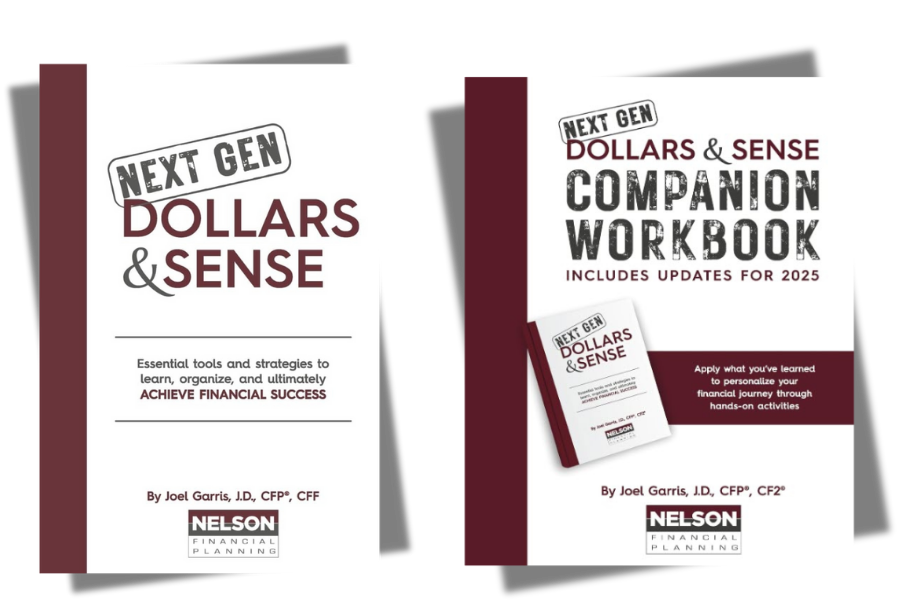
Unlock the secrets to financial success with Joel J. Garris’ insightful book, designed to equip you with the essential tools and strategies needed to take control of your financial future. Whether you’re just beginning your financial journey or approaching retirement, this book offers a comprehensive guide to help you build a solid financial plan that aligns with your goals.
Joel J. Garris, JD, CFP®, is the President and CEO of Nelson Financial Planning and the voice behind the Dollars & Sense podcast. A seasoned financial advisor with over 20 years of experience, Joel helps everyday investors make sense of complex markets with clarity and confidence. When he’s not simplifying retirement strategies or decoding economic trends, he’s probably on air delivering straight-talk financial advice – no fluff, just facts.

Resources
- 8 Wonders1
- Bank Investments3
- Beating Inflation1
- Budget for Retirement5
- Corporate Transparency Act2
- Digital Currency1
- Energy Tax Credits1
- ESG Funds1
- Featured Blog0
- Financial Planning13
- Financial Success4
- Importance of Dividends2
- Investment Portfolio5
- Investment Strategy3
- IRA1
- Joel Garris1
- Nelson Financial Planning7
- Net Worth Improvement1
- Next Gen Dollars and Sense1
- One Big Beautiful Bill Act (OBBBA)1
- Pension Plans1
- Podcast Transcripts12
- Retirement “Secure” Act2
- Retirement Income Planning3
- Retirement Planning7
- Retirement Regrets5
- Social Security4
- Tax Liability3
- Tax Planning7
- Year-End Tax Changes3