




Don’t Panic Sell: What History Says About Market Shocks, New Trump Accounts & IRMAA

How geopolitical headlines, new child investment accounts, and Medicare surcharges could impact your financial future.
Dollars & Sense Episode Summary
When global headlines dominate the news cycle, investors often feel the pressure to react quickly.
Military conflict, rising oil prices, economic uncertainty, and alarming media coverage can make even experienced investors question whether they should stay invested or move to cash. In this episode of Dollars & Sense, financial advisors Joel Garris, CFP® and Rob Field step back from the noise to examine what history actually tells us about markets during geopolitical events — and why long-term investors should remain disciplined even when headlines feel unsettling.
“Markets always seem to recover after a shock like that. History shows us that staying steady beats reacting to headlines.”
The conversation begins with the recent military actions involving the United States, Israel, and Iran, and the potential economic ripple effects tied to oil prices and global energy supply routes. Joel and Rob discuss why geopolitical shocks tend to create short-term market volatility but rarely change long-term investment outcomes. Drawing on historical data, they explain how markets have historically recovered after major conflicts and why emotional reactions can harm long-term financial plans.
“Diversification beats prediction every time. You’re never going to predict when these events happen.”
The episode then shifts to a newly introduced savings vehicle that’s generating curiosity among parents: Trump Accounts. These accounts function similarly to traditional IRAs for minors and may include a one-time $1,000 government contribution for eligible children born between 2025 and 2028. Joel and Rob walk through how the accounts work, the rules governing contributions and investments, and how they compare with existing options such as 529 education plans and custodial Roth IRAs. While the potential government contribution has captured attention, the hosts emphasize the importance of understanding the long-term rules and limitations before deciding whether the account fits into a broader financial strategy.
Finally, the discussion turns to a topic that increasingly affects retirees: IRMAA (Income-Related Monthly Adjustment Amount). Many retirees are surprised when their Medicare premiums suddenly increase, reducing the amount of Social Security income they receive each month. Joel and Rob explain how IRMAA works, why income from two years prior determines today’s Medicare premiums, and how certain financial events — such as Roth conversions, property sales, or required minimum distributions — can unexpectedly push retirees into higher premium brackets.
“IRMAA doesn’t reduce your Social Security — it increases your Medicare premium, which makes your Social Security check smaller.”
Throughout the episode, the hosts reinforce a consistent theme: successful financial planning requires discipline, diversification, and proactive planning rather than emotional reactions to headlines. Whether navigating global events, evaluating new savings tools for children, or planning retirement income to avoid Medicare surcharges, thoughtful strategy remains the most reliable path toward long-term financial stability.
10 Key Takeaways
- Geopolitical events can cause short-term market volatility, but markets have historically recovered over time.
- Emotional reactions to headlines often lead to poor investment decisions.
- Maintaining a diversified portfolio helps investors weather unpredictable global events.
- Trump Accounts are a new IRA-style investment account for minors.
- Some children born between 2025 and 2028 may qualify for a one-time $1,000 government contribution.
- Trump Accounts have strict rules during the child’s “growth period” before age 18.
- For education savings, 529 plans may still be a better option depending on the goal.
- IRMAA (Income-Related Monthly Adjustment Amount) increases Medicare premiums based on income.
- Medicare premium surcharges are determined using income from two years prior.
- Strategic income planning can help retirees avoid unexpected Medicare premium increases.
Episode Chapters
- 00:00 – Introduction: Trump Accounts and the IRMAA Medicare Adjustment
- 02:03 – Global Headlines and Market Reactions to the Iran Conflict
- 03:34 – Oil Prices, Energy Supply Risk, and Economic Impact
- 06:40 – Unemployment Data and Inflation Concerns
- 08:12 – What Market History Says About Geopolitical Events
- 10:13 – Why Investors Should Avoid Panic Decisions
- 11:36 – Five Practical Investment Actions During Market Volatility
- 16:34 – Introduction to Trump Accounts for Children
- 18:06 – How Trump Accounts Work and Who Qualifies
- 19:18 – Trump Account Rules: Growth Period Explained
- 21:13 – The $1,000 Government Pilot Contribution Program
- 23:19 – Contribution Rules and Investment Restrictions
- 26:09 – Withdrawal Rules and Long-Term Use
- 27:33 – Benefits and Drawbacks of Trump Accounts
- 28:41 – Understanding IRMAA and Medicare Premium Adjustments
- 30:29 – Why IRMAA Reduces Social Security Payments
- 31:18 – Income Sources That Trigger IRMAA
- 34:38 – The Two-Year Lookback Rule for Medicare Premiums
- 37:36 – Planning Strategies to Avoid IRMAA Surprises
Podcast Transcript
Podcast: Dollars & Sense
Episode Date: March 8, 2026
Speakers: Joel Garris, CERTIFIED FINANCIAL PLANNER® Professional, Certified Financial Fiduciary™ and Rob Field, Certified Financial Fiduciary™ (CF2™), Certified Fund Specialist (CFS), and National Social Security Advisor (NSSA)
Introduction: Trump Accounts and the IRMAA Medicare Adjustment
00:00:06 – Joel Garris, CFP
So we got the Trump accounts that we’re going to talk about today. We’re going to talk about what are they. We’re going to talk about how they work and whether you should set one up for your kids.
Also, we’re going to talk about the dreaded IRMAA. No, not the hurricane, but the income-related Medicare adjustment that more and more Americans are finding that is reducing their Social Security.
So all of that on this week’s edition of Dollars & Sense, where we help you make cents out of all of life’s decisions involving your dollars.
Joining me on the program, one of our very own Certified Financial Fiduciaries™ at Nelson Financial Planning, Rob Field. Welcome to the program as always.
Rob Field, CFP
Morning, Joel. Good to be here. Always good. Love the opportunity to chat with our audience.
Joel Garris, CFP
Very good indeed. For those of you who don’t know, Rob Field, beyond being a Certified Financial Fiduciary™, is also the resident National Social Security Advisor at Nelson Financial Planning. We’ve got a team of folks, all of whom happen to be Certified Financial Fiduciaries™, but they all have their own individual area of expertise as well.
We really believe in that more holistic approach, right Rob, to helping people with all aspects of their financial lives.
Rob Field, CFP
Well certainly. Everybody in the office is a Certified Financial Fiduciary™ because that’s important across the board. I know you’re a CFP®. We’ve got CPAs. I’ve studied mutual funds. I have a National Social Security Advisor designation. And I’m working on getting an actual designation associated with IRMAA to learn a little bit more about how we can do pre-planning in that area.
Joel Garris, CFP
Nothing wrong with lifetime learning. That is good stuff indeed. So more to come on that. But yes, we’re going to talk about that on the program.
My name is Joel Garris, by the way. As Rob said, I’m a CERTIFIED FINANCIAL PLANNER®, Certified Financial Fiduciary™ at Nelson Financial Planning.
So before we get into all of that, we get to tackle the ongoing headlines that exist today in today’s world.
02:03 – Global Headlines and Market Reactions to the Iran Conflict
02:03 – Joel Garris, CFP
And obviously just the ongoing bombing and military strikes on Iran by both the US and Israel.
Obviously that is starting to have a grave concern as to how long it’s going to last, what the scope of that conflict is going to be, and then, of course, the impact on oil prices.
A lot going on that one, that’s for sure.
Rob Field, CFP
Right, and that came quick. I mean, we saw, excuse me, we saw and heard a little bit about the warships starting to amass, and then all of a sudden, boom, and middle of the night, war begins.
Joel Garris, CFP
Well, and obviously the response from Iran, as to be expected, is they’re sort of expanding out the number of countries that are involved.
I think this past week alone, they wound up sending missiles into 11 different countries.
So that anytime you see that, then that obviously increases the risk of that conflict expanding and certainly had the markets on edge this past week as well.
Seemed to, Monday and Tuesday, markets seem to kind of hang in, but Wednesday, Thursday, just more and more of the pressure of the potential economic impact, particularly when it comes to oil, really started to play out in the markets as a whole.
Rob Field, CFP
Right. We’ve, you know, the news is intense. People are asking us, you know, should I be in the market, out of the market, get in, get out? What are your thoughts there?
Obviously, our goal has always been, for years, is the opposite of panic. We’re not going to react to something that’s going on short term.
You know, it’s our conversations over and over and over. Stay steady. Look what history shows you. Markets always seem to recover nice after any kind of a shock like that.
03:34 – Oil Prices, Energy Supply Risk, and Economic Impact
03:34 – Joel Garris, CFP
And it’s just unbelievable when you start to think about kind of the impact and just the immediate impact, particularly with oil prices.
I still drive a relatively big car. I’m not one of these small energy efficient vehicles. It’s a Ford Expedition EL.
Back when the kids were younger, we’ve had that car for a number of years, and so it is my primary car.
And sadly, I was low on gas and knew that coming into this week, but just didn’t have the time, as I’m sure everybody experiences in life.
I don’t want to have to stop, fuel up.
And so as I was driving home last night, the light came on, so I didn’t have a choice.
And so it’s interesting. This is a great example of where it’s always good to kind of drive the extra block and do a little comparison shopping because at one place it was $3.49 and then two blocks down it was $3.19.
So but that’s a whole lot more than where gas prices were just a handful of days ago.
Rob Field, CFP
Overall on an average, correct? But you were able to take advantage and get a little.
Joel Garris, CFP
I got 319, which I think, what I should drive by. I’ll drive by it on the way home.
And I bet you it’s going to be probably $3.49 right back up with everybody.
But clearly that’s got an economic impact.
That is probably the most significant economic impact that comes directly from that situation over in the Middle East, that’s for sure.
Rob Field, CFP
Right. Yeah, there’s a lot of things going on.
The market is reacting to the geopolitical news. We’re getting lots of questions.
Energy supply risk is coming along.
You know, it’s anything that’s going to kind of flow through that Strait of Hormuz is top-notch headlines and is people houseworthy concern.
We’re looking, that’s where that’s a critical route for global oil, liquefied natural gas.
That’s what people are kind of keeping an eye on.
Joel Garris, CFP
Right, and air travel as well.
That Dubai airport, which I’ve been through a couple of times, is the world’s busiest airport for international passengers and clearly airline travel has come to all but a stop.
06:40 – Unemployment Data and Inflation Concerns
06:40 – Joel Garris, CFP
The backdrop of all that this past week when we think about, okay, yeah, you’ve got that implication, but Friday’s economic data also was not particularly strong either from a US perspective.
Rob Field, CFP
Yeah, it just popped out latter part of Friday just a couple of days ago. Unemployment just not looking the way they would like.
Joel Garris, CFP
Right, continuing to rise. You know, the economy lost 92,000 jobs.
Unemployment kicked up to 4.4%.
And that’s a tough combination because then you have what’s going on with the price of oil, which obviously creates some inflationary pressure as well.
And then you have an up increase in unemployment.
So we got oil, we got inflation, we got unemployment.
I mean, I think at the end of the day, this is a good reminder of kind of for investors from that perspective, what does history tell us about these types of events and how they ultimately play out over a longer period of time?
08:12 – What Market History Says About Geopolitical Events
08:12 – Rob Field, CFP
Right, and it’s covering more than just that one area.
So I mean, the Middle East, yes. That’s not the only area you’ve got to wonder who else is exposed to these changes in these flows, and that’s going to be China.
They’re certainly involved right in the middle of that.
Joel Garris, CFP
And layer on that the situation with Venezuela and how that all has played out and certainly directs impacts China.
But when we think about it, we actually did some research, found some examples of other types of times where you have these dramatic historical events.
And at the end of the day, while certainly history doesn’t say nothing happens, right?
I mean it’s clearly something that happens when these types of events happen.
But if you look out past that initial emotional response, markets have a pretty good track record of responding and responding decently over time to even these types of headlines.
Rob Field, CFP
Right, that’s correct.
We’ve kind of done a little research, and if you come looking at the historical framing of what has happened in the past, you look at military geopolitical events since World War II.
The data we see shows that the S&P 500 has positive performance one year after any kind of active aggression in about 73 percent of cases.
So typically it happens and then responds and comes back in a positive way.
There’s no guarantee that’s what’s going to happen every time, but we do look at history and build that into our thoughts as we move forward.
10:13 – Why Investors Should Avoid Panic Decisions
10:13 – Joel Garris, CFP
Clearly I think the markets have a tendency to respond much more quickly and recover probably faster than we as humans and the emotions that we have.
I think we have a tendency to hang on to these things because they are significant.
And the media certainly floods the information channels with all of the negative aspects.
Rob Field, CFP
I think that’s the important point.
The media will play this up because that’s how they get people to watch their program or read their news.
Fear sometimes sells better than happy scenarios.
Joel Garris, CFP
Indeed it does.
We’re going to have a few more thoughts on this when we return after the break here on Dollars & Sense with Joel Garris and Rob Field of Nelson Financial Planning.
11:36 – Five Practical Investment Actions During Market Volatility
11:36 – Joel Garris, CFP
Welcome back to Dollars & Sense, where we help you make sense out of all of life’s decisions involving your dollars.
Rob, I think this is always an important moment when we have events like this happening in the world. Investors naturally become nervous. They wonder if they should make changes to their portfolios.
But historically speaking, this is often the time where the best decision is actually not to react emotionally.
The markets tend to adjust fairly quickly to new information.
And when you look historically at major geopolitical events, the market response tends to be temporary.
So investors who react emotionally sometimes wind up making decisions that ultimately hurt their long-term returns.
Rob Field, CFP
Right. I think what we try to remind clients of during periods like this is that markets price in information very quickly.
By the time you hear about something on the evening news, the market has already started adjusting.
So making reactive decisions after the fact can sometimes put you at a disadvantage.
Joel Garris, CFP
Exactly.
And I think that’s why diversification becomes so important.
You don’t want to try to predict exactly which asset class or which region of the world is going to outperform next.
Instead, having a diversified portfolio allows you to participate in growth opportunities while also helping to reduce the impact of volatility in any one area.
Rob Field, CFP
And I think that’s a really important reminder for investors.
Because when uncertainty increases, people naturally want to try to predict what’s going to happen next.
But prediction is extremely difficult in financial markets.
Diversification tends to be the more reliable strategy over long periods of time.
Joel Garris, CFP
Right.
So if we were to summarize a few practical actions investors can take during times like this, it would probably include things like staying disciplined with your investment strategy, maintaining diversification, avoiding emotional decisions, and continuing to focus on long-term financial goals.
Rob Field, CFP
Absolutely. And that’s the type of planning approach that we emphasize with clients at Nelson Financial Planning.
It’s not about reacting to headlines.
It’s about having a strategy in place that can adapt to different types of market environments.
16:34 – Introduction to Trump Accounts for Children
16:34 – Joel Garris, CFP
All right, let’s shift gears a little bit here because there’s another topic getting a lot of attention lately and that is something called Trump Accounts.
These are a new type of account that has been discussed as part of a broader policy proposal, and a lot of people are asking questions about what these accounts are and whether they might make sense for their children.
So we thought it would be helpful to spend a few minutes explaining how these accounts are supposed to work and what the potential benefits and limitations might be.
Rob Field, CFP
Right, because anytime something new like this comes along, people hear a headline or a short explanation and they assume they understand it, but when you dig into the details there are usually quite a few rules involved.
Joel Garris, CFP
Exactly.
And the concept behind these accounts is fairly simple.
They’re designed to be investment accounts for minors that allow money to grow over time with the goal of helping young people build assets earlier in life.
But like many government-related programs, the details matter quite a bit when it comes to how the accounts are structured and how the money can actually be used.
Rob Field, CFP
And that’s why people should understand the full set of rules before deciding whether this is something they want to participate in.
Because while there are some interesting potential benefits, there are also limitations that families should be aware of.
Joel Garris, CFP
Right.
So the idea behind these accounts is to give children the opportunity to start building investments early.
And the earlier someone begins investing, the more time compound growth has to work in their favor.
So that’s the general concept.
But of course, the details of how contributions work and what the restrictions are become very important when evaluating whether the account makes sense for your situation.
18:06 – How Trump Accounts Work and Who Qualifies
18:06 – Joel Garris, CFP
So the way these Trump Accounts are structured is that they are designed specifically for minors.
The idea is that a child would have an account established for them shortly after birth, and that account would be invested and allowed to grow over time.
The goal is to give younger generations a way to start building wealth earlier in life rather than waiting until adulthood to begin investing.
Rob Field, CFP
Right, and one of the aspects that has gotten a lot of attention is that there may be a government contribution associated with these accounts.
That’s something that has generated a lot of headlines.
Joel Garris, CFP
Exactly.
Under the proposal that has been discussed, children who qualify could receive an initial contribution into the account.
And that contribution could potentially be up to $1,000, depending on how the final program is structured.
But it’s important for people to understand that this isn’t simply free money without rules.
There are qualifications and limitations attached to how the accounts work and how the funds can be used.
Rob Field, CFP
And that’s where it becomes important to compare these accounts with other options that already exist.
Because parents today already have access to things like 529 education savings plans and custodial investment accounts.
So understanding the differences between these options helps families decide which one might be the better fit.
Joel Garris, CFP
Exactly.
Each of these types of accounts has different tax rules, contribution limits, and restrictions on how the money can be used.
So it’s not necessarily that one option is universally better than another.
It’s more about understanding which option aligns best with your goals for your child’s future.
19:18 – Trump Account Rules: Growth Period Explained
19:18 – Joel Garris, CFP
One of the key concepts that people need to understand with these accounts is what’s referred to as the growth period.
During this growth period, the money inside the account is intended to remain invested so that it has the opportunity to grow over time.
The idea is that long-term investing allows compound interest to do the heavy lifting.
And that’s really the central principle behind these accounts.
Rob Field, CFP
Right.
And the growth period essentially means that the funds are not meant to be accessed immediately.
Instead, the account is structured to encourage long-term investment behavior.
That allows the money to potentially grow significantly by the time the child reaches adulthood.
Joel Garris, CFP
Exactly.
And this is where people need to recognize that the purpose of the account is not short-term spending.
It’s designed to help create a foundation for future financial stability.
Whether that ultimately supports education, housing, entrepreneurship, or other major life goals will depend on how the program rules are finalized.
Rob Field, CFP
And as with many investment accounts, the longer the investment horizon, the greater the potential benefit from compounding.
Starting early can make a very significant difference over time.
21:13 – The $1,000 Government Pilot Contribution Program
21:13 – Joel Garris, CFP
One of the reasons these accounts have gotten so much attention recently is the discussion around the potential $1,000 government contribution.
Under the proposal that’s been talked about, there could be a pilot program where children who qualify would receive an initial contribution into their account.
So essentially the government would help seed the account with an initial investment.
Rob Field, CFP
Right, and that’s the part that really grabs headlines.
People hear that and immediately think about free money.
But as we’ve mentioned before, there are usually qualifications and rules that come with programs like this.
Joel Garris, CFP
Exactly.
And the intention behind the contribution is to help create a starting point for the account.
If that initial amount is invested and left to grow over a long period of time, it could potentially grow significantly.
That’s the whole premise behind encouraging early investing.
Rob Field, CFP
Right.
And it’s also intended to encourage families to continue contributing to the account over time.
The idea is that once an account is established and seeded with an initial investment, parents or relatives may be more likely to add to it over the years.
Joel Garris, CFP
Which ultimately reinforces the broader concept that starting early and allowing investments to grow over long periods of time can have a powerful impact.
23:19 – Contribution Rules and Investment Restrictions
23:19 – Joel Garris, CFP
Now another important part of understanding these accounts involves the rules around how contributions can be made and how the money can be invested.
Like most investment-related accounts, there are likely to be limits on how much money can be added each year.
Those limits help define the structure of the program and prevent the accounts from being used in ways that were not originally intended.
Rob Field, CFP
Right, and that’s something families need to be aware of.
When new programs like this are introduced, people often assume they can simply move large amounts of money into the account.
But typically there are contribution limits that control how much can be added on an annual basis.
Joel Garris, CFP
Exactly.
And the investment options within the account may also be somewhat structured.
In many cases with accounts designed for long-term growth, the investments may be focused on broad market index funds or diversified investment options.
That approach is intended to encourage long-term growth while avoiding excessive speculation.
Rob Field, CFP
Right.
Because the overall purpose of the account is long-term financial development for the child.
So the structure of the investment options usually reflects that goal.
Joel Garris, CFP
And again, this is where families should carefully review the details once the program is finalized.
Understanding the contribution limits and investment options will help determine whether the account fits into a broader financial plan.
26:09 – Withdrawal Rules and Long-Term Use
26:09 – Joel Garris, CFP
Another piece of the puzzle that people need to understand involves the rules around withdrawals.
Whenever you have an account designed for long-term investing, there are usually guidelines about when and how the money can be accessed.
The idea is to encourage people to keep the funds invested long enough to benefit from long-term growth.
Rob Field, CFP
Right.
Because if people were able to withdraw the money at any time for any reason, the account wouldn’t really serve its intended purpose.
These types of accounts are designed to support long-term financial development.
Joel Garris, CFP
Exactly.
And that’s why the rules surrounding withdrawals tend to be structured around specific life milestones or qualifying uses.
Whether that ends up being education, starting a business, purchasing a home, or some other approved purpose will depend on the final program rules.
Rob Field, CFP
And again, this is very similar to other types of investment or savings accounts where the goal is long-term planning.
The longer the funds remain invested, the more opportunity there is for growth.
Joel Garris, CFP
Right.
So when families consider whether this type of account makes sense, they should think about how the long-term structure aligns with their goals for their child’s financial future.
27:33 – Benefits and Drawbacks of Trump Accounts
27:33 – Joel Garris, CFP
So when we look at something like this, the important question always becomes, what are the advantages and disadvantages?
Because every financial tool has trade-offs.
There are potential benefits, but there are also limitations that people need to understand.
Rob Field, CFP
Right.
On the benefit side, one of the biggest advantages is simply getting children started with investing early.
The earlier someone begins investing, the more time they have for compound growth to work in their favor.
Joel Garris, CFP
Exactly.
If you think about the power of compounding over decades, even relatively small contributions made early in life can grow into meaningful amounts over time.
That’s one of the reasons programs like this generate interest.
Rob Field, CFP
But on the flip side, people need to recognize that these accounts may come with restrictions.
Depending on how the program is finalized, there could be limitations on how the funds are invested and how they can ultimately be used.
Joel Garris, CFP
And that’s why it’s always important not to assume that a new program is automatically the best option.
Sometimes existing tools, like 529 education plans or other custodial investment accounts, may provide more flexibility depending on the goals.
Rob Field, CFP
Exactly.
It really comes down to evaluating the details and understanding how each option fits within a family’s overall financial plan.
28:41 – Understanding IRMAA and Medicare Premium Adjustments
28:41 – Joel Garris, CFP
All right, Rob, let’s turn our attention to something that impacts a lot of retirees and that is IRMAA, the Income-Related Monthly Adjustment Amount.
A lot of people are surprised when they first hear about this because they notice their Social Security check is smaller than they expected.
And they assume that something has happened to their Social Security benefit.
Rob Field, CFP
Right, and that’s a very common misunderstanding.
What’s actually happening is that their Medicare premiums are increasing, and those premiums are typically deducted directly from their Social Security benefit.
So when the Medicare premium increases because of IRMAA, the Social Security payment they receive appears smaller.
Joel Garris, CFP
Exactly.
And IRMAA is essentially a surcharge that applies to Medicare premiums when someone’s income exceeds certain thresholds.
So higher-income retirees wind up paying higher Medicare premiums.
Rob Field, CFP
Right.
And this is something that can catch people off guard because they may not realize that their income level affects how much they pay for Medicare.
But that’s exactly how the IRMAA system works.
Joel Garris, CFP
And this is one of the reasons why income planning in retirement becomes so important.
Because certain financial decisions can push income over those thresholds and trigger higher Medicare premiums.
30:29 – Why IRMAA Reduces Social Security Payments
30:29 – Rob Field, CFP
So when people see their Social Security deposit come in and it’s smaller than they expected, they sometimes assume that their benefit was reduced.
But that’s not actually what’s happening.
What’s happening is that their Medicare premium has increased, and that premium is being deducted directly from their Social Security check.
Joel Garris, CFP
Exactly.
So technically, Social Security hasn’t reduced the benefit.
It’s just that Medicare is collecting a higher premium because the person’s income level places them in a higher IRMAA bracket.
Rob Field, CFP
And that’s why it can feel like a surprise.
Because people may not have expected their Medicare costs to increase simply because of their income.
Joel Garris, CFP
Right.
But the reality is that Medicare premiums are structured in tiers.
And once your income crosses certain thresholds, the premiums increase accordingly.
31:18 – Income Sources That Trigger IRMAA
31:18 – Joel Garris, CFP
And this is where retirees sometimes get caught off guard.
Because IRMAA is based on your modified adjusted gross income, which means several different types of income can push you into a higher bracket.
Rob Field, CFP
Right.
And that can include things like required minimum distributions from retirement accounts, capital gains from selling investments, income from selling property, or even certain types of Roth conversions.
Joel Garris, CFP
Exactly.
People sometimes assume that if their primary income is Social Security, they won’t be affected.
But the reality is that other sources of income can push them into a higher IRMAA bracket.
Rob Field, CFP
And once that happens, the Medicare premium increases.
That’s why planning ahead becomes so important.
Joel Garris, CFP
Right.
Understanding how different income sources affect Medicare premiums allows retirees to make more strategic decisions about when and how they recognize income.
34:38 – The Two-Year Lookback Rule for Medicare Premiums
34:38 – Joel Garris, CFP
Another part of IRMAA that surprises people is the two-year lookback rule.
Medicare does not determine your current premium based on the income you earned this year.
Instead, it looks at the income reported on your tax return from two years prior.
Rob Field, CFP
Right, and that’s where people can really get caught off guard.
Because something that happened financially two years ago may suddenly affect what they are paying for Medicare today.
Joel Garris, CFP
Exactly.
For example, someone might have sold a property, realized a large capital gain, or taken a significant distribution from a retirement account.
That spike in income could push them into a higher IRMAA bracket.
Then two years later they see their Medicare premiums increase and wonder why.
Rob Field, CFP
And by that point, the income event already happened.
So people often feel like they have no control over the situation when they first see the premium increase.
Joel Garris, CFP
Which is why advance planning becomes so important.
If you understand how the lookback rule works, you can potentially make decisions about income timing that help manage those future Medicare premiums.
37:36 – Planning Strategies to Avoid IRMAA Surprises
37:36 – Joel Garris, CFP
So when we think about IRMAA from a planning perspective, the key takeaway is that income planning in retirement really matters.
Because certain financial decisions can push your income over those Medicare thresholds without you even realizing it.
Rob Field, CFP
Right.
And that’s why retirees should think about how different income sources interact.
Things like required minimum distributions, capital gains, or Roth conversions can all influence where your income falls relative to those IRMAA brackets.
Joel Garris, CFP
Exactly.
If you understand how the system works ahead of time, you may be able to structure withdrawals and other financial decisions in a way that helps manage those thresholds.
Rob Field, CFP
And that’s where proactive planning really becomes valuable.
Instead of reacting after the fact when the Medicare premium increases, people can potentially make adjustments ahead of time.
Joel Garris, CFP
Right.
And that’s one of the reasons why working with a financial planning team that understands these interactions can be helpful.
Because retirement planning isn’t just about investments.
It’s also about understanding how taxes, Medicare, Social Security, and income planning all fit together.
Rob Field, CFP
Exactly.
All of those pieces interact, and when they’re coordinated properly it can help people make better long-term financial decisions.
Joel Garris, CFP
And that’s exactly what we try to help people do every day at Nelson Financial Planning.
Helping families understand how all of these pieces work together so they can make informed decisions about their financial future.
And that wraps up another edition of Dollars & Sense, where we help you make sense out of all of life’s decisions involving your dollars.
Next Steps
If you’d like help reviewing your financial plan, investment strategy, or retirement readiness, explore the resources available through Nelson Financial Planning or schedule a consultation to discuss your goals.
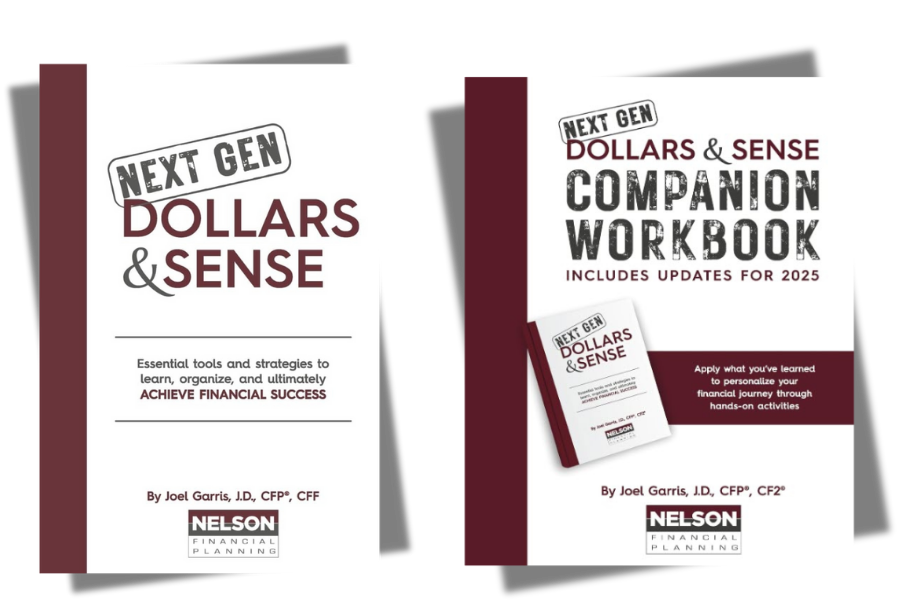
Unlock the secrets to financial success with Joel J. Garris’ insightful book, designed to equip you with the essential tools and strategies needed to take control of your financial future. Whether you’re just beginning your financial journey or approaching retirement, this book offers a comprehensive guide to help you build a solid financial plan that aligns with your goals.
REQUEST YOUR FREE COPY OF OUR BOOK & WORKBOOK!
- 8 Wonders1
- Bank Investments3
- Beating Inflation1
- Budget for Retirement5
- Corporate Transparency Act2
- Digital Currency1
- Energy Tax Credits1
- ESG Funds1
- Featured Blog0
- Financial Planning13
- Financial Success4
- Importance of Dividends2
- Investment Portfolio5
- Investment Strategy3
- IRA1
- Joel Garris1
- Nelson Financial Planning7
- Net Worth Improvement1
- Next Gen Dollars and Sense1
- One Big Beautiful Bill Act (OBBBA)1
- Pension Plans1
- Podcast Transcripts13
- Retirement “Secure” Act2
- Retirement Income Planning3
- Retirement Planning7
- Retirement Regrets5
- Social Security4
- Tax Liability3
- Tax Planning7
- Year-End Tax Changes3