




How New IRS Rules Could Impact Your Taxes & Retirement Income

Dollars & Sense Episode Summary
Major tax changes are here – and more are coming. In this episode of Dollars & Sense, Joel Garris and Christina Lamb break down what families, high earners, and retirement savers need to know about 2025 and 2026 tax rule changes, and why planning ahead matters more than ever.
The conversation starts with a timely discussion about financial goals and why so many people abandon them by mid-January. The hosts explain how setting clear, measurable goals – and sticking with them even after a setback – can make a real difference in long-term financial success.
From there, the episode shifts into key tax updates that could directly impact your wallet. Families will want to pay close attention to changes in the Child Tax Credit, including the 2025 increase and the new inflation indexing that takes effect in 2026. The discussion highlights common eligibility mistakes and explains the difference between refundable and non-refundable credits in plain language.
The episode also covers a major shift for high-income earners: new caps on itemized deductions starting in 2026, which could quietly reduce the value of deductions for those in higher tax brackets.
Finally, Joel and Christina unpack one of the most significant retirement changes in years – the new Roth 401(k) catch-up contribution rules. High earners over age 50 may lose valuable tax deductions, face higher taxable income, and even be blocked from making catch-up contributions depending on their employer’s plan.
The takeaway? These changes aren’t just technical – they affect real decisions. Thoughtful tax and retirement planning now can help avoid surprises later.
Episode Chapters & Highlights
- 0:00 – Why mid-January is where financial goals often fail – and how to reset instead of quitting
- 3:45 – Common mistakes people make when setting financial goals (and how to fix them)
- 6:20 – Why vague goals don’t work and how SMART goals improve follow-through
- 11:30 – Child Tax Credit increases to $2,200 per child for 2025
- 12:20 – Refundable vs. non-refundable Child Tax Credit explained in simple terms
- 12:55 – Big change for 2026: Child Tax Credit will automatically adjust for inflation
- 18:40 – New itemized deduction cap for high-income earners starting in 2026
- 20:15 – Who the IRS considers a “high-income earner” under the new deduction rules
- 24:45 – Major retirement shift: Roth 401(k) catch-up rules begin in 2026
- 26:30 – Why earning over $150,000 could eliminate your catch-up tax deduction
- 31:25 – The hidden risk if your employer plan doesn’t offer a Roth option
- 33:45 – Pros and cons of Roth catch-ups: tax-free income vs. higher taxes today
- 36:15 – Action steps to take now to avoid costly tax and retirement surprises
5 Key Takeaways
- Missing a few days doesn’t mean you failed – most financial progress comes from restarting, not perfection.
- Clear, specific goals beat vague intentions every time, especially for saving, debt reduction, and retirement planning.
- The Child Tax Credit rises to $2,200 for 2025 and will auto-adjust for inflation starting in 2026, but eligibility rules still trip up many families.
- High-income earners face a quiet tax hit in 2026 as itemized deductions lose value under new caps.
- A major retirement shift starts in 2026: workers over 50 earning $150,000+ must use Roth accounts for catch-up contributions – changing taxes today and income tomorrow.
Podcast Transcript
Speakers: Joel Garris, CFP® and Christina Lamb, CF2™
Intro
[00:00:00] Joel Garris:
It’s a little past mid-January. How are you doing on those financial resolutions? We’re going to talk about that on this week’s program. Plus, as you might imagine, it’s hard to get through all of the tax changes on the table for 2025 and 2026, so we’re continuing that conversation on this week’s edition of Dollars & Sense, where we help you make sense of life’s decisions involving your dollars.
[00:00:29] Joel Garris:
This is one of Central Florida’s longest-running radio programs and also a top financial planning podcast. If you’d like to subscribe on your favorite podcast platform, just visit our website at nelsonfinancialplanning.com. You’ll also find a number of resources there to help you work through some of these additional tax changes.
[00:00:55] Joel Garris:
Christina Lamb is joining us on the program today. Christina, welcome back.
[00:01:03] Christina Lamb:
Thank you. Thanks for having me.
[00:01:06] Joel Garris:
One of your claims to fame – especially relevant for today’s discussion – is that you’re an IRS Enrolled Agent. Can you explain what that means?
[00:01:17] Christina Lamb:
Sure. It means I’ve completed a series of classes and exams, and I’m authorized to prepare tax returns and represent taxpayers before the IRS.
[00:01:30] Joel Garris:
But you’re not actually an agent of the IRS itself.
[00:01:34] Christina Lamb:
Correct. I don’t work for the IRS. I represent the taxpayer, similar to a CPA.
[00:01:41] Joel Garris:
That distinction is important. You’re on the consumer’s side, not the government’s side.
[00:01:46] Joel Garris:
Last week on the program, our in-house CPA, Kristen Costello, joined us to walk through the top ten tax changes. But as you might imagine, there’s far more than just ten items when it comes to these new rules.
[00:02:02] Joel Garris:
So today, we wanted to continue that conversation and dig into some of the additional changes that didn’t quite make the top ten list but are still very important—especially for families, high-income earners, and people planning for retirement.
Quitter’s Day, Financial Resolutions & Goal-Setting
[00:02:32] Christina Lamb:
This is a period of time when a lot of people have already hit the wall with their New Year’s resolutions.
[00:02:38] Joel Garris:
Yes, this past Friday was known as Quitter’s Day. We’re now a couple of days past that, since the show airs on Sunday. So the timing really couldn’t be better.
[00:02:51] Joel Garris:
Quitter’s Day typically falls on that second Friday of January. You make it through the first weekend of the new year, stick with your resolution for a bit, and then the second weekend rolls around.
[00:03:05] Christina Lamb:
I know – it seems really quick. I feel like people should be sticking with their goals a little longer, but that’s okay.
[00:03:13] Joel Garris:
That’s okay. The gyms are already thinning out, you don’t have to wait for a StairMaster anymore, budgeting apps are getting used less, and the bold goals people set for the new year are melting away like snow in Florida.
[00:03:31] Joel Garris:
Although it is cold, so there might still be some snow hanging around here in Florida.
[00:03:37] Joel Garris:
Because of that, we thought we’d open the show with some thoughts on how you might overcome this phase and get back on track.
[00:03:49] Christina Lamb:
And I think it’s important to say that if you just missed a day or two, you can still jump back into your financial goals. You technically didn’t quit – you may have just taken a short break.
[00:04:01] Christina Lamb:
So we’re diving into Chapter Three on financial goals from the Next Gen Dollars & Sense Companion Workbook. This chapter explains why goals matter, how to set them effectively, and – most importantly – how to stick with them when your motivation fades.
[00:04:24] Joel Garris:
That’s a great tie-in, Christina. Over the past few years, we’ve put together a number of educational resources, starting with the book in 2023 and then the companion workbook we released last year.
[00:04:39] Joel Garris:
There’s a really helpful exercise in the workbook that walks through many of the concepts we’re talking about here – especially the idea of turning a dream into something real.
[00:04:55] Joel Garris:
Goals allow you to set a roadmap. They help you get on the right path, stay motivated, and remain focused. Without goals, it’s really just a dream.
[00:05:15] Christina Lamb:
And just because you have a bad day doesn’t mean you have to forfeit your goal. You can always get back on track.
[00:05:23] Joel Garris:
That’s exactly right. Goals aren’t about perfection. They’re about progress over time.
Why Financial Goals Fail & How to Set Them Correctly
[00:05:31] Joel Garris:
One of the biggest issues we see is that people set goals that are just too vague.
[00:05:36] Christina Lamb:
Exactly. Saying, “I want to save money” isn’t really a goal. It doesn’t give you anything specific to work toward.
[00:05:43] Christina Lamb:
A better goal would be something like, “I want to save $200 per month,” because now it’s measurable and actionable.
[00:05:52] Joel Garris:
Right. You can actually track that. You know whether you did it or you didn’t.
[00:05:58] Christina Lamb:
Another common problem is setting goals that are unrealistic. People start with something so aggressive that it’s hard to maintain, and then they get discouraged.
[00:06:10] Christina Lamb:
It’s much better to start with something achievable and build momentum over time.
[00:06:18] Joel Garris:
That’s where the idea of SMART goals really comes into play.
[00:06:22] Christina Lamb:
SMART goals are specific, measurable, attainable, relevant, and time-based. Each of those pieces matters.
[00:06:33] Christina Lamb:
If your goal isn’t measurable, you don’t know if you’re making progress. If it’s not realistic, you’re more likely to quit.
[00:06:43] Joel Garris:
And if there’s no time frame, it just keeps getting pushed off.
[00:06:48] Christina Lamb:
Exactly. Deadlines create accountability, even if the deadline is just for yourself.
[00:06:55] Christina Lamb:
Another issue we see is that people don’t have a plan behind the goal. They have the goal written down, but no steps to get there.
[00:07:05] Joel Garris:
A goal without a plan is really just a wish.
[00:07:10] Christina Lamb:
You need to know what actions you’re taking, how often you’re checking progress, and what adjustments you’ll make if something isn’t working.
[00:07:21] Joel Garris:
That’s especially true with financial goals, because life happens. Expenses pop up, income changes, and plans need to be adjusted.
[00:07:31] Christina Lamb:
And adjusting the plan doesn’t mean you failed. It just means you’re responding to real life.
[00:07:39] Joel Garris:
Exactly. Flexibility is part of success.
Child Tax Credit Changes for 2025 & 2026
[00:11:03] Christina Lamb:
So we have two additional tax changes that we wanted to bring to your attention. The first one is the Child Tax Credit, and the second is the itemized deduction cap for high-income earners.
[00:11:12] Joel Garris:
The Child Tax Credit is a big one for families. We’ve seen it gradually increase over the past few years, and it looks like we’re getting another increase for the 2025 tax year, with those returns coming up soon.
[00:11:31] Christina Lamb:
Absolutely. The first question people usually ask is, “What’s the amount?” For 2025, the Child Tax Credit increases by $200, bringing it to $2,200 per qualifying child under the age of 17.
[00:11:49] Joel Garris:
So that’s an extra $200 per child under 17.
[00:11:53] Joel Garris:
Now, this is where the Child Tax Credit can get a little confusing. There’s a nonrefundable portion, and there’s a refundable portion.
[00:12:02] Joel Garris:
The refundable portion is the part that allows people to actually receive money back as part of their refund, even if they don’t owe any taxes. That distinction is really important.
[00:12:21] Christina Lamb:
That’s right. And looking ahead to 2026, there’s another change. The entire Child Tax Credit is now indexed for inflation.
[00:12:32] Christina Lamb:
That means both the refundable and nonrefundable portions will automatically adjust each year going forward.
[00:12:43] Joel Garris:
So we won’t have to wait for Congress to step in every time there’s an adjustment.
[00:12:48] Christina Lamb:
Correct. In the past, the credit stayed fixed for long periods of time. For example, it sat at $2,000 for several years.
[00:12:58] Christina Lamb:
Now, instead of waiting on legislation, the credit will move automatically with inflation.
[00:13:09] Christina Lamb:
It’s also important to remember that there are income limits. For married couples filing jointly, the phase-out begins at $400,000. For single filers, it begins at $200,000.
[00:13:26] Joel Garris:
So this is definitely good news for families, as long as they understand the rules and make sure they’re checking all the right boxes to qualify.
Itemized Deduction Caps for High-Income Earners
[00:13:33] Joel Garris:
So what’s next on the list? You mentioned there was now a cap for high-income earners.
[00:13:38] Christina Lamb:
Yes. And I think an important distinction here is that, unlike the Child Tax Credit – which applies to the 2025 return you’re filing soon – this change starts with the 2026 tax return.
[00:13:53] Christina Lamb:
So it’s a future change, but it could be substantial, which means it’s something people should start thinking about now as they plan for 2026.
[00:14:06] Christina Lamb:
The change is a cap on itemized deductions for high-income earners. If you’re in the 37% tax bracket and you itemize deductions, you won’t receive a full 37% tax benefit on those deductions anymore.
[00:14:23] Christina Lamb:
Instead, you’ll only receive about a 35% benefit.
[00:14:28] Joel Garris:
And that may sound small at first, but for high earners with large deductions, it can add up quickly.
[00:14:36] Joel Garris:
If you have a $1,000 deduction and you’re in the 37% bracket, that deduction used to save you $370 in taxes. Under the new rule, the savings will be less.
[00:14:51] Christina Lamb:
Right. And the reason this matters is because deductions are worth more in absolute dollars for people in higher tax brackets.
[00:14:59] Christina Lamb:
The goal here is really to trim back itemized deductions for top earners and indirectly increase the amount of taxes they pay.
[00:15:11] Christina Lamb:
This is a new approach. Over the years, we’ve seen different limitations placed on deductions, but this one applies broadly to all itemized deductions.
[00:15:25] Joel Garris:
So it’s not just one category—it applies across the board.
[00:15:29] Christina Lamb:
Exactly. It applies to mortgage interest, charitable contributions, and state and local taxes.
[00:15:39] Christina Lamb:
State and local taxes actually received a slightly higher cap going forward, but they’re still included in this overall limitation.
[00:15:50] Joel Garris:
And there’s another big component people need to be aware of.
[00:15:54] Christina Lamb:
Yes. One of the changes made permanent by recent legislation is the elimination of many miscellaneous itemized deductions.
[00:16:05] Christina Lamb:
We saw many of these deductions temporarily disappear with the 2017 tax changes, but those changes have now been made permanent.
[00:16:18] Christina Lamb:
This includes things like tax preparation fees, investment management fees, and unreimbursed employee expenses.
[00:16:31] Joel Garris:
So those deductions aren’t coming back.
[00:16:34] Christina Lamb:
That’s correct. They’re permanently eliminated, or as permanent as the tax code ever is.
Who the IRS Considers High-Income Earners
[00:16:42] Joel Garris:
So when we’re talking about high-income earners, what does the IRS actually consider to be “high income” in this case?
[00:16:49] Christina Lamb:
For single filers, high income is defined as earning more than $640,000. For married couples filing jointly, it’s $768,700.
[00:17:02] Christina Lamb:
Those are pretty high numbers, but the reason this matters is because the impact at those income levels is significant.
[00:17:10] Joel Garris:
Right, because deductions are worth more in absolute dollars at higher tax brackets.
[00:17:16] Joel Garris:
If you’re in the 37% tax bracket, a $1,000 deduction is worth $370. That’s much more meaningful than it would be at a lower bracket.
[00:17:29] Christina Lamb:
Exactly. That’s why the focus here is on trimming itemized deductions for top earners as a way to indirectly increase taxes.
[00:17:41] Christina Lamb:
This is a brand-new mechanism. We’ve seen limitations on deductions before, but this one applies to the total amount of itemized deductions, not just specific categories.
[00:17:57] Joel Garris:
So it’s a broader approach than what we’ve seen in the past.
[00:18:02] Christina Lamb:
Yes, and that’s why it’s important for high-income earners to understand how this could affect their overall tax picture going forward.
Roth 401(k) Catch-Up Contribution Changes (2026)
[00:18:10] Joel Garris:
Our next topic is a major retirement savings shift for millions of Americans age 55 and up.
[00:18:17] Joel Garris:
Beginning in 2026, older, higher-income workers who make catch-up contributions to their 401(k)s will experience a change that could lead to a higher tax bill.
[00:18:29] Joel Garris:
We’re going to unpack what those changes are, who’s affected, why they’re happening, and what steps people should consider.
[00:18:42] Joel Garris:
To set the table, catch-up contributions have been around for a long time. They apply to people age 50 and older and allow them to contribute extra money to their employer retirement plan beyond the standard limit.
[00:18:59] Joel Garris:
So for 2026, Christina, what are the contribution limits we’re talking about?
[00:19:05] Christina Lamb:
For workers age 50 and over, you can contribute an additional $8,000 on top of the standard $24,500 contribution limit.
[00:19:15] Christina Lamb:
Workers between the ages of 60 and 63 can contribute even more—an additional $11,250.
[00:19:26] Joel Garris:
So those are significant extra amounts for people trying to catch up on retirement savings.
[00:19:32] Joel Garris:
What exactly is changing with the new Roth requirement?
[00:19:38] Christina Lamb:
This is where things get a little more complicated. Starting January 1, 2026, higher-income workers are affected by this rule.
[00:19:48] Christina Lamb:
A high-income earner, in this case, is defined as someone who earned more than $150,000 in the prior year.
[00:19:57] Joel Garris:
And they use the prior year’s income to determine that threshold.
[00:20:02] Christina Lamb:
Correct. It’s based on what you earned in the previous year, not the current year.
[00:20:08] Christina Lamb:
And to be clear, this isn’t the same high-income threshold we talked about earlier with itemized deductions. This is a much lower number.
[00:20:17] Christina Lamb:
If you fall into this category and you’re making catch-up contributions, those contributions must now go into the Roth side of your 401(k), 403(b), or 457 plan.
[00:20:31] Joel Garris:
So under this new rule, higher earners making more than $150,000 lose the immediate tax deduction they previously received on those extra contributions.
[00:20:43] Joel Garris:
Before, those catch-up contributions went in pre-tax. Now they’re after-tax.
[00:20:50] Christina Lamb:
That’s right. This can feel like a pretty significant hit, especially for people in higher tax brackets.
Why the Roth Catch-Up Change Matters
[00:20:58] Joel Garris:
This can have a meaningful impact. For someone in a higher tax bracket, losing that deduction changes their overall tax picture.
[00:21:06] Joel Garris:
For example, if you’re in the 35% tax bracket and you’re contributing the full $11,250, that’s a significant amount of income that’s now taxable.
[00:21:18] Christina Lamb:
And that increase in taxable income doesn’t just affect your income taxes. It can also affect other areas tied to income.
[00:21:27] Christina Lamb:
For example, it could push you into a higher Medicare IRMAA bracket, which would increase your Medicare premiums.
[00:21:39] Joel Garris:
That’s a key point. IRMAA is the income-related monthly adjustment amount, and it can significantly raise the cost of Medicare depending on your income.
[00:21:55] Joel Garris:
By losing that pre-tax deduction, you lose some flexibility in managing adjusted gross income.
[00:22:03] Christina Lamb:
Exactly. It can also affect eligibility for other tax credits or deductions that are based on income thresholds.
[00:22:13] Joel Garris:
So this really becomes a situation where tax planning and retirement planning overlap.
[00:22:21] Christina Lamb:
Yes, they’re very closely connected here. This is a good example of how one change can ripple through multiple areas of your financial life.
[00:22:34] Joel Garris:
And this change wasn’t actually part of the most recent tax bill that people may be thinking about.
[00:22:42] Joel Garris:
This rule came from legislation passed back in 2022. It’s just taken several years to fully implement.
[00:22:52] Christina Lamb:
That’s right. It’s one of the biggest retirement savings shifts we’ve seen in quite some time.
[00:23:01] Joel Garris:
And because it took so long to roll out, a lot of people are just now becoming aware of it.
Should You Still Make Catch-Up Contributions?
[00:23:09] Christina Lamb:
So the big question people are asking is whether they should stop making catch-up contributions now that those contributions are required to go into a Roth account.
[00:23:18] Christina Lamb:
There are definitely reasons why you might still want to continue making those contributions.
[00:23:24] Christina Lamb:
First, when you retire, Roth withdrawals are completely tax-free. That can be very helpful in retirement planning because it gives you income that isn’t taxable.
[00:23:38] Christina Lamb:
Another benefit is that there are no required minimum distributions on Roth 401(k)s or Roth IRAs.
[00:23:47] Christina Lamb:
If Congress raises tax rates in the future – which some analysts believe is likely – having more money in Roth accounts could result in meaningful tax savings during retirement.
[00:24:02] Christina Lamb:
Roth accounts can also play an important role in legacy planning.
[00:24:07] Christina Lamb:
When you pass away, Roth IRAs can be a way to transfer assets to beneficiaries with less tax impact compared to traditional retirement accounts.
[00:24:21] Joel Garris:
Those are all great points. Roth accounts clearly have some valuable long-term advantages.
[00:24:29] Joel Garris:
On the downside, though, you have to think about what your original goal was with those catch-up contributions.
[00:24:36] Joel Garris:
If your goal was to reduce your current tax burden and you’re in a higher income tax bracket, you’ve now lost that option.
[00:24:47] Joel Garris:
That loss can have broader effects, especially because it increases your total income.
[00:24:55] Joel Garris:
For example, if you’re already close to an IRMAA threshold, losing that deduction could push you into a higher Medicare premium bracket.
[00:25:10] Joel Garris:
So this really calls for a personalized analysis, like the kind of planning we do every day with clients at Nelson Financial Planning.
Why Catch-Up Contributions Still Matter & Action Steps
[00:25:18] Joel Garris:
That said, I want to make sure we’re clear on something important. The primary goal of a catch-up contribution is exactly what it sounds like—it’s to help you catch up on your retirement savings.
[00:25:30] Joel Garris:
If you’re behind on your retirement savings goals, continuing to make those catch-up contributions is still very important.
[00:25:38] Christina Lamb:
Right. It’s more important to have money in retirement than it is to save a little bit on taxes today.
[00:25:45] Joel Garris:
Exactly. That distinction really matters. You don’t want to sacrifice long-term security just to reduce your tax bill in the short term.
[00:25:55] Joel Garris:
Because of that, there are some action steps people should be thinking through with this change.
[00:26:03] Christina Lamb:
One of the most important steps is to check whether your employer plan offers a Roth option.
[00:26:11] Christina Lamb:
If your plan does not offer a Roth 401(k), you won’t be able to make catch-up contributions at all under the new rule.
[00:26:20] Christina Lamb:
That’s critical, and it should be the first thing you look into.
[00:26:26] Joel Garris:
You need to know whether the option exists in the first place, because without it, you lose the ability to make those extra contributions entirely.
[00:26:35] Christina Lamb:
Hopefully that won’t be the case for most people, but it may take some time for employers to update their plans.
[00:26:44] Joel Garris:
Which means it may require a conversation with your employer or HR department.
[00:26:49] Joel Garris:
These plan documents should be updated regularly, especially with major tax changes like this.
Employer Plan Implementation & What Employees Should Watch For
[00:26:57] Joel Garris:
Another important point is to watch for communication from your employer or plan administrator.
[00:27:03] Joel Garris:
As we mentioned earlier, a large number of plans are going to require some form of employee action in order for these changes to take effect properly.
[00:27:12] Joel Garris:
So you should be on the lookout for emails, alerts, or notices from HR or your plan provider.
[00:27:20] Christina Lamb:
And when you receive those notices, it’s important to actually read them and follow whatever steps are required.
[00:27:27] Christina Lamb:
Some employers may automatically switch eligible employees to Roth catch-up contributions, while others may require employee consent.
[00:27:37] Christina Lamb:
If your employer requires consent and you don’t take action, your catch-up contributions could be suspended.
[00:27:47] Joel Garris:
That’s a big deal, and it’s something people could easily miss if they’re not paying attention.
[00:27:54] Joel Garris:
Some plans may not yet have a Roth option in place, especially if this feature hasn’t previously been offered.
[00:28:05] Joel Garris:
Several large plan providers have already raised concerns about how disruptive this could be.
[00:28:13] Joel Garris:
For example, Vanguard has stated that nearly two-thirds of the plans they administer will require some type of employee action.
[00:28:24] Christina Lamb:
That’s why it’s so important to understand how your specific employer plan is handling these changes.
Monitoring Your Account & Ongoing Planning
[00:28:32] Christina Lamb:
Another important step is to log into your 401(k) account and actually review what’s happening.
[00:28:39] Christina Lamb:
A lot of people set up automatic contributions and then don’t look at their account again for a long time.
[00:28:47] Christina Lamb:
You’ll want to confirm whether your catch-up contributions have been automatically converted to Roth, or if there’s an issue that needs your attention.
[00:28:58] Christina Lamb:
If your company requires consent, you may see alerts or notifications when you’re approaching the regular contribution limit.
[00:29:08] Joel Garris:
That’s a really good point. People assume everything is running smoothly, but changes like this can cause problems if you’re not monitoring your account.
[00:29:18] Joel Garris:
And all of this really reinforces the importance of proactive tax and retirement planning.
[00:29:27] Joel Garris:
This is a good example of how tax planning and retirement planning are closely connected.
[00:29:35] Christina Lamb:
From a tax standpoint, these changes can affect your tax bracket, your adjusted gross income, IRMAA, and eligibility for other credits or deductions.
[00:29:50] Joel Garris:
What’s also interesting is that this particular change wasn’t part of the most recent tax legislation people often talk about.
[00:29:58] Joel Garris:
This rule actually came from legislation passed back in 2022 and has just taken several years to implement.
[00:30:09] Christina Lamb:
That delay is part of why many people are only now becoming aware of it.
Final Takeaways & Closing Remarks
[00:30:17] Joel Garris:
So when you step back and look at all of this, it really highlights how important it is to stay informed and proactive when it comes to tax and retirement planning.
[00:30:27] Joel Garris:
These rules may sound technical, but they can have very real consequences for people’s finances if they’re not paying attention.
[00:30:36] Christina Lamb:
Absolutely. And this is one of those situations where a small change can have a ripple effect across taxes, retirement savings, and even healthcare costs.
[00:30:47] Joel Garris:
That’s why this kind of planning really needs to be individualized. There’s no one-size-fits-all answer here.
[00:30:56] Joel Garris:
The right approach depends on your income, your retirement timeline, your employer plan, and your overall tax situation.
[00:31:07] Christina Lamb:
And if you’re not sure how these changes apply to you, that’s a good sign that it’s time to ask questions and get guidance.
[00:31:16] Joel Garris:
That’s exactly right. These are the kinds of conversations we have every day with clients here at Nelson Financial Planning.
[00:31:26] Joel Garris:
With that, we’re going to wrap things up for this week’s edition of Dollars & Sense.
[00:31:33] Joel Garris:
If you think we might be able to help you, visit us online at nelsonfinancialplanning.com.
[00:31:40] Joel Garris:
Thanks for listening, and have a great rest of the day.
Next Steps
If you’d like help reviewing your financial plan, investment strategy, or retirement readiness, explore the resources available through Nelson Financial Planning or schedule a consultation to discuss your goals.
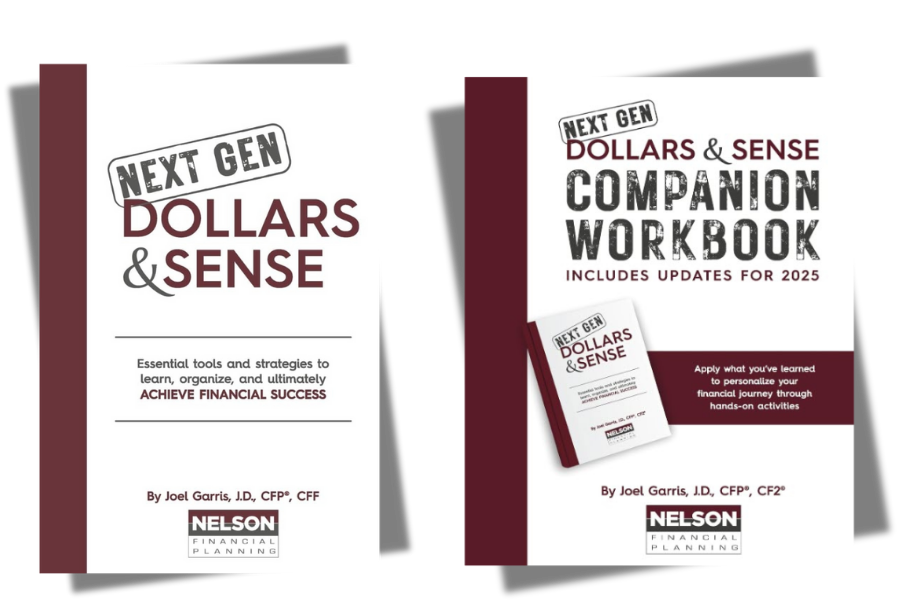
Unlock the secrets to financial success with Joel J. Garris’ insightful book, designed to equip you with the essential tools and strategies needed to take control of your financial future. Whether you’re just beginning your financial journey or approaching retirement, this book offers a comprehensive guide to help you build a solid financial plan that aligns with your goals.
- 8 Wonders1
- Bank Investments3
- Beating Inflation1
- Budget for Retirement5
- Corporate Transparency Act2
- Digital Currency1
- Energy Tax Credits1
- ESG Funds1
- Featured Blog0
- Financial Planning14
- Financial Success5
- Importance of Dividends1
- Investment Diversification1
- Investment Portfolio6
- Investment Strategy4
- IRA1
- Joel Garris1
- Nelson Financial Planning7
- Net Worth Improvement1
- Next Gen Dollars and Sense1
- One Big Beautiful Bill Act (OBBBA)1
- Pension Plans1
- Podcast Transcripts17
- Retirement “Secure” Act2
- Retirement Income Planning3
- Retirement Planning7
- Retirement Regrets5
- Social Security4
- Tax Liability3
- Tax Planning7
- Year-End Tax Changes3