




Precious Metals Surge: Should You Buy Gold Now – And What Advisors Don’t Always Explain

As gold prices spike and uncertainty rises, Joel Garris breaks down the real risks of precious metals — and the critical questions investors should ask their financial advisors.
Dollars & Sense Episode Summary
Gold and silver are dominating headlines again. Record price surges. Social media hype. Fear of inflation. Global uncertainty. And the familiar narrative that precious metals are the ultimate “safe haven.”
But is that really true?
“A pound of gold today is exactly the same as it was 2,000 years ago. It doesn’t innovate. It doesn’t pay dividends. It simply relies on what someone else is willing to pay for it.”
In this episode of Dollars & Sense, Joel Garris, CERTIFIED FINANCIAL PLANNER® and Certified Financial Fiduciary™, takes a disciplined look at what’s actually happening beneath the headlines. While precious metals are attracting attention, corporate earnings in the S&P 500 are showing strong year-over-year growth — marking the fifth consecutive quarter of double-digit earnings expansion and the tenth straight quarter of earnings growth overall.
That matters.
Because long-term wealth isn’t built on hype or fear — it’s built on productivity, innovation, revenue growth, and disciplined diversification.
Joel walks through the historical performance of gold versus equities, explains why precious metals often experience long periods of stagnation between dramatic spikes, and outlines the real-world costs investors face when buying and selling physical gold and silver — including premiums, spreads, liquidity constraints, and ETF expense ratios.
“Expenses reduce your investment results. There’s no way around that. If you’re paying a nickel, your return is a nickel less.”
But the conversation doesn’t stop there.
The second half of the episode shifts to something even more important: the questions every investor should be asking their financial advisor. From understanding total fees and expense ratios to confirming fiduciary responsibility, investment philosophy, client specialization, communication standards, and risk alignment — Joel provides a practical checklist for strengthening your financial partnership.
“Your financial advisor should be a guide. But it’s your money. And unless you’re asking the right questions, you may not be getting the full benefit of their expertise.”
If you’ve ever wondered:
- Is gold really a hedge against inflation?
- Are ETFs tied to gold cost-effective?
- How do advisor fees actually impact my returns?
- What does fiduciary truly mean?
- Am I asking the right questions about my portfolio?
This episode delivers clarity.
It’s not about chasing trends. It’s about making informed, disciplined decisions — and making sure your financial strategy reflects your long-term goals, not short-term emotion.
10 Key Takeaways
- Corporate earnings growth remains strong, with S&P 500 earnings up approximately 13% year-over-year in the latest reporting season.
- Gold and silver often surge during periods of uncertainty, but historically lag equities over long-term horizons.
- Precious metals experience dramatic price spikes followed by extended periods of stagnation.
- Physical gold and silver investing often involves 10%+ premiums on purchase and sale — requiring significant appreciation just to break even.
- Gold ETFs may carry higher expense ratios and still do not provide income or dividends.
- Fear of missing out (FOMO) and social media hype can drive emotional investing decisions.
- Total investment cost includes advisor fees plus underlying product expenses — both matter.
- A fiduciary advisor is legally obligated to act in your best interest.
- Understanding your advisor’s investment philosophy and communication structure strengthens long-term partnership.
- Diversification across equities, bonds, and cash remains a cornerstone of disciplined investing.
Episode Chapters
- 00:00 – Introduction: Gold, Silver & Essential Advisor Questions
- 00:05 – Marathon Investing: Why Consistency Beats Speed
- 00:10 – Corporate Earnings Season: What the Data Actually Shows
- 10:15 – Gold & Silver Price Surge: What’s Driving the Hype?
- 13:16 – Historical Performance: Gold vs. the S&P 500
- 16:06 – The Real Costs of Buying & Selling Precious Metals
- 20:58 – Why Gold Isn’t the “Golden Ticket” to Wealth
- 24:07 – 7 Essential Questions to Ask Your Financial Advisor
- 26:41 – Understanding Fees, Expense Ratios & Hidden Costs
- 33:11 – Fiduciary Responsibility & Advisor Credentials
- 35:02 – Investment Philosophy, Client Fit & Communication Standards
Podcast Transcript
Podcast: Dollars & Sense
Episode Date: February 15, 2026
Speaker: Joel Garris, CFP®, Certified Financial Fiduciary™ (CF2™), Certified Financial Planner® (CFP®), President, Nelson Financial Planning, Host of Dollars & Sense podcast
Introduction: Gold, Silver & Essential Advisor Questions
00:00:05 – Joel Garris, CFP®
Gold and silver. Should you be investing in precious metals today? We’re going to talk about that on this week’s program. Plus, we’re going to give you some essential questions to ask your financial advisor. These are some questions that maybe you haven’t necessarily thought of, or maybe you’re just a little scared, in a word, of asking. But
There are questions that need to be asked, and you need to make sure that you understand and appreciate the answers. So we’re going to talk about all of that on this week’s edition of Dollars & Sense, where we help you make sense out of all of life’s decisions involving your dollars. One of Central Florida’s longest-running radio programs, also a top 25 financial planning podcast, and of course, a well-known YouTube channel as well. Make sure you check us out on your favorite platform.
Whether it’s your podcast channel or your YouTube channel. If you have any trouble finding us, go to our website at Nelson Financial Planning. There you’ll see a bunch of icons. Click on them. They’ll immediately connect you. Or you could just search Dollars & Sense with Joel Garris of Nelson Financial Planning. And I’m pretty sure the channel will pop up. Which leads me to tell you that my name is, in fact, Joel Garris. I’m A CERTIFIED FINANCIAL PLANNER®, Certified Financial Fiduciary™ at Nelson Financial Planning.
Marathon Investing: Why Consistency Beats Speed
00:01:32 – Joel Garris, CFP®
And we got a team of great folks. You got to hear from a couple of them last week. Rob Field, Chet Cowart. We certainly appreciate them filling in for us while we were over in St. Pete, running the St. Pete Marathon. Clearly I survived, so that is good. And at the end of the day, actually finished, had a goal of wanting to finish under 5 hours.
And so was able to do that and so was feeling good about that. Weather was perfect for that. One of those things if you’re a runner, man, it’s hard to be a distance runner here in Florida because it is so hot all the time. But fortunately, calendar and temperature worked out well. So had a good race last week and certainly appreciate Rob and Chet filling in admirably for me. I think
The analogy that they drew between running a marathon and investing, pretty good analogy. When you think about it, investing is all about being consistent. And that’s important when you’re running 26.2 miles, right? You don’t want to run the first few miles too fast, because otherwise you’ll be really, really not in good shape at the end. So it’s about consistency. And then, of course, making sure that you have a good plan and a good strategy to kind of tackle that race. When are you going to try and push? When are you going to kind of stay back, pull back? All of that, crucially important to make sure that your finances are in the right order. Same thing with running a marathon. So we appreciate that.
Yes, in fact, still able to get around at my age as I approach 50. What am I? 50? Yeah, going to be 56 here coming up. So anyway, I like to see still getting out there and still able to walk the next day too. So that’s good. And let’s see here. Yesterday, so this program is airing on February 15th. So yesterday was Valentine’s Day.
The Christian feast from a couple thousand years ago that became linked to more romantic meaning in the medieval times, and then obviously the folks at Hallmark and Russell Stover, that’s a throwback name. I think Russell Stover still makes chocolates, but Hallmark, Russell Stover managed to turn it into the commercial sensation that it was. If for some reason you missed it and you forgot your Valentine, well, you probably don’t have a Valentine today. So anyway, I hope you all had a good Valentine’s Day. Last Sunday, in addition to marathon day for myself, was Super Bowl. My beloved Patriots laid a bit of an egg.
And of course, if you are a regular listener to the program, that on Super Bowl Sunday, we always talk about the Super Bowl market indicator. That is another in the long list of market indicators, those sort of tongue-in-cheek pseudo-macroeconomic concepts. This one was created by a sportswriter by the name of Leonard Coppett in the 1970s. It claims that the stock market’s direction for the year can be predicted by which conference wins the Super Bowl. If an AFC team wins, that means it’s going to be a bear market. If an NFC team wins, that means it’s going to be a bull market, meaning the market goes up. It had a decent success rate early on, but like the last 10 years, it’s only been right like two of the last 10. Although last year it was correct, Eagles won and the market was up. So Seahawks won. So maybe we’ve got a good trend for the year ahead.
Corporate Earnings Season: What the Data Actually Shows
00:05:33 – Joel Garris, CFP®
Although in all seriousness and in all candor, we want to direct your attention to what is happening in the financial markets now, because what’s happening right now is a much better indicator versus the Super Bowl market indicator, a much better indicator of what the future holds and a much better litmus test of where the markets are. And we’re talking about corporate earnings season. So this is the time of year where we’re kind of into that first quarter, right? About 6 weeks in. And companies, corporate America, this is the time where they would typically be reporting their corporate earnings and their revenues and all of that for the prior quarter. So what’s going on right now is a report by corporate America of how they did in the fourth quarter. And so far, things are trending much more strongly than what originally was expected. And we think that’s the more important story than any of this other kind of silly stuff that we’ve been talking about so far. Because the reality is that when you look at corporate earnings, S&P 500 earnings, so that’s the sort of traditionally thought of as the 500 largest companies in America, tracking about 13% up year over year for the fourth quarter of 2025. About 59% of companies have reported, so we’re a little over halfway in terms of this earnings season. Of those that have reported, over 3/4 have reported earnings that have beaten estimates and those earnings estimates or those earnings that are getting reported are close to 8% above analysts’ forecast. This would be the 5th consecutive quarter, assuming that it holds for sort of the other half of corporate America that is yet to report, the 5th consecutive quarter of double-digit earnings growth. So pretty impressive.
But what’s even more impressive is the top line numbers. And these are the things that you always want to kind of look at. Revenue, when we think about revenue, that shows money in the door. That represents real spending by consumers of your products versus sometimes profits, where if you cut expenses or maybe achieve efficiency, then you might be able to increase your earnings, but you haven’t necessarily sold more stuff.
When your revenue is expanding, this is the interesting trend. And so far, 73%, so again, nearly 3/4 of the companies out there have exceeded those revenue expectations.
And that revenue growth is sort of across the board in all sectors. So some interesting numbers to kind of start to look at. Obviously, information technology, communication services, those types of things continue to sort of lead right now.
Some of the sectors that are kind of showing mixed results is kind of more in the healthcare. Bottom line, the breadth of this market improvement and these earnings has really been sort of across the board whereby you’ve got another quarter, which is actually the 10th consecutive quarter of year-over-year earnings growth for what’s happening in corporate America. So pretty interesting results, pretty strong. Fifth consecutive quarter of double-digit earnings growth, the 10th consecutive quarter of year-over-year earnings growth. So a lot of positive things. And I think what we’re seeing so far is we think about how these earnings that are coming out, it’s really across the board in companies in all different sectors, which really sort of reaffirms one of the themes that we talked about at the very first show of the year 2026. And that was that diversification is going to be crucially important to our investment results this year. Certainly in the current earnings season, we are seeing that. So make sure that your portfolio has that broad-based diversification in it to take advantage of these opportunities that we’re seeing in today’s market. So with that, we’re going to take a break and continue on here on Dollars & Sense with Joel Garris of Nelson Financial Planning.
Gold & Silver Pricing Surge: What’s Driving the Hype?
00:10:15 – Joel Garris, CFP®
We’re going to dig into a topic which has certainly been generating a lot of headlines of late, and that is the conversation about precious metals, whether it be gold or silver. And obviously, I mean, you have to be kind of living under a rock if you kind of haven’t seen the headlines on this stuff, because there has been a significant surge in the prices of these precious metals. And it begs the question, or maybe you’ve got the question of, is it time for me to jump in, to be a part of that? And I guess what we’re going to talk about in this segment is before you rush in to buy those shiny bars and coins and all of that, I think it’s important to really kind of take a closer look at what’s going on here.
So we’re going to talk about some of the risks, sort of the history, the historical performance, which obviously is important, and then the practical realities of investing in precious metals, and then summarize it all up for what it means to you as an investor. So let’s start with kind of what’s happening right now over the past several months. Gold and silver have soared to levels that we really haven’t seen in many, many years. Certainly when you look and hear, look at traditional media or social media, both of those are all abuzz with these headlines about record-breaking prices.
And social media really lending itself to sort of pumping up the excitement and the interest and correspondingly the price of these precious metals. And it is generally viewed as it has always been throughout history, gold, silver, all of those precious metal commodities, usually as a little bit more of sort of a safe haven. And the popularity typically spikes during periods of higher uncertainty. Certainly you could argue that would apply now with concerns about inflation, employment, AI, global uncertainty. All of that is sort of blowing in the wind. And so consequently, you see precious metals and those types of things really participating much more strongly when you have that higher level of uncertainty. And the reality is that the prices on these have a tendency to move relatively quickly, so it’s easy to kind of get swept up and create sort of that herd mentality. And I think that’s the important historical perspective that we want to kind of talk a little bit about. I mean, obviously, gold and silver has been around forever, like, right, since the time of Christ and all of that. I mean, it’s been around a long time. And they’ve always been considered valuable, right? Whether it’s as a currency, whether it’s for jewelry.
Historical Performance: Gold vs. the S&P 500
00:13:16 – Joel Garris, CFP®
But I think the question is, how does it ultimately sort of stack up over time versus some of the other investing alternatives? So you look generally at the stock market. I think the answer on this is pretty clear. When you look at the past several decades in the stock market, measured by the S&P 500, it’s consistently outperformed precious metals in terms of long-term results.
And obviously, if you put money in the S&P 500 50 years ago and reinvested the dividends, you’d have a significant nest egg versus gold and silver, not really even close, even at today’s high prices. So, and I guess that underscores the point is precious metals have a tendency to have long periods of stagnation with these occasionally dramatic spikes. So this is a pattern that we’ve seen many times before versus the stock market, which I think is all about sort of consistency and building wealth over time for folks that are diversified and patient investors. So I think when we think about what the stock market represents, and we were talking earlier in the program about corporate earnings and sort of what that means in terms of if revenue is increasing, then that’s good because that means people are actually buying more of your stuff. The reality is that when we think about kind of what generates stock market return, it’s things like innovation, it’s things like productivity, it’s things like profits of companies that actually make stuff that the world is using and consuming on a regular basis. Gold and silver, on the other hand, don’t generate out any earnings or pay any dividends. A pound of silver today, a pound of gold today is exactly the same as what it was 2,000 years ago. No difference at all. Meanwhile, you know, there’s been a few inventions like, you know, the computer, internet, things like that, light bulb, that have fundamentally changed society as a whole and produced some very profitable results for those companies that obviously have those products. So at the end of the day, a pound of gold, pound of silver, still the same as it was 2,000 years ago, not generating any earnings or dividends.
Just kind of sits there and solely relies on price appreciation, which is exclusively determined by just simply what people are willing to pay for it at any given point in time. That’s why you see this pattern with gold and silver, where you see these spikes, but then you also see long periods of time where it’s basically going sideways, those periods of stagnation. So
The Real Costs of Buying & Selling Precious Metals
00:16:06 – Joel Garris, CFP®
So I think that’s important to consider. I mean, obviously that I think should be self-evident when we think about gold and silver. But there’s also just the sheer cost of trading precious metals. You know, it’s not like when you buy a stock or an ETF or a mutual fund, it’s click of a button and voila, you’ve purchased it. Or if you’re selling it, it’s click of a button and that’s taken care of. When you’re talking about gold and silver, it isn’t that simple. You typically have to deal with a third party. And oftentimes there’s hefty premiums over the spot price plus shipping and insurance. And then when you then go ahead and sell, then there’s also a cost involved in that. So when we look at those costs, it’s typically 10% on the front end, 10% on the back end, which means that you’ve got to make at least 20% just to break even on the cost. So that should help to kind of put this a little bit into perspective. Now, obviously, there’s a lot of exchange-traded funds, ETFs that have been created, but to sort of deal with tracking gold and silver directly. But remember, in those cases, you aren’t actually holding the product, the physical commodity directly. And the reality is that there’s still some pretty significant high management fees in a lot of those ETFs that you have to kind of look a little bit deeper on as you’re looking at that, because there’s really is sort of a little bit of a liquidity issue when it comes to owning a physical asset. You can’t instantly, instantly sell it. And, so from that perspective, we understand why, sort of the appeal of precious metals, because you can touch them, they’re tangible, right? You can have a pound of gold, if you will, in your in your vault or in your safe deposit box, but, and they’ve certainly been around a long time, certainly have a sort of that air of permanence, but
There’s a lot of volatility going on, which I think is crucially important. I think a lot of the price appreciation has to deal with fear or FOMO. FOMO, fear of missing out, right? Where you have more and more people that are sort of joining the bandwagon, chasing a lot of the latest hot item. I think social media goes a long ways to sort of fan those flames as well which can produce a lot of hype and a much more emotional investing. There’s also virtually no regulation when it comes to some of these ads and some of these claims that you hear about what the future potential of the price appreciation on gold and silver might be. So that lends itself to kind of a little bit more outrageous claims in terms of what you can expect from them. So bottom line, I think that there’s a lot of things that investors need to remember about gold and silver and precious metals investing. And it comes back to, that long-term return. It’s always about results and how they’ve done over time as well. And so those are some of the things to consider. We’ve got some kind of final thoughts and takeaway on this topic. And we’ll do that when we return here on Dollars & Sense with Joel Garris of Nelson Financial Planning.
Welcome back to Dollars & Sense, where we help you make sense out of all of life’s decisions involving your dollars. In the last segment, we were talking a little bit about precious metals, gold, silver, getting a lot of attention these days. We’ve got some final thoughts on that in this segment. This course is Dollars & Sense, one of Central Florida’s longest running radio programs.
Also a top 25 financial planning podcast, over 50,000 downloads of our program worldwide. So we certainly appreciate our valued listening audience out there on all of those different podcast platforms. We are on pretty much any of them that you can imagine. If you have trouble finding us, go to our website at nelsonfinancialplanning.com. There you’ll see icons. They’ll get you immediately connected on over. That website address again is nelsonfinancialplanning.com.
And while there, if you’re interested in making an appointment with us to have a conversation about how we can help you make better decisions with your money, well, go ahead and fill out that Contact Us box.
A live person, not an AI bot, will call you back and schedule a face-to-face conversation. Isn’t that exciting? That’s good stuff.
My name is Joel Garris, CERTIFIED FINANCIAL PLANNER®, Certified Financial Fiduciary™ at Nelson Financial Planning.
Why Gold Isn’t the “Golden Ticket” to Wealth
00:20:58 – Joel Garris, CFP®
So let’s wrap up this topic about gold and silver, because I think it’s an important one. Obviously, it’s getting a lot of attention these days, particularly when we see these big price run-ups.
And I want to come back to something I was saying at the very end of the segment, which is that you have to understand that this is a very highly unregulated part of the industry.
And when we think about these ads, we think about these social media claims, and we say gold’s going to go to $100,000 an ounce or whatever the claims are, you have to understand that there’s no underlying regulation that ultimately governs that. So that leads to a lot of, I guess, exaggeration in terms of what your potential return might be careful about that, along with the notion of the herd mentality, that fear of missing out.
The reality is that a pound of gold is still a pound of gold, whether it’s a pound of gold today or when Jesus was walking the earth.
So when you think about that and some of the real things that you can actually invest in terms of companies that make products that the world uses every day, I think the results speak for themselves in terms of that long-term performance numbers.
And of course, gold has certainly plenty of periods, and silver, plenty of periods where you’ve got stagnation in terms of the overall cost. So as an investor, what you want to continue to do is to make sure that you are embracing diversification, whether it’s among stocks or bonds and cash.
The reality is that’s how you ultimately can weather through whatever the volatility might be. Because the reality is that those types of investments are always fully liquid.
They don’t have these massive carry costs in terms of, okay, where am I going to store this thing?
How am I going to insure it? How do I ultimately wind up selling it and get anywhere near or buying it? You can get anywhere near what the spot price is.
That’s why you see the full page ads is because the real money to be made here is in the buying and the selling, not in the owning because there’s some significant differences versus the current spot price when you either buy or you sell.
And for anybody that’s ever bought or sold, they know that very well. It’s usually close to 10% on the front side, 10% on the backside. That can be significant. So make sure you’re staying disciplined as it comes when it comes to investing. Be careful about chasing trends or reacting emotionally to kind of the market swings because certainly gold and silver getting a lot of attention, shining brightly these days in the headlines, but certainly not the golden ticket to long-term wealth.
So be careful about having the latest surge in precious metals distract you from sort of those bigger, longer-term goals when it comes to investing.
So some thoughts there on what’s going on in gold and silver.
Essential Questions to Ask Your Financial Advisor
00:24:07 – Joel Garris, CFP®
Let’s shift gears to the other topic that we mentioned at the beginning of the program here.
And that is this concept of some of the questions that we think are important that you should ask your financial advisor.
So we’re going to get into that.
The reality is that there’s a lot of great firms out there. I know when we think, when we hear programs like this, there’s sort of this insinuation that, hey, we’re the only one that could possibly do what we do.
And while we might think that, the reality is, yeah, you know what, there’s probably some other good folks in the industry out there. One of my very best friends, longest friends, is actually in the industry as well, works for a different firm.
And so I want you to think about these questions as questions that you should just ask, not to try and necessarily draw comparison, but really to get a better understanding of your finances.
So this segment is really devoted to folks that have an advisor, whoever he or she is at whatever company they work for.
The goal here is to give you some questions to ask them to really help get a better understanding of what it is that you own.
Because the reality is that you need to have these questions answered because it really does help your financial advisor and yourself to really engage in a more of a partnership. And the reality is that we like to think of ourselves, and I think most people would think of it this way, is that if you’re using a financial advisor of some kind, then that individual really should serve the role of being sort of a guide, right?
It’s your money after all.
So you get to make the ultimate decision.
But they should be there to guide you and help provide insight and understanding along the way.
And in order to do that, then you’ve got to make sure that you’re asking the right questions, that you’re understanding what the answers are.
And that’s probably true of anything in life, but certainly very true of financial planning in order to get the most out of the expertise that you’re relying on.
So we’re going to go through some of the questions that we certainly get asked on a regular basis, and we would encourage you to ask your financial advisor as well.
The first question, which I think is probably one of the most important ones, if not the most important one, is kind of the fee question, right?
How much is all of this going to cost?
And here is where it can start to get a little murky because
You hear different things, like you hear, the expense ratio, or you hear an assets under management fee, or you hear a flat fee, or a planning fee, or a commission fee, or a…
I mean, there’s so many different names in terms of what is basically really just a cost, right?
A cost is a cost.
It’s something that ultimately impacts the return that you get, right?
I don’t care whether the cost is a nickel or 1/4, it’s still going to ultimately impact how much you, the investor, receive in terms of your overall rate of return.
So that’s where the investment results matter most because ultimately the underlying cost is impacting, is reducing down what those investment results are.
So that’s why that fee question, what’s the cost?
And make sure you have an understanding of that because what we’re seeing more and more in the industry is kind of a bifurcated approach where there is a cost that you pay the advisor, whatever that fee or however they’re describing it.
And then, and this is where I think the disconnect happens, every investment is going to have an underlying expense.
And it’s important to understand what that underlying expense is, whether it’s an ETF or a mutual fund or whatever the case may be to understand that cost because that is a cost in addition to the cost that you are paying that particular individual.
So the key point on this question when you’re asking it is to make sure you understand that what the total cost is, what the total expense is, all aspects of that crucially important in terms of getting that answer and making sure that you understand exactly how that impacts the value of your account and your investment return over time.
So clearly, probably the number one question.
Number 2 is probably, are you acting as a fiduciary, right?
You want to make sure that the individual is ultimately giving you advice that is in your interest and not in their interest.
There’s a lot of ways in which to measure that.
There’s a bunch of credentials that are available in the industry that in fact ensure that.
And we’ll tell you a little bit more about those key things to sort of look out for when we return here on Dollars & Sense with Joel Garris of Nelson Financial Planning.
Talking about some of the questions that you should be asking your financial advisor.
These are some crucial questions to be asking them in order to make sure that you have a good partnership and you have a good understanding of what it is that they do and how it ultimately impacts you.
Because after all, when we think about the relationship that an individual should have with someone that is advising them about their finances, it really does need to be
A partnership, and in order to have a partnership, you need to understand what the other party is doing, and ultimately, at the end of the day, to make sure that you have a good understanding of at the end of the day, after all, it is your money.
And to make sure that their role is to not just be a partner, but also to be a guide through all of that.
And unless you’re asking the right questions and understanding the answers, as with anything in life, you may not be getting the full benefit of their expertise.
So we’ve got some questions that we’re kind of going through here on the program in order to help assist you with that conversation.
Question 1: What Is My Total Cost
The first, which is always the most important question, is how much is all of this going to cost me?
What’s the fee?
What’s the expense?
There’s so many different terms in the industry these days that it just, I mean, it’s an alphabet soup.
It’s a management fee.
It’s an expense.
It’s an expense ratio.
It’s a flat planning fee.
It’s a fee for service.
I mean, you name it, okay?
But the answer is separate through all of those different terms and ultimately it boils down to an expense.
And you have to make sure that you’re considering all expenses, whether it’s be the fee that you pay the individual or the underlying expenses in the products themselves.
We talked about this early in the program.
Some products can have very high internal expenses. Typically, when we’re talking about gold and silver, early in the program, ETFs involving that typically have higher expenses.
And you need to understand that and what those are, because here’s how expenses work.
They reduce your investment results.
There’s no other way around that.
If you’re paying a nickel for something, then your investment results are going to be less by that nickel.
If you’re paying 1/4, and they’re gonna be even more less as a result of that expense.
So crucially important to kind of get a handle on that expense question and make sure that you understand all pieces of that, because sometimes in today’s world, there’s a split up of different costs for different things.
And then what has become unbelievably ubiquitous in the industry is these products that are generally more opaque less transparent, so you don’t really have a good understanding of what the underlying expenses are really at all.
And for that, we’re talking about things like annuities, things like private credit products, things like REITs, all of those kinds of things have sort of features that compensate the investment provider a higher level based on what’s happening inside the fund.
So it’s crucially important that you have an understanding of the cost.
So that’s number one.
Question 2: Are You a Fiduciary?
00:33:09
Number 2, Are they a fiduciary?
And this is the one we were talking about just prior to the break.
And that means that as a fiduciary, they are giving advice that is solely and exclusively in your best interest.
There’s not conflicts.
There’s not a product that some mothership that’s over them is offering through a subsidiary over here on the side.
That ultimately becomes crucially important in making sure that they are a fiduciary.
The easiest way to determine that is just ask for the credentials that the individual has.
Because if they are a CERTIFIED FINANCIAL PLANNER®, if they are a Certified Financial Fiduciary™, then they absolutely have that obligation to do and act exclusively in your best interest.
That, after all, is what being a fiduciary is all about.
So those are certainly the top two questions to be asking.
Question 3 & 4: What is Your Investment Philosophy? What Has Been Your Track Record Managing Client Money?
00:34:07
The next one is kind of deals with investment philosophy and track record, right?
Like what’s your investment philosophy and what’s been your track record with managing actual client money over time?
Obviously, those are kind of important questions.
And, you know, there’s different philosophies out there.
Ours is not the only one that, you know, that is available out there, although we think it’s the best one, but hey, that’s very self-serving.
But ours, for example, we talk about focusing on large companies that make the products and the goods and the services that the world uses every day.
That’s always been the core of our investment philosophy, going back now 40 years.
Sprinkle in some other key concepts, such as diversification and being consistent, and you get to see a lot of, in terms of what the investment philosophy is at Nelson Financial Planning, but others have different philosophies. Some would say, oh, it needs to be more passive.
There needs to be a broader mix than just larger companies.
All kinds of different philosophies out there.
Bottom line on this one is make sure you understand it, right?
And make sure that you are comfortable with it in terms of what all of that looks like.
Question 5: Who Do You Typically Work With?
00:35:25
Another good question to ask, which we hear a lot, so we always know when someone’s sort of done their homework is when we get asked this question.
And that is this notion of, okay, well, what clients do you typically work with?
A lot of firms these days are sort of specialized, like maybe they’ll only look for professionals or they’ll only look for retirees or things like that.
Certainly, we see a lot of sort of chasing higher net worth types of clients, particularly when we see a lot of the industry minimums that were, kind of hovering around 500,000.
I think I see more and more where a lot of the account minimums now are over a million.
I just philosophically have an issue with that, because if you’re truly a fiduciary, you’re supposed to be a fiduciary for your clients, then how does that really square with the notion of you only want to be a fiduciary or help people only when they have a bunch of money already?
Think about that.
Our philosophy is and has always been that we like to help you wherever you are on your financial journey.
So we’ve never had any kind of account minimums or anything like that.
Certainly, that is the trend is to have that and that becomes pretty self-apparent.
But I think that’s the good question to ask in terms of what kind of clients do you typically work with, because it does tell a lot about how that operation might be working.
Question 6: How Often Will We Communicate
00:36:56
And then, what’s the form of communication? Like, how often do you communicate with your clients?
How often will I get to meet with you face to face?
Who will be my primary contact?
All of those kinds of things are very important. Because again, when you’re using a financial advisor, it’s about a partnership.
And the reality is that you want to make sure that your partner is there when you need them and not ignoring you when you ultimately need them.
So one of those things that I think it’s important to ask is, kind of what’s the level of correspondence look like?
What’s the educational opportunities look like?
What’s the regular schedule of what I should expect during the course of a year from that particular firm?
We at Nelson Financial Planning have all of that in writing. We actually refer to that as our 5, 4, 3, to one service guarantee.
Each one of those numbers means something in terms of the amount of communications, the amount of face-to-face visits, the amount of educational events.
And so we go through that with every client to understand what those expectations are that they can expect from us in terms of the communication over time.
Question 7: How is Risk Managed?
00:38:10
And then, you know, in terms of sort of other things, obviously you want to have the conversation about risk, right? You want to make sure that your portfolio is designed and your financial plan is designed with a level of risk that you are comfortable with and that the game plan ultimately matches what your specific financial goals are all about.
This is where we believe very strongly that you need to have a tax overlay on that, particularly in today’s world, to really make that have some sense.
So certainly some questions I think that you want to be asking your financial advisor on a universal basis.
So jot those down and make note of them.
If you missed any part of them, know that you can always go over to our YouTube channel or any of our podcast channels and hear this part of the episode again to make sure that you have a good understanding of those questions to be asking your financial advisor.
Closing
00:39:14
With that, we’re going to wrap it on up and get on out of here. My name is Joel Garris, CERTIFIED FINANCIAL PLANNER®, Certified Financial Fiduciary™ at Nelson Financial Planning.
If you’re interested in learning how we might be able to help you personally, visit our website at nelsonfinancialplanning.com. There you can check out the contact us form and reach out to us to schedule an absolutely free conversation at your earliest convenience.
Have a great day.
Next Steps
If you’d like help reviewing your financial plan, investment strategy, or retirement readiness, explore the resources available through Nelson Financial Planning or schedule a consultation to discuss your goals.
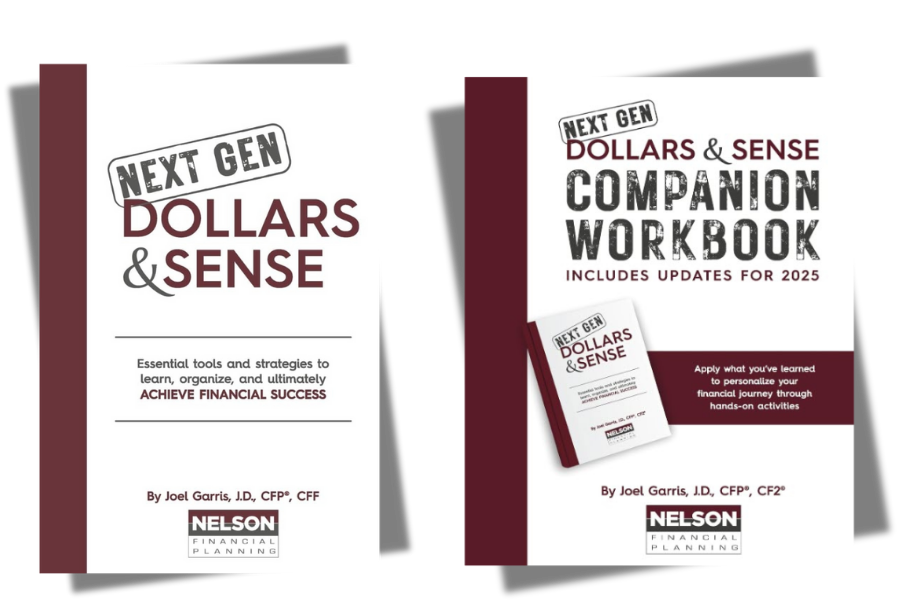
Unlock the secrets to financial success with Joel J. Garris’ insightful book, designed to equip you with the essential tools and strategies needed to take control of your financial future. Whether you’re just beginning your financial journey or approaching retirement, this book offers a comprehensive guide to help you build a solid financial plan that aligns with your goals.
REQUEST YOUR FREE COPY OF OUR BOOK & WORKBOOK!
- 8 Wonders1
- Bank Investments3
- Beating Inflation1
- Budget for Retirement5
- Corporate Transparency Act2
- Digital Currency1
- Energy Tax Credits1
- ESG Funds1
- Featured Blog0
- Financial Planning13
- Financial Success4
- Importance of Dividends2
- Investment Portfolio5
- Investment Strategy3
- IRA1
- Joel Garris1
- Nelson Financial Planning7
- Net Worth Improvement1
- Next Gen Dollars and Sense1
- One Big Beautiful Bill Act (OBBBA)1
- Pension Plans1
- Podcast Transcripts10
- Retirement “Secure” Act2
- Retirement Income Planning3
- Retirement Planning7
- Retirement Regrets5
- Social Security4
- Tax Liability3
- Tax Planning7
- Year-End Tax Changes3