




What today’s biggest investment trends are hiding — and how they could impact your retirement

Breaking down the hype, the headlines, and the real risks behind today’s financial trends.
Dollars & Sense Episode Summary
In a financial landscape filled with bold claims, trending investment products, and eye-catching retirement strategies, it’s never been more important to separate fact from fiction. In this episode of Dollars & Sense, Certified Financial Fiduciary (CF2™) Joel Garris and Chartered Retirement Planning Counselor (CRPC™) Chet Cowart take a deep dive into two of the most talked-about topics in today’s market: the rise (and early cracks) of private credit investments, and the growing popularity of “tax-free retirement” strategies.
Private credit has quickly become one of Wall Street’s favorite alternatives to traditional stocks and bonds. Marketed as a way to achieve higher yields with lower volatility, these investments have increasingly been pushed into the hands of everyday investors — even finding their way into retirement accounts like 401(k)s. But as recent global events and market pressures unfold, the reality behind these products is starting to surface. Limited liquidity, withdrawal restrictions, and lack of transparency are creating real challenges for investors who assumed they could access their money when needed.
“Quarterly liquidity doesn’t guarantee liquidity—it just means you might get your money if conditions allow.”
Joel and Chet break down what private credit actually is, why it exists outside traditional banking systems, and how its structure can create unintended consequences — especially during times of uncertainty. As redemption requests increase and some funds struggle to meet demand, investors are learning firsthand that “quarterly liquidity” doesn’t always mean immediate access to their money.
“There’s a lot being pushed on investors right now, and if you don’t understand what you own, that’s where the problems start.”
In the second half of the episode, the conversation shifts to another widely promoted concept: the idea of a completely tax-free retirement. While it’s an appealing promise — and one heavily marketed through seminars, ads, and social media — the reality is far more nuanced. Strategies like Roth conversions and backdoor IRAs can play an important role in tax planning, but they come with trade-offs that are often overlooked.
“The idea of a tax-free retirement sounds great — but getting there is not a tax-free move.”
The hosts emphasize the importance of personalized financial planning over one-size-fits-all advice. They explore when tax-free strategies might make sense, when they don’t, and why understanding the timing, tax implications, and long-term impact is critical before making major financial decisions.
This episode is a must-listen for anyone navigating retirement planning, evaluating new investment opportunities, or simply trying to make smarter financial decisions in a rapidly changing environment.
10 Key Takeaways
- Private credit is growing rapidly, but has not been tested through multiple market cycles
- Liquidity is one of the biggest risks – many investors cannot access their money when they expect to
- Withdrawal limits and redemption queues can create “bank run” scenarios in stressed markets
- Private investments lack the transparency and pricing clarity of publicly traded assets
- Higher yields often come with hidden risks that are not always clearly communicated
- “Tax-free retirement” strategies are often oversimplified in marketing and seminars
- Roth conversions can trigger significant tax bills, especially during peak earning years
- Backdoor Roth strategies are more complex than they appear and require careful planning
- Tax diversification is important — but it must be tailored to each individual’s situation
- Personalized financial planning consistently outperforms one-size-fits-all advice
Episode Chapters
- 00:00 – Private Credit Squeeze & Tax-Free Retirement Teaser
- 02:08 – March Madness, NIL Money & Why Athlete Taxes Get Complicated
- 10:07 – Why Nelson Financial Planning Prefers 20-Year Track Records
- 12:44 – What Private Credit Really Is & Why It’s Being Pushed
- 17:37 – War Headlines, Redemption Limits & the Private Credit Squeeze
- 19:35 – Why Quarterly Liquidity Doesn’t Guarantee Real Liquidity
- 24:31 – The Pitch of a Totally Tax-Free Retirement
- 29:41 – Why Roth Conversions, Backdoor Roths & Whole Life Need More Scrutiny
Podcast Transcript
Podcast: Dollars & Sense
Episode Date: March 22, 2026
Speakers: Joel Garris, CERTIFIED FINANCIAL PLANNER® Professional, Certified Financial Fiduciary™ and Chet Cowart, Chartered Retirement Planning Counselor (CRPC™) and Certified Financial Fiduciary® (CF2™)
00:00 – Private Credit Squeeze & Tax-Free Retirement Teaser
Joel Garris, CFP:
So the private credit squeeze is on how quickly these new products can go from hype to help me get out of here. And so we’re going to talk about that along with another reality or hype-driven conversation about a totally tax-free retirement. Man, that would be fantastic, right, Chad? I mean, totally tax-free. Who’s not to love that?
Chet Cowart, CF2™:
It would be amazing. I don’t know if it’s possible, though.
Joel Garris, CFP:
Oh, well.
Chet Cowart, CF2™:
I think the IRS knows how to get their money.
Joel Garris, CFP:
Yeah, a lot of seminars out there these days. A lot of posts on social media that are delving into this topic, making it seem like it is just a whisper, a snap of the fingers away, we’re going to dig deep into that and help explain some of that. On this week’s edition of Dollars & Sense, where we help you make sense out of all of life’s decisions involving your dollars, one of Central Florida’s longest-running radio programs, is also a top 25 financial planning podcast. So make sure you check us out on your favorite podcast platform. Any trouble finding us, go to our website at nelsonfinancialplanning.com. There you’ll see the icons, they’ll help you get automatically connected over. And then if you want to see how sharp Chet and I look, okay, you can go to our YouTube channel and see the video. And for those of you who haven’t picked up, Chet Cowart joins me this week on the program. Chet, welcome on in as always.
Chet Cowart, CF2™:
Thank you. Always good to be here.
Joel Garris, CFP:
Chet is one of our Certified Financial Fiduciaries® at Nelson Financial Planning. My name, of course, is Joel Garris, and I am a Certified Financial Fiduciary® along with a CERTIFIED FINANCIAL PLANNER® as well. We’re excited to have you join us on this week’s program.
02:08 – March Madness, NIL Money & Why Athlete Taxes Get Complicated
Joel Garris, CFP:
Speaking of excitement, Chet, it is March Madness kicking off.
Chet Cowart, CF2™:
It is my favorite time of the year. Coincides directly with tax season, which is less of my favorite time of the year. But it’s always a great time. I love March Madness, love making a bracket and watching all the games. It’s a good time.
Joel Garris, CFP:
It’s hard to watch these games when they’re on during, you know, normal work hours.
Chet Cowart, CF2™:
Right, and I missed all the night games last night because I went home and fell asleep.
Joel Garris, CFP:
Goodness, yes, indeed. So annual field of 68 teams now, covering the next few weekends. Actually interesting, historically, it started in 1939 with just eight teams and the Ducks beat the Buckeyes. Oregon prevailed over Ohio State in that first one. Who’d you pick it all? Who’d you pick it to win all this year, Joe?
Chet Cowart, CF2™:
Of course, as every year, the Gators. No matter where they’re seeded, as long as they’re in the tournament, I’ve got the Gators winning, and I think we’re going back-to-back.
Joel Garris, CFP:
Wow, okay, so a bit of a homer, if you will, on your bracket selection.
Chet Cowart, CF2™:
Absolutely. If I was a little bit better of a student in high school, that might be my alma mater. But it is not, but it’s my mom’s and my grandpa’s and long line of Gator fans and my family.
Joel Garris, CFP:
That’s okay. my wife did the same thing. She picked her fabulous Florida Gators to be a part. She graduated from there. And meanwhile, I don’t really have any allegiance. University of Maine, I don’t think has ever made the NCAA tournament. So that means I went straight with Arizona, which I think is a decent enough We’ve got a bracket challenge going on at the office.
Chet Cowart, CF2™:
Nick is running that.
Joel Garris, CFP:
Nick’s running that.
Chet Cowart, CF2™:
He’s just got done tallying up, I think. So we’ll see who’s ahead.
Joel Garris, CFP:
We’ll see. We’ll see where we’ll see where everybody winds up once we once we close out the weekend here with the slated games today. And then, you know, last year I actually went to the Final Four, which was kind of kind of interesting. Snuck away during it was not easy to sneak away, but during tax season, but we snuck away. Because both Florida and Auburn, so my oldest son went to Auburn, that was some mixed allegiances out there.
Chet Cowart, CF2™:
A family divided.
Joel Garris, CFP:
A family divided indeed. So we’ll see. We’ll see all about that.
Chet Cowart, CF2™:
The business of college sports with this NIL money is becoming a crazy, crazy thing. It says players are not as as loyal to their teams anymore, and understandably so. If there’s money to be made, I guess you’ve got to take advantage of that. Well, it’s interesting.
Joel Garris, CFP:
In sports, you never know when you’re going to get injured. You never know when all of that changes. And when you’re talking about sports and at those higher levels of sports, it’s really It’s really just such an incremental difference between the highest level and even the next highest level.
Chet Cowart, CF2™:
Absolutely. And I mean, I can, there’s a lot of complaints, of course, with the whole environment now, but I can understand if you, maybe you don’t take the money at another school and then you blow your ACL out, now you never play again, then that’s not a good, not a good situation either. So it’s, I don’t know if there’s any winners here, but it’s interesting to see.
Joel Garris, CFP:
Yeah, it always amazes me, you know, My oldest son, Nelson, returned back home from a couple of years working in the athletic department for Purdue. He now works for the Osceola Magic, which is kind of the Geely team for the Orlando Magic. And those are some great players. I’m there at the games now regularly because, you know, but he sold me on season tickets. But, I mean, it’s one of those things where just the difference from one level to the next.
Chet Cowart, CF2™:
Very little. Yeah. They’re essentially, they’re essentially, you know, NBA players. I mean, they are technically, I suppose, but, yeah, they’re great. They’re very good. And they can get pulled up by, right, at any time.
Joel Garris, CFP:
Right, at any time. Yeah. They operate on, sort of, some of them operate on 2A contracts. So they’re going to get shifted up to the Orlando team when there’s an injury or something like that. But, yeah, the money is crazy. I mean, we’ve been fortunate as a firm to have several of these young athletes join us over the course of the past few years. But it’s complicated. This is not something that like, you don’t just get a little W-2 or something like that. I mean, this is much more complicated.
Chet Cowart, CF2™:
Money coming from a lot of different places. Correct. And yeah, it’s not a simple tax return from what I understand.
Joel Garris, CFP:
Yeah, no, it certainly is not. I mean, we’ve had to set up LLCs for some of these kids. We’ve had to do S-corp elections, and then you have to do W-2s, things like that. So it’s, and then there’s multiple streams of income coming through because it really, Yeah, I mean, it’s really unbelievable on kind of how it’s so early in this game, if you will, of NIL money and the rest of the dollars that are coming in and how they wind up being taxable and what’s a fringe benefit that’s taxable and what’s not, which is why, when you look at the stat, I mean, there’s so much turnover among the big conferences these days.
Chet Cowart, CF2™:
Right, absolutely. To speak on that stat, across the 70 plus schools in the Power Five conferences, just 22 players on scholarships have played for the same school all four years. including just one player across 16 SEC schools. So just one is actually a crazy stat.
Joel Garris, CFP:
One person in the SEC on these basketball teams has played at the school for all four years. That’s just Unbelievable. And I guess the other part of that stat that we saw, only 19 players have played for four schools, or 19 players have actually played for four schools in four years. So that’s different school every single year.
Chet Cowart, CF2™:
And I wonder how much, I mean, we could easily look this up, but how many basketball, is this just basketball? How many basketball players are in the SEC schools? So, you know, one out of how many?
Joel Garris, CFP:
I’m curious to see that rate. Yeah, 16 SEC schools, there’s got to be 12 different, you know, at least 12. So, that’s a whole lot of a whole lot of folks, and only to have one. That’s crazy.
Chet Cowart, CF2™:
I wonder if he’s been that one guy’s been rewarded for his loyalty.
Joel Garris, CFP:
I would.
Chet Cowart, CF2™:
Or maybe he just hasn’t gotten any offers.
Joel Garris, CFP:
I would. Yeah, I would. Yeah, this is true. Although I know, you know, speaking of Purdue where Nelson worked, a couple of the guys are four-year guys are actually at Purdue. They built a little bit of loyalty. But anyway, bottom line is on all this a lot of money flowing through collegiate sports these days and if you or you are or if you happen to know somebody that is a benefactor of some of this NIL money which is some really some significant amount of dollars you know you we want to really take a moment and just urge you to seek out proper financial and tax counsel because it because it does It is complicated. It’s much more complicated than you would imagine.
Chet Cowart, CF2™:
Yeah. Oh, yeah. I know. It’s like you said before, it’s not just a W-2, you know, like it would be if you’re working at any other job. It’s a lot more complicated and the tax return is messy.
02:08 – March Madness, NIL Money & Why Athlete Taxes Get Complicated
Joel Garris, CFP:
Speaking of excitement, Chet, it is March Madness kicking off.
Chet Cowart, CF2™:
It is my favorite time of the year. Coincides directly with tax season, which is less of my favorite time of the year. But it’s always a great time. I love March Madness, love making a bracket and watching all the games. It’s a good time.
Joel Garris, CFP:
It’s hard to watch these games when they’re on during, you know, normal work hours.
Chet Cowart, CF2™:
Right, and I missed all the night games last night because I went home and fell asleep.
Joel Garris, CFP:
Goodness, yes, indeed. So annual field of 68 teams now, covering the next few weekends. Actually interesting, historically, it started in 1939 with just eight teams and the Ducks beat the Buckeyes. Oregon prevailed over Ohio State in that first one. Who’d you pick it all? Who’d you pick it to win all this year, Joe?
Chet Cowart, CF2™:
Of course, as every year, the Gators. No matter where they’re seeded, as long as they’re in the tournament, I’ve got the Gators winning, and I think we’re going back-to-back.
Joel Garris, CFP:
Wow, okay, so a bit of a homer, if you will, on your bracket selection.
Chet Cowart, CF2™:
Absolutely. If I was a little bit better of a student in high school, that might be my alma mater. But it is not, but it’s my mom’s and my grandpa’s and long line of Gator fans and my family.
Joel Garris, CFP:
That’s okay. my wife did the same thing. She picked her fabulous Florida Gators to be a part. She graduated from there. And meanwhile, I don’t really have any allegiance. University of Maine, I don’t think has ever made the NCAA tournament. So that means I went straight with Arizona, which I think is a decent enough We’ve got a bracket challenge going on at the office.
Chet Cowart, CF2™:
Nick is running that.
Joel Garris, CFP:
Nick’s running that.
Chet Cowart, CF2™:
He’s just got done tallying up, I think. So we’ll see who’s ahead.
Joel Garris, CFP:
We’ll see. We’ll see where we’ll see where everybody winds up once we once we close out the weekend here with the slated games today. And then, you know, last year I actually went to the Final Four, which was kind of kind of interesting. Snuck away during it was not easy to sneak away, but during tax season, but we snuck away. Because both Florida and Auburn, so my oldest son went to Auburn, that was some mixed allegiances out there.
Chet Cowart, CF2™:
A family divided.
Joel Garris, CFP:
A family divided indeed. So we’ll see. We’ll see all about that.
Chet Cowart, CF2™:
The business of college sports with this NIL money is becoming a crazy, crazy thing. It says players are not as loyal to their teams anymore, and understandably so. If there’s money to be made, I guess you’ve got to take advantage of that. Well, it’s interesting.
Joel Garris, CFP:
In sports, you never know when you’re going to get injured. You never know when all of that changes. And when you’re talking about sports and at those higher levels of sports, it’s really It’s really just such an incremental difference between the highest level and even the next highest level.
Chet Cowart, CF2™:
Absolutely. And I mean, I can, there’s a lot of complaints, of course, with the whole environment now, but I can understand if you, maybe you don’t take the money at another school and then you blow your ACL out, now you never play again, then that’s not a good, not a good situation either. So it’s, I don’t know if there’s any winners here, but it’s interesting to see.
Joel Garris, CFP:
Yeah, it always amazes me, you know, My oldest son, Nelson, returned back home from a couple of years working in the athletic department for Purdue. He now works for the Osceola Magic, which is kind of the Geely team for the Orlando Magic. And those are some great players. I’m there at the games now regularly because, you know, but he sold me on season tickets. But, I mean, it’s one of those things where just the difference from one level to the next.
Chet Cowart, CF2™:
Very little. Yeah. They’re essentially, they’re essentially, you know, NBA players. I mean, they are technically, I suppose, but, yeah, they’re great. They’re very good. And they can get pulled up by, right, at any time.
Joel Garris, CFP:
Right, at any time. Yeah. They operate on, sort of, some of them operate on 2A contracts. So they’re going to get shifted up to the Orlando team when there’s an injury or something like that. But, Yeah, the money is crazy. I mean, we’ve been fortunate as a firm to have several of these young athletes join us over the course of the past few years. But it’s complicated. This is not something that like, you don’t just get a little W-2 or something like that. I mean, this is much more complicated.
Chet Cowart, CF2™:
Money coming from a lot of different places. Correct. And yeah, it’s not a simple tax return from what I understand.
Joel Garris, CFP:
Yeah, no, it certainly is not. I mean, we’ve had to set up LLCs for some of these kids. We’ve had to do S-corp elections, and then you have to do W-2s, things like that. So it’s, and then there’s multiple streams of income coming through because it really, Yeah, I mean, it’s really unbelievable on kind of how it’s so early in this game, if you will, of NIL money and the rest of the dollars that are coming in and how they wind up being taxable and what’s a fringe benefit that’s taxable and what’s not, which is why, when you look at the stat, I mean, there’s so much turnover among the big conferences these days.
Chet Cowart, CF2™:
Right, absolutely. To speak on that stat, across the 70 plus schools in the Power Five conferences, just 22 players on scholarships have played for the same school all four years. including just one player across 16 SEC schools. So just one is actually a crazy stat.
Joel Garris, CFP:
One person in the SEC on these basketball teams has played at the school for all four years. That’s just Unbelievable. And I guess the other part of that stat that we saw, only 19 players have played for four schools, or 19 players have actually played for four schools in four years. So that’s different school every single year.
Chet Cowart, CF2™:
And I wonder how much, I mean, we could easily look this up, but how many basketball, is this just basketball? How many basketball players are in the SEC schools? So, you know, one out of how many?
Joel Garris, CFP:
I’m curious to see that rate. Yeah, 16 SEC schools, there’s got to be 12 different, you know, at least 12. So, that’s a whole lot of a whole lot of folks, and only to have one. That’s crazy.
Chet Cowart, CF2™:
I wonder if he’s been that one guy’s been rewarded for his loyalty.
Joel Garris, CFP:
I would.
Chet Cowart, CF2™:
Or maybe he just hasn’t gotten any offers.
Joel Garris, CFP:
I would. Yeah, I would. Yeah, this is true. Although I know, you know, speaking of Purdue where Nelson worked, a couple of the guys are four-year guys are actually at Purdue. They built a little bit of loyalty. But anyway, bottom line is on all this a lot of money flowing through collegiate sports these days and if you or you are or if you happen to know somebody that is a benefactor of some of this NIL money which is some really some significant amount of dollars you know you we want to really take a moment and just urge you to seek out proper financial and tax counsel because it because it does It is complicated. It’s much more complicated than you would imagine.
Chet Cowart, CF2™:
Yeah. Oh, yeah. I know. It’s like you said before, it’s not just a W-2, you know, like it would be if you’re working at any other job. It’s a lot more complicated and the tax return is messy.
Joel Garris, CFP:
Tax return is messy. And in order to minimize out taxes, there’s a variety of ways in which you can do that. So you need to make sure that you’re really kind of exploring all of that. So With that, we’re going to take a break and continue here on Dollars & Sense with Joel Garris and Chet Cowart of Nelson Financial Planning.
Tax return is messy. And in order to minimize out taxes, there’s a variety of ways in which you can do that. So you need to make sure that you’re really kind of exploring all of that. So With that, we’re going to take a break and continue here on Dollars & Sense with Joel Garrison and Chet Cowart of Nelson Financial Planning.
10:07 – Why Nelson Financial Planning Prefers 20-Year Track Records
Joel Garris, CFP:
Chet, before the break, we’re talking a little bit about that NCAA tournament. Been around a long time, 1939.
Chet Cowart, CF2™:
1939 was at the Ducks or Oregon beat Ohio State, that first tournament. And this year it’s all the Gators.
Joel Garris, CFP:
Or so he says. But you know, we, our firm, Nelson Financial Planning, not been around since 1939, but we are entering our 42nd year. And there’s a few fundamental principles when it comes to our clients and the advice that we give. And one of those that we do, or one of those sort of central tenets that we follow, is that we only recommend investments that have at least a 20-year track record. And that has kept us out of trouble probably more often than I want to count.
Chet Cowart, CF2™:
Yeah, no, absolutely. I mean, the biggest reason for that, you want to see that your investment vehicle has been around through tough times, right? And with a long track, a fund that’s been around for… for three to five years may have seen COVID, but that’s really about it. You want to see a fund that’s been through the tech bubble and the financial crisis in 08, and then the funds that go back longer than 20 years, which is most of our funds, much longer than 20 years, have seen a lot.
Joel Garris, CFP:
Yeah, and to see that full cycle, to see periods of significant and extended market volatility and And the reason for that is, we just see that, time and again, the second hand kind of volatility creeps in to the market, investor fear goes up, and then you get to see the real deal in terms of how an investment product is going to operate and to show itself. And clearly, the headlines over the past few weeks, I mean, you don’t need me to say this because it’s everywhere. There’s a little situation going on in the Middle East. Yeah, that has really increased fear and nervousness pretty dramatically.
Chet Cowart, CF2™:
Absolutely. Yeah. And the track record is important in times like this. The market has been volatile lately. We’ve seen about this same time last year, there was an equal more volatility, frankly. If you see a fund that’s been around one or two years, it may have amazing, amazing performance, but that doesn’t really tell you much, does it?
Joel Garris, CFP:
No, that’s exactly right. And so what we really want to focus on today with that kind of backdrop is.
12:44 – What Private Credit Really Is & Why It’s Being Pushed
Joel Garris, CFP:
There’s this private credit stuff that has really been pushed as a little bit of a, oh, this is a different alternative to the stock market. And it’s just kind of been pitched much more over the past couple of years.
Chet Cowart, CF2™:
Yep. Yeah, no, it’s kind of the new fad. There’s always every couple of years or something, there’s something like this. And it’s different, it’s new, it’s exciting. It reminds me of maybe about a year ago when all of the private placements were being pushed on 401ks and that sort of thing. It’s always something, always something else. And typically the tried and true is what’s best.
Joel Garris, CFP:
Well, and significantly when it comes to private credit, you saw a push into sort of more the retail industry. The push into, hey, we want to have these products be available to investors inside their 401ks. And now, okay, as that popularity spiked and regular folks, if you will, got into regular investors, got into these types of investments, you’re starting to see cracks, particularly as investors are asking for their money back. A lot of funds, a lot of these investments are basically limiting the withdrawal saying, hey, wait a minute, no, you can’t get your money back. And some of the biggest names on Wall Street are actually sort of under pressure on this stuff.
Chet Cowart, CF2™:
Yeah, I mean, people forget that when you’re investing in something that’s not traded on public markets, liquidity can very quickly become a problem. I mean, you’re typically withdrawing from these types of investments are limited to, certain time periods. And it’s not, if you don’t read into it and you just kind of throw your money into it, you can be surprised on the rules.
Joel Garris, CFP:
So let’s set the table a little bit on this and talk a little bit about what is private credit. I mean, at its core, private credit is basically lending outside the traditional banking system. So if you need to seek out private credit, right? Then the regular bank has probably said, no, we’re not going to loan to you. And instead you are seeking a private solution outside of the banking industry.
Chet Cowart, CF2™:
Yep. Yeah, no, they’re lending money to middle market companies, private equity backed firms, niche borrowers, things like that. Investors are promised higher yields. than bonds and less volatility than the overall stock market is essentially the gist of it.
Joel Garris, CFP:
Yeah, I mean, key distinction is because it’s private. It doesn’t, as you mentioned, doesn’t trade on public markets. There’s no daily pricing, which means that there’s no easy exit and liquidity is limited by design on these products. These products are intended to be able to loan somebody money. Well, you don’t want that loan to be callable within, you know, within the month after the fact. And the reality is that more often than not, if you’re having to go outside the traditional banking system, then maybe there’s something unique about you as a borrower that caused you to go that way in the 1st place.
Chet Cowart, CF2™:
Right, And when money is flowing in and everybody’s happy, then there’s not much of an issue, or at least the issue doesn’t come to the surface. But, you know, it becomes a lot more uncomfortable when investors want out.
Joel Garris, CFP:
Yeah, that lack of transparency is big because these aren’t necessarily necessarily fringe products anymore. I mean, these are some of the largest asset managers in the world that have built up these massive private credit platforms.
Chet Cowart, CF2™:
Yep, Blackstone, BlackRock, Apollo, Blue Owl, you know, have aggressively expanded these products and push it on retail, especially, you know, retail, that retail investors that sometimes don’t understand what they’re getting into.
Joel Garris, CFP:
Yeah, no, that’s a good word. The aggressive push into the investing public, once again, with this newer product, because it’s not like private credit is sort of new. I mean, it’s been around for decades, but more on the institutional side, more on pension funds, endowments, and things like that, who have a specific structure for managing liquidity.
So when they go into a product like this, they know, hey, you know, no matter if the headlines go up or down, I’m only going to be able to get access to this money over an extended period of of time. And that whole sort of arrangement has been thrown out the window as this product has been aggressively, as you said, pushed into the retail market.
Chet Cowart, CF2™:
Yeah, no, I mean, typically these big companies, institutional investors that have been in these products for years, they know exactly what they’re getting into and that they won’t need the money necessarily quicker than it’s available to them, which may not always be the case for retail investors, especially during times of market volatility when people people who want out of the market in general.
17:37 – War Headlines, Redemption Limits & the Private Credit Squeeze
Joel Garris, CFP:
Sure, and obviously the recent headlines of the war in Iran, I mean, that’s really marked one of, sort of that first turning point in this newer product that’s been available, that’s now available to retail investors. This is sort of the first little period of time where people are saying, oh, wait a minute, maybe I want something different.
Chet Cowart, CF2™:
Right, right, and typically these funds will cap withdrawals around 5% a quarter, which is not a lot. If you want your money out quickly, that’s not very quick.
Joel Garris, CFP:
You’ve got to get in line. And those redemption requests for a number of those larger private credit managers have in fact exceeded the limits. And some of the funds have only been able to pay out sort of part of those redemptions, leaving others to just, okay, you got to just kind of wait in line, if you will.
Chet Cowart, CF2™:
Yeah, no, it’s becoming a problem, and we’ll certainly see where it goes.
Joel Garris, CFP:
Yeah, no, I mean, and it turns. into very quickly sort of that classic, classic bank run, if you will, where, wait a minute, I want to make sure I get my money out. I’m going to ask for my money, even if I don’t need it. I’m going to ask for my money. And so, you know, a lot of things have come together to create the situation. Obviously, the war in Iran, but some other forces as well have been at play of late, too.
Chet Cowart, CF2™:
Yeah, I mean, there’s interest rates and just general What’s the right word? General uncertainty in the bond and stock market is creating.
Joel Garris, CFP:
So fear can spread very, very quickly. That’s fundamentally what it comes down to. Well, we’re going to have more on this. So stay with us through the break as we kind of talk through this private credit stuff and what we’re seeing out there in the market as a whole. So stay tuned. This is Joel Garris, Chet Cowart of Nelson Financial Planning.
19:35 – Why Quarterly Liquidity Doesn’t Guarantee Real Liquidity
Chet Cowart, CF2™:
Welcome back to Dollars & Sense. Still talking about some of these private credit placements and sort of the effect they’re having on retail investors. My name is Chet Cowart, Nelson Financial Planning. I’m A Certified Financial Fiduciary®, joined by no other than Joel Garris. Certified Financial Fiduciary®, CERTIFIED FINANCIAL PLANNER® at Nelson Financial Planning. So yeah, these private credit placements are kind of creating a big wave in the market right now.
Joel Garris, CFP:
Yeah, I mean, look, there’s a major impact. We’ve talked about this in the last segment about how, you know, these are newer products, and they haven’t really stood the test of time. And here we are having the first test of time with the war in Iran. And it’s not playing out particularly great on this private growth stuff.
Chet Cowart, CF2™:
No, I mean, yeah, the biggest shock seems to be the illiquidity in the investments themselves. I mean, pulling your money out, like you said in the last segment, kind of creating a bank run situation that can quickly, quickly become a problem.
Joel Garris, CFP:
Yeah, so a lot of regular retail investors are learning that quarterly liquidity doesn’t guarantee you liquidity. It only means you get access to your money if… conditions allow and conditions can change pretty quickly.
Chet Cowart, CF2™:
Right, And right now it seems conditions are not allowing. So yeah, no, it is. It’s illiquidity is that’s one of the for most investors. I find liquidity is one of the biggest concerns. And, you know, that’s why we always tend to stick with, you know, mutual funds and just in general publicly traded investments.
Joel Garris, CFP:
Correct. Correct. Full liquidity. And with publicly traded investments, there’s a lot more transparency.
Chet Cowart, CF2™:
Absolutely.
Joel Garris, CFP:
Anything private, there’s not going to have that kind of transparency. And that lack of transparency then leads to issues with pricing?
Chet Cowart, CF2™:
Yeah, no, absolutely. If investments, or excuse me, redemptions exceed investments and it’s under a quick period of time, then pricing certainly will suffer.
Joel Garris, CFP:
No, and then that obviously leads to great concern about if you’re asking for your money back, right? then how much money am I getting back? How much is this stuff that you kind of priced at? And you start to see some spillover impact as well. So there’s some key takeaways that investors need to remember on this private credit stuff. And the biggest is that it’s not cash. It’s not a bond fund. Liquidity on this stuff is limited by design, that is for sure.
Chet Cowart, CF2™:
No, absolutely. It’s not, yeah, it’s not cash. It’s not a bond. You’re loaning money to private companies. And, you know, it’s not regulated the same way that a bond fund or even a bond or a money market fund is. There’s not a prospectus that outlines exactly what you can and can’t do. It’s kind of the Wild West a little bit when it comes to when it comes to lending.
Joel Garris, CFP:
And you now have growth that is fueled by retail money, and that sort of changes the risk profile, right? These strategies were built for longer-term institutional capital, not, quick.
Chet Cowart, CF2™:
Exits by any stretch. Valuations matter a lot when investors, when they want out, because if you need your money and it’s not there or not available to you, then that’s a problem.
Joel Garris, CFP:
Or you don’t know what the value is due to the lack of transparency. And I don’t think this is a, the situation unnecessary got to a critical point, but cracks are certainly showing. I think it’s a good reminder of some of the concepts that we’ve always said on this program, which is that make sure what you own, make sure you understand it and understand it fully, and be wary of sort of newer stuff, because it hasn’t necessarily stood the test of time.
Chet Cowart, CF2™:
Absolutely. And be diversified, because I mean, it’s not to say that private credit may not have a placement somewhere. and it’s with any asset class, not necessarily just private credit, but whether that be precious metals or anything. It may have a place, but it shouldn’t be the overarching position in anybody’s account.
Joel Garris, CFP:
No, and we’ve certainly seen situations where this private credit stuff has been 80, 85% of some investors’ portfolios. And trying to get in the process of helping them unwind it. We’ve seen those situations face to face, and it’s not easy to get out. So just be aware. If you’ve got some private credit or you’ve been pitched on private credit, just know what those risks are and how they could possibly impact you.
24:31 – The Pitch of a Totally Tax-Free Retirement
Joel Garris, CFP:
Speaking of getting a better understanding and a better knowledge of things, I guess this is a good segue to our other topic on this morning’s show, is this notion of a totally tax-free retirement. It sounds great, you know, tons of ads out there, even some seminars out there pitching it. Hey, that just sounds fantastic, right?
Chet Cowart, CF2™:
It does sound great. I mean, I would love to pay no taxes for the rest of my life. I guess that’s, is it possible? I don’t know. I guess, according to a lot of these seminars and ads, it’s certainly possible.
Joel Garris, CFP:
Yeah, except it’s time to dig into the fine print, right? Well, you sent in on a meeting where somebody actually went to one of those seminars.
Chet Cowart, CF2™:
Yes, yeah, we had a client come in who had just recently, I think the meeting sort of spawned from the seminar. I believe it did. And they had been pitched a completely tax-free retirement, which, to nobody’s surprise, more than likely, it’s not exactly all it’s cracked up to be, but it’s just rough conversions. That’s what they’re pushing.
Joel Garris, CFP:
Yeah, and I think that’s really where you really got to kind of dig deep and run those numbers and kind of think it through. And I guess that’s where the difference is, right? I mean, there’s the notion of a seminar suggestion or a an ad or a social media post, but then the actual implementation, and oftentimes those can be two totally different things, if you will.
Chet Cowart, CF2™:
Yeah, absolutely. I mean, when it comes to tax-free withdrawals, if you have all Roth and you’ve always had all Roth, and that’s one thing, but to get from the traditional to the Roth side, that’s not a It’s not a tax-free move at all.
Joel Garris, CFP:
Well, and it’s not to say that, look, concepts like tax diversity, tax efficiency, and retirement are certainly crucial, right? That’s why we have a full tax team at Nelson Financial Plan. That’s why we actually do tax return preparation for our clients as a value-added service for our clients, but also to really dial in and get a specific answer on what’s going to happen if you do something versus, just do it and don’t worry about it. There’s a big difference on that.
Chet Cowart, CF2™:
Yeah, and we’ve heard plenty of stories of, 100% conversions over to Roth without really knowing the consequences and then being shocked by a ginormous tax bill at the end of at the beginning of the next.
Joel Garris, CFP:
Yeah, no question at all. I mean, obviously, you know, we understand why it’s getting some conversation. I mean, yes, tax rates right now are at some of their lowest, but tax rates can be relatively unpredictable. And even if you are in a historically low tax rate, you can certainly have some major tax implications if you decide to engage in some of these activities.
Chet Cowart, CF2™:
Yeah, no, absolutely. It’s, yeah, tax rate, there is an argument to be made for periodic Roth contributions, you know, a little bit here, a little bit there. But what these seminars are pushing, I don’t think is that.
Joel Garris, CFP:
Yeah, I mean, a lot of things don’t get explained. I mean, we talk about Roth conversions. That’s really a strategy that you got to get right and you got to get more finely tuned.
Chet Cowart, CF2™:
Absolutely. And opportunity cost is huge. You know, when you voluntarily send money to the IRS, you know, the money is not just gone, but future earnings. You have a lot less growth potential just because there’s a lot less money in the account now.
Joel Garris, CFP:
Well, and that’s a key piece, and I think that’s the part that gets overlooked, is, well, okay, what’s the opportunity cost? I’m going to send a chunk of money in because I converted. What’s the opportunity cost? We actually saw a situation where someone independently did a conversion and it pushed them over the limit. And so their Medicare next year is going to cost more money. I mean, when we think about income and adjusted gross income on a tax return, there’s so much that is based on that AGI number. So the amount you’re going to pay for Medicare, the amount of tax you’re going to pay on your Social Security, the amount of that income drives your ability to deduct your medical expenses. It drives, you know, being able to fund a retirement, and all of those things are so crucially linked to your AGI. When you’re doing a conversion, that’s extra money. That’s extra money that then serves to reduce or increase your adjusted gross income for that year.
Chet Cowart, CF2™:
And based off of what we were told in that meeting from the client who went to the seminar, I don’t think they really got into all those consequences.
Joel Garris, CFP:
There’s a lot more ripples when you are making a major decision like that. And there’s more to this that we want to talk through a little bit more. So stay with us through the break. And we’re going to kind of continue this conversation of making sure that you’re making smart retirement decisions as it relates to your potential future tax bill. Coming up next here on Dollars & Sense with Joel Garris, Chet Cowart of Nelson Financial Planning.
29:41 – Why Roth Conversions, Backdoor Roths & Whole Life Need More Scrutiny
Joel Garris, CFP:
So a totally tax-free retirement. We’re talking about is that possible? What does that involve? And digging beyond the ads on social media or in some cases, some of the seminars that our clients have been to. So Chet, we were talking about kind of really sort of working through, you know, details are crucial when it comes to making financial decisions.
Chet Cowart, CF2™:
Right. No, they absolutely are. And with these Roth conversions. conversions and this tax-free retirement, the seminars, the ads are often pitched to investors who are a decade or less out from retirement, which is not necessarily the best time to do Roth conversions. If those are your highest earning years, and that’s typically going to be your highest tax brackets as well. So are you going to now pay for these Roth conversions at a high tax rate to then retire and be in a lower tax bracket where that doesn’t make any sense at all? That’s I don’t think the details are really being looked at very strongly.
Joel Garris, CFP:
No, that’s a great point, because the reality is, for most people, if you think about your working career, right, and your income should be at its highest in the last… 5 or 10 years of you working. Right. I mean, that should be the normal sequence, which then means that your Roth conversions, if you’re doing them, are going to be at that highest marginal bracket, highest marginal, because they fill the next bracket. And your tax liability is going to be at the highest possible tax rate when you’re doing these Roth conversions.
Chet Cowart, CF2™:
Absolutely. And then oftentimes, not necessarily true for everyone, but when you retire, you often, you know, your income drops. and you go into a lower tax bracket, where in that hypothetical scenario, that doing no Roth conversions would have been the better idea.
Joel Garris, CFP:
Yeah, and I think you used a great word there, Chet, hypothetical, because all of this talk is sort of a hypothetical exercise. When we, will push out about 700 tax returns for our clients this tax season. We see how an actual tax return plays out for clients and the decisions that they make. And it’s not I mean, the hypothetical conversation is very different than the real conversations you see play out in someone’s tax return.
Chet Cowart, CF2™:
Absolutely. I mean, I can tell you from experience, these same, these advisors at seminars or the advisors running the ads that will tell you to convert all of your assets to Roth, they’re the same ones that when you ask them about the taxes, they will say, consult your tax professionals.
Joel Garris, CFP:
They don’t want to answer.
Chet Cowart, CF2™:
So you always got to be weary of that.
Joel Garris, CFP:
Yeah, no. And then, you know, you hear some of these other suggestions you talk about. beyond just a conversion conversation, right? So that’s one part of it. But then you hear conversations about, oh, do the backdoor Roth, fine print on the backdoor Roth. If you have another IRA, if you have an IRA, you have to actually prorate that backdoor Roth contribution amount. So it’s not as easy as people think. if there is existence of any outside IRA, then you’ve got to run that proportionality test.
Chet Cowart, CF2™:
And then another suggestion is, of course, the whole life policies, barring against them, and now you have no income tax because it’s a loan. It’s not income, but it doesn’t always… play out that way.
Joel Garris, CFP:
The whole life policies. what people don’t realize is when you borrow money on a whole life policy, there is then an interest rate applied. It is a loan.
Chet Cowart, CF2™:
Of course.
Joel Garris, CFP:
And then that interest rate serves to chew away at the cash value of your policy. Insurance company, your whole life insurer is not letting you just use the money without some repercussions of that usage.
Chet Cowart, CF2™:
Yep, you can’t have your cake and eat it too.
Joel Garris, CFP:
That is very, very true. There’s so, To just be aware and to think through, it’s really more fine print that you’ve really got to dig into if you’re thinking about it. It’s not to say that, look, tax efficiency and having diversification of tax, it should be a part of your plan right from the very beginning. But for those that achieve that through simply, let’s just pay a ton of taxes and let’s not worry about the massive ripple effects, we think that there’s more to the story there than what’s getting painted on a lot of these social media ads.
Chet Cowart, CF2™:
Yeah, I mean, and the thing we hear all the time is avoiding RMDs, right? But then if you’re paying, let’s say you have a traditional IRA with $1,000,000 in it and you convert all of it at once, I mean, that may be 1/3 of it disappearing to save money on the taxes that you would owe on your RMD, which is going to be insignificant at least year over year versus the one giant tax bill that you’re going to, it just doesn’t mathematically make much sense.
Joel Garris, CFP:
Yeah, and I think the insignificant concept is pretty important because people think that the required minimum distribution is some massive amount. And I will tell you 9 out of 10 times, okay, and I’m sure you’ve had this experience, Chet, we’re talking to clients, we’re talking to them about their RMD for the first time, they’re asking about it, and I say, well, Here’s the amount that it is. So on that $1,000,000 IRA, okay, well, okay, Mr. and Mrs. Smith, on the $1,000,000 IRA, your required minimum distribution is less than $40,000.
Chet Cowart, CF2™:
Right. And they’re going to be taking that as income more than likely in retirement because they need money. And so what are you really, what, dark entity are you saving yourself from by converting everything?
Joel Garris, CFP:
Yeah. So important to really kind of think through that and to just be aware, yes, these are certainly valid tax strategy. We’re not saying that they’re not, but you’ve really got to run the numbers and be very careful with what you are doing. And bottom line, as we’ve been saying, and this is kind of the theme throughout the show, is you’ve got to not just understand what you own, but understand what you’re doing.
Chet Cowart, CF2™:
Absolutely. I think just in general, a huge problem in the industry is just blanket advice to everyone. You know, when we all know, and the biggest part of our job is to meet with clients individually, see their individual situation, and make decisions based off of that information. You can’t sit in a room at a seminar and look at a group of 100 people and give blanket advice to everybody and think that it’s going to work.
Joel Garris, CFP:
Well, and yeah, the devil is certainly in the details. So I think, just as we think about the things that we’ve talked about on this week’s program chat, I mean, there’s really some sort of some key takeaways for investors and listeners to really remember. And those takeaways and what folks need to do really haven’t really haven’t changed in kind of the history of the firm, going back to 1984, history of the radio program, going back to the late 80s. I mean, there are just some fundamentals that I think all of our topics circulate around this week’s program.
Chet Cowart, CF2™:
Absolutely. Yeah. No, a ton of key takeaways. One being back to the private credit. You know, remember your liquidity, right? So know which holdings are daily liquid, monthly, quarterly, locked up, and allocate your assets into each one accordingly, you know, depending on what you need now versus what you don’t need for a very long time.
Joel Garris, CFP:
No, and the importance of a tax strategy and use it the advice of fiduciaries. I mean, obviously, our firm, Nelson Financial Planning, we have CPAs that are part of the full-time team. There are IRS enrolled agents that are part of the full team. And the importance of that is really it allows for an actual calculation to be done to understand what the opportunity cost is when you’re making any kind of decision, whether it’s about your taxes or whether it’s about your investments or just your finances in general.
Chet Cowart, CF2™:
Yep, no, we talk to Certified Financial Fiduciaries®, talk to CPAs, IRS enrolled agents, firms that will actually put your best interest first and not their own, which is often what we’re seeing.
Joel Garris, CFP:
Yeah, I mean, it’s crucially, crucially important to sort of overlay tax planning with the investing side of things, and crucially important to sort of get the right help. And I think that’s, whether we’re talking about NIL money, like we were talking about earlier in the program, program and setting up the right structure. If you’re fortunate enough to know that you’re getting some of that or you know somebody who is, it’s important to have the right structure. Private credit, new product, same old story, already kind of showing cracks, particularly when it comes to liquidity. And then this Roth conversion stuff.
Chet Cowart, CF2™:
Yep, yeah, there’s a lot of crap, excuse my language, being pushed upon investors. And you got to be careful with it. You really got to research.
Joel Garris, CFP:
I think that’s a good word to summarize some of what we see out there on an all too familiar basis. I’m always reminded of one of the stories that Kristen ran into is that somebody had done the entire conversion of their account and didn’t understand why they owed $100,000 in taxes. It should have been explained to them. That should have been kind of the first thing. So What is that? Knowledge is power. That’s always a good thing, which is why we do the program each and every week. So thank you for joining on into this week’s program here on Dollars & Sense. If you’re interested in catching the program again or any of our years of inventory of programs that are out there, visit our website at nelsonfinancialplanning.com.
Next Steps
If you’d like help reviewing your financial plan, investment strategy, or retirement readiness, explore the resources available through Nelson Financial Planning or schedule a consultation to discuss your goals.
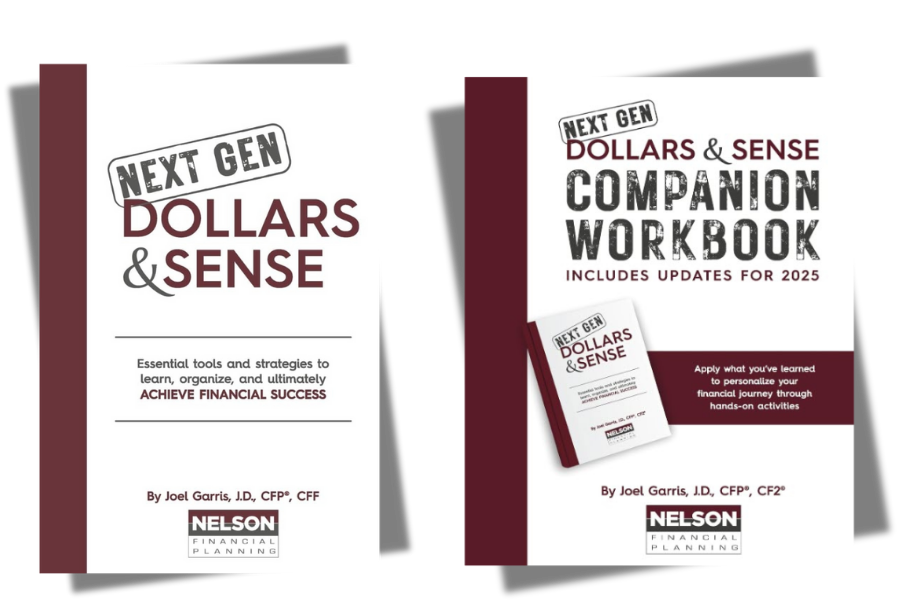
Unlock the secrets to financial success with Joel J. Garris’ insightful book, designed to equip you with the essential tools and strategies needed to take control of your financial future. Whether you’re just beginning your financial journey or approaching retirement, this book offers a comprehensive guide to help you build a solid financial plan that aligns with your goals.
REQUEST YOUR FREE COPY OF OUR BOOK & WORKBOOK!
- 8 Wonders1
- Bank Investments3
- Beating Inflation1
- Budget for Retirement5
- Corporate Transparency Act2
- Digital Currency1
- Energy Tax Credits1
- ESG Funds1
- Featured Blog0
- Financial Planning13
- Financial Success4
- Importance of Dividends2
- Investment Portfolio5
- Investment Strategy3
- IRA1
- Joel Garris1
- Nelson Financial Planning7
- Net Worth Improvement1
- Next Gen Dollars and Sense1
- One Big Beautiful Bill Act (OBBBA)1
- Pension Plans1
- Podcast Transcripts12
- Retirement “Secure” Act2
- Retirement Income Planning3
- Retirement Planning7
- Retirement Regrets5
- Social Security4
- Tax Liability3
- Tax Planning7
- Year-End Tax Changes3