




The Essential Guide for Protecting Your Wealth, Relationships, and Legacy
Money is often labeled as one of the most taboo topics in families – right alongside politics and religion. Money may not buy happiness, but avoiding conversations about it can certainly create stress, confusion, and long-term financial damage. Almost every family – traditional, blended, large, small, close, or distant – faces financial crossroads where silence becomes risky and clarity becomes essential.

“The power of a converstaion is that it helps to reveal things you might not have thought about.” – Joel
At Nelson Financial Planning, we believe that open, honest, and proactive financial discussions are essential to building a secure future – for yourself and for those you love. This expanded guide blends real insights from our proven financial planning strategies (discussed in our podcast Dollars & Sense) and research-backed financial guidance to help families (especially those over 50 and preparing for retirement) navigate the conversations that matter most.
6 Must-Have Money Conversations to Have with Your Family
- Talking to your kids about money: breaking the taboo early
- Talking money with aging parents: caregiving and preventing crisis through clarity
- The survivors’ penalty: the hidden financial shock after a spouse dies
- Retirement mental health: it’s not just about the money
- Relationship red flags: money behaviors that can break a partnership
- Estate planning in blended families: avoiding the Netflix drama
#1. Talking Money with Your Kids: The Conversation that Shapes Generational Wealth
It’s no secret that most children aren’t learning financial literacy in school. That leaves parents with a crucial role: teaching the next generation to manage money wisely. But talking to your children about money can feel awkward, emotionally loaded, or unnecessary – particularly if your kids are older. Yet silence almost always leads to financial missteps later. So how do you start this conversation?
“Talking about money with your kids is often a tricky subject . . . but if you engage in that conversation, you help put them on a path toward responsibility.” – Joel
The need for this conversation becomes even more urgent when you consider 96% of inheritances disappear within 18 months. This statistic alone underscores the importance of preparing your children – not just financially but emotionally and intellectually – for the responsibilities that come with money.
Families often assume their children understand the basics of stewardship. Many don’t.
Why This Conversation Matters More Today
Modern financial life is more complex than it was 30 years ago. Families now manage:
- digital bank and investment accounts
- password vaults
- retirement holdings
- cryptocurrency assets
- estate documents spread across multiple platforms
- automatic bill pays and subscription services
“There are a lot of reasons why you want to engage in this conversation about money with your kids. First, it is not an integral part of what they are learning these days – certainly not in school.” – Joel
Kids can not manage what they don’t know exists. Poor financial decisions – like excessive credit card debt or risky business ventures – can derail their future. Without guidance, they may misuse inherited wealth or fail to plan their own retirement.
A FINRA study found that only 34% of young adults can correctly answer basic financial literacy questions. That’s not a character flaw – that’s a curriculum gap.
Real-World Scenarios Parents Frequently Encounter
Joel offered an example from the podcast about an inheritance gone wrong: An individual received a sizable inheritance, quit a job with a pension, and purchased a franchise with zero business experience. The entire inheritance vanished. The business failed. The stable job was gone. This isn’t rare. It’s common.
The 5 “Conversations” to Have With Your Kids
#1. The wealth transfer conversation will not be a single discussion
Joel emphasizes that this must be an ongoing series of conversations, not a one-time event. He stresses that most families (75%) have never had even an initial conversation.
KEY POINT.
This isn’t a once-and-done talk. Families need repeated, evolving discussions – especially as values, relationships, and circumstances change.
#2. A conversation about your values and the purpose of your wealth
Passing wealth is not just about numbers – it’s also about sharing the values behind your decisions, especially since adult children have lived outside the home for decades and may have drifted from childhood values.
Examples include:
- what you want wealth to represent
- how you hope it will be used
- whether generosity, entrepreneurship, debt-freedom, or charitable giving are priorities
This is a chance to “reset” or reinforce family values as adults.
#3. A conversation about the details of your estate plans
This is a big one. Joel explains you don’t have to share exact numbers, but you must provide clarity on:
- how assets will be divided (equally or not)
- loans you’ve given to children that will affect inheritance
- charitable bequests
- special provisions you’ve designed
KEY POINT. Children need clarity so they aren’t surprised, confused, or in conflict after your passing.
#4. A conversation about who the decision-makers are
This includes: trustees, executors / personal representatives, financial advisors, estate attorneys, CPAs, where accounts are located, and how to contact each professional.
Joel describes one approach a client used where they kept a Word document with every account, number, advisor, address, and phone number – giving heirs a clear roadmap rather than an “easter egg hunt.” This prevents massive stress during estate settlement.
#5. A conversation involving the next generation on how the money should be used
Families should talk about:
- how wealth should be used
- whether distributions will be lump sums or income over time
- philanthropic goals
- guardrails or trust structures
- preferences for long-term stewardship
Joel explains that if the structure involves income streams, charitable giving plans, or staggered payouts, the next generation should understand the reasoning.
KEY POINT. Including children in these discussions strengthens alignment and reduces future conflict.
BONUS RECOMMENDATION!
Seek educational resources: use tools such as Nelson Financial Planning’s free Next Gen Dollars and Sense guidebook and workbook to make financial topics approachable.
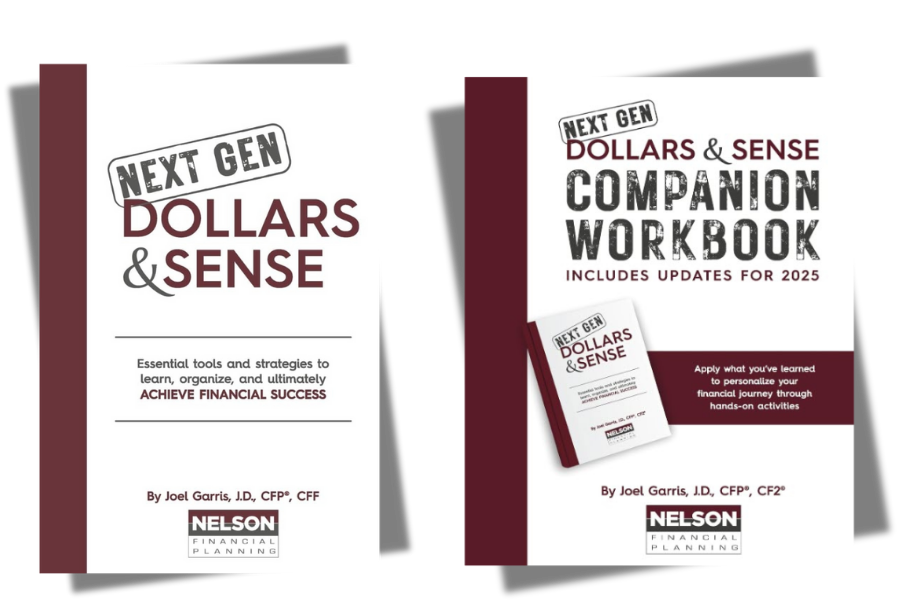
These conversations aren’t just about dollars – they’re about values, legacy, and empowerment.
Listen to the podcast video below to get more detailed recommendations.
#2. Talking Money with Aging Parents: Caregiving & Preventing Crisis Through Clarity
Discussing finances with aging parents can feel uncomfortable but these conversations are essential precisely because the absence of them causes far more stress later. Many adult children assume they’ll figure things out “when the time comes,” yet families often discover the hard way that waiting leads to confusion, conflict, and even financial loss. According to Pew Research, 23% of U.S. adults care for an aging loved one, and many of them navigate finances blindfolded.
As more Americans step into caregiving roles, financial transparency with aging parents becomes essential. Yet many face emotional and logistical challenges when managing a loved one’s finances.
“Most families have some kind of complexity to them, and it’s that complexity that really underscores the need to try and have these conversations.” – Joel
5 Conversations to Have with Aging Parents
Conversation #1: “How do you want things handled when the time comes?”
This includes understanding the overall plan – not the exact numbers – behind how parents want their money and property distributed.
Joel notes that property passes in 3 ways: by title, by beneficiary designation, or by will. Most beneficiaries don’t know this, which is why talking early matters. Parents should explain:
- whether assets will be split equally
- whether past loans or gifts will affect distributions
- whether any charities or special provisions are included
Families avoid conflict when expectations are clear before grief clouds judgment.
Don’t forget to ask about financial systems as well such as: automatic bill payments, insurance premiums, retirement distributions, and required minimum distributions.
Elder financial exploitation is rising sharply. The FBI estimates senior victims lost more than $3 billion in 2023. Freezing credit and consolidating accounts dramatically reduces vulnerability.
Conversation #2: “Who are the decision-makers we need to know?”
This discussion ensures adult children know:
- who the financial advisor is
- who the estate attorney is
- who the CPA is
- who will serve as executor, trustee, or power of attorney
This one conversation often becomes the biggest stress-reducer for heirs.
Conversation #3: “Where are your essential documents?”
Aging parents should confirm the location of:
- will
- power of attorney
- healthcare surrogate / medical POA
- living will
- trust documents (if applicable)
Joel emphasizes that unfound documents might as well not exist, and missing paperwork can halt medical decisions or delay estate distribution. This conversation prevents heartbreaking moments when families must guess at medical or financial choices.
And ensure the following documents exist and are up to date: durable power of attorney, healthcare directive, HIPAA authorization, living will, and updated beneficiary designations.
Conversation #4: “Do we need to update titles or beneficiaries?”
It’s important to know that:
- beneficiary designations pass automatically
- joint ownership passes automatically
- trust only work when properly funded
Adult children don’t need legal expertise – they only need to ask whether:
- beneficiaries are current
- accounts are titled correctly
- the estate plan reflects today’s reality
This keeps parents’ wishes from being unintentionally derailed by outdated paperwork.
Conversation #5: “What are your priorities for the money you leave behind?”
This conversation addresses:
- whether they want structured distributions
- whether they prefre income over lump sums
- charitable intentions
- concerns about how certain heirs manage money
Joel often says you use a trust when you don’t trust someone to manage money well. Aging parents should feel comfortable expressing their concerns so the next generation understands the reasoning – not just the result.
Why These Conversations Matter So Deeply
When a parent passes away, adult children must navigate their grief while simultaneously handling legal, financial, and administrative responsibilities. Without clarity, this period becomes exponentially harder.
“No matter how much plan, you’ll never fully appreciate the emotional toll that someone’s passing has on their loved ones. It becomes far more emotional if things are not set up the way they need to be.” – Joel
Families who prepare avoid frantic searches through file cabinets, unplanned probate delays, and surprise beneficiary outcomes that contradict their parents’ wishes.
These conversations help transform uncertainty into clarity and they help families:
- avoid unnecessary probate delays
- honor parents’ wishes precisely
- reduce emotional and financial strain
- prevent arguments among siblings
- protect aging parents from confusion or exploitation
Thoughtful planning ensures assets “pass efficiently and effectively,” but only if everyone understands the plan. These steps help prevent confusion and protect your loved one’s financial well-being.
#3. The Survivor’s Penalty: The Hidden Financial Shock After a Spouse Dies
Losing a spoues is devastating enough. What many families don’t anticipate is the financial aftershock known as the survivor’s penalty – the dual burden of lost income and increased taxes that often follows.
“The income impact of survivor’s penalty when a partner passes has to be dealt with ahead of time. The tax impact of the survivor’s penalty really takes on a different format. It requires some multi-year tax projections to really get an accurate picture.” – Joel
Understanding the Two-Part Survivor’s Penalty
Immediate Income Loss
- one social security check disappears
- pension benefits may be reduced by 50% or more
- joint income streams cease
Delayed Tax Increase
Many surviving spouses feel financially stable the first year because they still file as “married filing jointly.” But the following year everything changes.
Why?
- standard deduction is cut in half
- tax brackets shrink
- medicare IRMAA surcharges may spike
Medicare premium brackets for singles tighten significantly.
How to Prepare: Strategies to Mitigate the Penalty
Income Planning: run “what if” scenarios to identify replacement income sources – sometimes accelerating income in the year of death (while still filing jointly) reduces overall lifetime tax burden
Multi-Year Tax Projections: use real tax return software – not just spreadsheets – to forecast future liabilities
Life Insurance: consider policies to offset lost pension income – this ensures the surviving spouse avoids financial distress during an already painful period
Planning ahead is crucial. And these conversations should happen before a crisis – not after.
#4. Retirement Mental Health: It’s Not Just About the Money
Retirement is often seen as a financial milestone, but its emotional impact can be just as profound. Retirement changes more than your income. It alters identity, purpose, energy, and relationships.
“Loss of identity was cited by the majority of new retirees as creating the biggest struggle in retirement – 53% cited loss of identity, while only 10% cited financial difficulties.” – Joel
Nelson Financial Planning stresses that while financial readiness matters, emotional readiness determines your real quality of life. A recent survey by the Retirement Coaches Association found that loss of identity, routine, and community ranked higher than financial difficulties among retirees.
“Do you know how to enjoy yourself in retirement?“ – Chet Cowart
People often underestimate how deeply work structures their life.
Common Emotional Challenges
- feeling disconnected or purposeless
- watching too much TV or lacking social engagement
- depression or cognitive decline linked to lack of structure
The 8 Conversations You Must Have Before Retiring
- Your Spouse – do you want the same lifestyle? have the same travel plans? Daily routines? Volunteer work?
- Your Adult Children – will you help with childcare? Do they expect support? Will you live nearby?
- Your Doctor – disucss physical capability, mental health, activity levels, and preventative care.
- Your HR Department – clarify pension options, retiree benefits, health insurance subsidies, and rollover rules.
- Your Siblings – they may have invaluable perspective or experience retiring ahead of you.
- Your Financial Planner – this conversation should begin 5-7 yeras before retirement.
- Your Professional Peers – industry-specific trends may influence the timing of your departure.
- Yourself – ask: how will I structure my time? What will give me purpose? How will I stay connected?
Retirement without purpose leaves people unfulfilled, fatigued, and isolated.
How to Prepare
- Create a “free time” plan – know what you’ll do with your days beyond managing finances
- Stay socially engaged – maintain friendships, community involvement, and discuss new hobbies and activities to fill your day
- See support – talk to your financial planner who understands both the numbers and the emotions behind retirement
At Nelson Financial Planning we always ask: what are you going to do with the rest of your life? That question matters just as much as “where will your income come from.”
#5. Relationship Financial Red Flags: What to Watch For
Money shapes relationships more than many couples realize. Money can make or break a relationship. Financial psychologists note that differing attitudes about money are among the top predictors of long-term conflict.
“According to a survey from Intuit, 87% of adults say they are interested in dating someone who is responsible with their money.” – Zach Keister
Top 5 Financial Red Flags
- Secretive Spending: hidden purchases or separate accounts
- Borrowing from friends / family: frequent reliance on others for financial support
- Gambling / addictive behaviors: risky habits that drain resources
- Lack of future planning: no savings goals or retirement strategy
- Excessive debt: high credit card balances or poor repayment habits
“It’s OK to have differences, but you need to have the capability to work through those differences and agree on some of the things that you can agree on – such as paying household bills on time or setting aside a certain amount of money every month to save for the future.” – Joel
How to Strengthen Financial Communication
- Schedule monthly money meetings – treat it like a relationship checkup
- Share visibility – transparency builds trust
- Use joint tools – apps like YNAB, Monarch Money, or Empower can help couples automate alignment
- Work with a financial planner – a neutral third party diffuses tension and clarifies long-term strategies
These conversations may feel vulnerable, but they’re essential for building trust and shared vision.
#6. Estate Planning in Blended Families: Avoiding the Netflex Drama
Formed after divorce or remarriage, blended families bring love, but they introduce complex estate dynamics and sometimes financial chaos. Without careful planning, the wrong people may inherit – often untentionally. From stepchildren to statutory shares, the financial dynamics can quickly spiral if not addressed proactively.
“Estate planning in a blended family is complicated. That would be an understatement.” – Rob Field
Why It Matters
- Over 20% of married couples are part of blended families
- Without clear planning, biological children may be unintentionally disinherited
- Surviving spouses may be legally entitled to a statutory share – even if not named as a beneficiary
Where Things Commonly Go Wrong
Beneficiary designations override wills
Many families don’t realize this. “Once you change a beneficiary or registration, that’s going to go to whoever you’ve named – regardless of what your will says,” states Rob.
Trusts remain unfunded
A trust without titled assets accomplishes nothing. Joel warns, “If you don’t fund the trust, it’s just words on paper.”
Second marriages shift financial dynamics
Biological children sometimes get unintentionally disinherited.
Florida’s statutory share surprises families
In Florida, a surviving spouse can claim 30% of the estate regardless of what the will says.
3 Essential Tools for Blended Family Planning
Trusts
Each spouse should have their own trust, with assets titled accordingly. But remember: “you must actually fund the trust. If you don’t, then it’s just words on paper,” says Joel.
Specific Beneficiary Designations
Use tools like Transfer on Death (TOD) or Payable on Death (POD) to allocate assets directly to the children or other heirs. “The will is not going to be able to change what you’ve put in place with TOD agreements,” says Rob.
Prenuptial or Postnuptial Agreements
These legal contracts clarify asset distribution and expectations. “If you’re doing a pre or postnuptial agreement, both of you need to be represented by different legal counsel,” says Joel.
Additional Considerations
Choose the Right Trustee or Executor
This person must understand your intentions and act impartially. “You probably don’t want to pick one kid out of your family to be the trustee… it creates friction.” – Rob
Understand the Statutory Share
In Florida, a surviving spouse can claim 30% of the estate, even if not named. “It doesn’t matter whether you’ve been married a week or 20 years—the surviving spouse has legal rights.” — Joel Garris
Review Your Plan Regularly
Life changes – so should your estate plan. “It’s a work in motion… the number of people who say ‘I haven’t talked to my lawyer in 10 years’—that’s just not the way to keep up with it.” – Rob Field
Final Thoughts: Why These Conversations Matter
Talking about money feels vulnerable. It challenges comfort zones, confronts mortality, and sometimes forces difficult truths. They help prevent confusion, reduce stress, and empower everyone involved to make informed decisions. Joel captured the heart of the matter perfectly: “Financial conversations are acts of love and responsibility.“
These conversations protect your family from confusion, conflict, and unintended consequences. They clarify expectations, preserve wealth, and strengthen relationships.
It’s not just financial planning – it’s legacy building.
At Nelson Financial Planning, we’re here to help you navigate these tough topics with clarity and compassion. From our free guidebooks to personalized consultations, we offer tools and support to make these conversations easier – and more impactful. If you’re ready to start one of these conversations, Nelson Financial Planning is here to help. Give us a call to schedule a free consultation.
ABOUT THE AUTHOR

Joel J. Garris, JD, CFP®, is the President and CEO of Nelson Financial Planning and the voice behind the Dollars & Sense podcast. A seasoned financial advisor with over 20 years of experience, Joel helps everyday investors make sense of complex markets with clarity and confidence. When he’s not simplifying retirement strategies or decoding economic trends, he’s probably on air delivering straight-talk financial advice – no fluff, just facts.
- 8 Wonders1
- Bank Investments3
- Beating Inflation1
- Budget for Retirement5
- Corporate Transparency Act2
- Digital Currency1
- Energy Tax Credits1
- ESG Funds1
- Featured Blog0
- Financial Planning13
- Financial Success4
- Importance of Dividends2
- Investment Portfolio5
- Investment Strategy3
- IRA1
- Joel Garris1
- Nelson Financial Planning7
- Net Worth Improvement1
- Next Gen Dollars and Sense1
- One Big Beautiful Bill Act (OBBBA)1
- Pension Plans1
- Podcast Transcripts11
- Retirement “Secure” Act2
- Retirement Income Planning3
- Retirement Planning7
- Retirement Regrets5
- Social Security4
- Tax Liability3
- Tax Planning7
- Year-End Tax Changes3