



updated December 2025
Navigating the Investment Landscape: A Comprehensive Guide
Do you know what kind of investor you are? How do you plan to retire with enough money to live the lifestyle you want?
Embarking on the journey of building an investment portfolio can feel like setting sail into uncharted waters. With a myriad of options and strategies available, it’s essential to chart a course that aligns with your financial aspirations and risk tolerance.
As discussed on the Dollars & Sense podcast, most investors jump straight to picking investments before answering a more important question: what kind of investor are you? According to Rob Field, that single question influences everything that follows – from how much risk you take to how confidently you stick with your plan when markets get volatile.
By the end of this conversation,” Field explains, “you should be better prepared to answer who you are, where you’re going, and what you’re doing with your money.” Those three questions form the foundation of the four-part portfolio framework outlined below, helping investors move from guesswork to intentional decision-making.
This guide explores the four key components of creating a robust investment portfolio, providing valuable insights to help you navigate the complexities of the financial world. It’s a full-circle conversation that will take you from your early days of investing to your later years in retirement.
Before choosing investments, funding strategies, or income plans, it’s critical to start with clarity around your goals and expectations.
The 4 Fundamental Components of Crafting a Robust Investment Portfolio
- Establishing your investment objective
- Knowing what you should invest in
- Deciding how to fund your investments
- Generating income from your investments
1. Establishing Your Investment Objective
Before diving into the vast ocean of investment opportunities, it’s imperative to anchor yourself with a clear investment objective. This foundational step involves introspection and planning, ensuring that your financial goals are both realistic and attainable.
As discussed on the Dollars & Sense podcast, your investment objective is shaped by three core factors that apply to nearly every investor: risk tolerance, time horizon, and performance expectations. Together, these elements help determine how your portfolio should be structured and how it should evolve.
This is where you set your goals and start your plan.
Risk Tolerance: Understanding How You React to Market Movement
Understanding your comfort level with market fluctuations is crucial. Are you someone who can weather the storms of market volatility without losing sleep, or do you prefer a steadier, more predictable growth trajectory? Assessing your risk tolerance helps in selecting investments that won’t keep you up at night.
Risk tolerance is often misunderstood as simply how much risk you want to take. In reality, it’s about how much volatility you can tolerate emotionally and financially without abandoning your plan.
“Risk tolerance is really comparing volatility versus stability,” explains Rob Field. “The real question isn’t whether markets will go up or down – they will. It’s whether you’ll stick to your investment plan when things get uncomfortable.”
If you’re unsure of your risk tolerance, search for online questionnaires to help you assess your stance. A popular option is the global portfolio allocation scoring system (PASS). This provides a series of statements that you respond to with “strongly agree,” “strongly disagree,” or something in between. Your score reveals your risk tolerance, giving you a good place to start when establishing your investment objective.
Different investments fluctuate for different reasons, and sometimes for reasons investors don’t fully understand. While higher risk can bring higher potential returns, it also requires discipline. Being honest about how you react during market downturns is critical to building a portfolio you can stay committed to long term.
Kristin Castello adds that market conditions often reveal more than questionnaires alone. “If recent market volatility is causing stress or anxiety beyond a reasonable level, that’s a sign your investments may not be aligned with your true risk tolerance.”
Time Horizon: Matching Investments to When You’ll Need the Money
Time horizon refers to how long your money will remain invested before you need to use it. This plays a major role in determining whether your investment strategy should focus on short-term stability or long-term growth.
Consider the timeframe within which you aim to achieve your financial goals. Are you investing for a short-term objective, like purchasing a home in the next few years, or are you focused on long-term goals, such as retirement decades down the line? Your time horizon will significantly influence your investment choices.
Short-term goals, such as saving for a home purchase within the next year or two, generally require safer, more liquid options. Even though savings accounts may offer modest returns, they reduce the risk of needing funds during a market downturn.
A longer time horizon, such as saving for retirement starting in your 20s or 30s, allows you to take on more risk.
Longer time horizons, particularly for retirement, allow investors to take on more risk in exchange for potential growth. “When it comes to retirement planning, we really think of it as a journey, not a sprint,” Kalley explains. “Your risk tolerance and time horizon shouldn’t stay stagnant—they should be reassessed every few years as your situation changes.”
Reassess your time horizon every few years as you approach retirement to ensure it still aligns with your investment objective.
Performance Expectations: Balancing Growth, Income, and Reality
Performance expectations tie risk tolerance and time horizon together. Investors often want strong returns while also expecting stability and predictable income – but those goals don’t always align.
Set realistic expectations regarding the returns on your investments. While everyone hopes for substantial gains, it’s essential to understand the historical performance and potential of your chosen investment vehicles.
“There’s always a trade-off between risk and reward,” Castello notes. “If you expect meaningful growth, you have to accept some level of risk. And even maintaining purchasing power requires risk just to keep up with inflation.”
Having reasonable performance expectations means you understand the likely yield, rate of return, and capital gains and losses of your investments. If you’re sitting on cash and expect your portfolio to generate a certain income or grow to a certain level over time, you’ll end up disappointed. You have to accept some risk to get the performance you want.
Rob emphasizes that clarity upfront leads to better outcomes over time. “Everyone wants strong returns, but markets test your expectations,” he says. “The more honest you are about your goals and comfort level from the beginning, the better positioned you’ll be to stay on track.”
On the other hand, if you’re in a very aggressive portfolio and expect a steady income, you’ll end up disappointed. You must be willing to accept major swings in your balances and know that you might not always get the timing right when making withdrawals.
When your investment objective is clearly defined, it becomes easier to trust both your strategy and the process. History has shown that markets perform well over the long run, but only for investors who remain committed through periods of uncertainty.
2. Knowing What You Should Invest In
Once your investment objective is clearly defined, the next step is determining what you should invest in. While there are countless investment options available, the key takeaway from the Dollars & Sense podcast is that there is no one-size-fits-all solution.
“There’s no cookie-cutter approach when it comes to investing,” says Rob Field. “You can answer a few questions online and get a pre-generated allocation, but those models rarely take your personal circumstances into account.”
Online asset allocation tools can be helpful as a starting point, but they shouldn’t replace thoughtful planning. Every investor’s situation is unique, and investment choices should reflect individual goals, timelines, and comfort levels – not just generic assumptions.
One size doesn’t fit all, so discuss your various investment options with a trusted financial advisor.
Here’s a look at the three basic types of investments.
Stocks: Ownership and Growth Potential
Stocks, also known as equities, represent ownership in a company. When you purchase a stock, you participate in the company’s success through price appreciation, dividends, or both.
Representing ownership or equity interest in a company, stocks offer the potential for growth through dividend payments, stock price growth, or both. Stocks are often categorized into growth, value, or blend styles.
- Growth stocks – companies expected to grow at an above-average rate compared to their industry peers.
- Value stocks – companies that appear undervalued based on fundamental analysis.
- Blended stocks – a combination of both growth and value characteristics.
Kristin Castello notes that understanding these distinctions helps investors align their portfolios with their objectives rather than chasing trends.’
Fixed Income: Stability and Income Generation
Fixed-income investments are generally designed to provide stability and predictable income with less volatility than stocks. These include savings accounts, certificates of deposit (CDs), money market accounts, and bonds.
Government bonds are often viewed as lower-risk options because they are backed by the U.S. government, while corporate bonds offer higher yields in exchange for additional risk. However, bond prices can fluctuate as interest rates change, which is an important consideration when incorporating them into a portfolio.
“Fixed income plays a role in balancing risk,” Field explains, “but it’s important to understand how interest rates can impact bond values over time.”
Mutual Funds: Diversification Made Simpler
Choosing investments isn’t about finding the “best” option—it’s about finding the right option for you. Field compares the process to buying a car:
“You don’t walk into a dealership and say, ‘Just sell me whatever.’ You talk about features, budget, size, and how you’ll use it. Investing should work the same way.”
These pooled investment vehicles allow investors to own a diversified portfolio of stocks, bonds, or other assets. Managed by professionals, they offer an accessible way to achieve broad market exposure. Because they are more diversified, they are considered less risky than buying individual stocks or bonds.
When investors clearly communicate their priorities, a portfolio can be constructed that supports their goals while helping them stay confident during market ups and downs.
3. Deciding How to Fund Your Investment Portfolio
Accumulating the capital to invest is a pivotal aspect of portfolio building. This involves disciplined saving and strategic allocation of resources.
After defining your investment objectives and selecting appropriate investments, the next step is deciding how you will fund your portfolio. This is where planning turns into action—and where consistency matters far more than perfection.
As discussed on the Dollars & Sense podcast, funding an investment portfolio follows four basic steps:
- Set clear goals
- Create a realistic budget
- Choose the right type of account
- Decide how much and how often you will invest
Each step builds on the previous one, creating a system that supports long-term success rather than short-term guesswork.
Once you know your objective and what you want to invest in, it’s time to start saving. Here are the four steps of funding an investment account.
Pay Yourself First: Making Saving Non-Negotiable
One of the most effective strategies for funding an investment portfolio is also one of the simplest: pay yourself first.
“If investing is the last thing on your budget, it’s usually the first thing that gets cut,” says Rob Field. “Setting aside money for your future should be a priority – not an afterthought.”
By building investment contributions into your budget from the start, saving becomes automatic rather than dependent on what’s left at the end of the month.
Set Clear Savings Goals:
Most people want the same standard of living once they retire. Determine how much you need to save to reach your investment objectives. Break down these goals into manageable, periodic savings targets.
To make sure you have enough money, first consider your current gross salary. Then, subtract the following:
- Social Security taxes
- Medicare taxes
- 401K contributions
- Deferred compensation plan contributions
- Social Security benefits
- Pensions
- Other sources of income besides your gross salary
You now know how much income you need your portfolio to generate to maintain your standard of living after retirement. Now it’s just a quick calculation of how much you have saved, how much you’re saving annually, and how many years you have until retirement.
Determining How Much to Save
A common rule of thumb discussed on the podcast is saving 10% to 13% of gross income for retirement. However, that number can vary based on when you start saving and how close you are to retirement. If you’re close to retirement age and your portfolio isn’t in good shape, consider changing your goals. Maybe push out retirement a few years or lower your anticipated retirement income expectations.
Kristin Castello explains that more personalized analysis often reveals whether someone is on track – or needs to make adjustments. “If savings fall short, it may mean increasing contributions, delaying retirement, or adjusting income expectations,” she notes.
Cash-flow analysis tools, whether online or with a financial professional, can help determine how current savings, future contributions, and time horizon work together.
Choose the Right Accounts:
Funding your investments also means choosing where your money goes. Retirement accounts such as 401(k)s, IRAs, Roth IRAs, and SEP IRAs offer tax advantages that can significantly impact long-term growth.
There are two general categories – retirement accounts and regular investment accounts. The best ones for you depend on your employment situation, desired contribution amounts, and tax implications. Your options include:
- Employer-sponsored retirement savings, including 401K, 403B, and 457 plans
- Individual Retirement Accounts (IRAs)
- Brokerage accounts
- Certificates of Deposit (CDs)
- Other traditional investment accounts
Employer-sponsored plans like 401(k)s make investing easier by automatically deducting contributions from each paycheck – often with the added benefit of employer matching contributions. Individual retirement accounts provide additional flexibility and, in many cases, a broader range of investment options.
Once contribution limits are reached, traditional investment accounts can help investors continue building wealth while adding diversification across tax treatments.
Determine How and When to Invest – Time in the Market Beats Timing in the Market
One of the most consistent messages from the podcast is that time in the market matters far more than trying to time it. In other words, saving consistently over a longer period provides a more favorable outcome than trying to catch up later in life.
“The more time your money has to grow, the better your long-term results. Even investors who put money in on the worst possible day still came out ahead over time—as long as they stayed invested.”
Rather than waiting for the “perfect” moment, systematic investing allows growth to compound regardless of short-term market fluctuations.
Automate Your Savings:
Setting up automatic transfers to your investment accounts can help maintain consistency and discipline in your saving habits.
Dollar-Cost Averaging: A Simple, Effective Strategy
Dollar-cost averaging is a disciplined approach that involves investing a fixed amount at regular intervals—often monthly.
Field describes three outcomes, all of which can work in an investor’s favor:
- If markets rise, you benefit from being invested
- If markets move sideways, you steadily accumulate assets
- If markets decline, you buy at lower prices, reducing your average cost
“Over time, this strategy helps remove emotion from investing,” Field explains, “and allows long-term trends to work in your favor.”
Funding your investment portfolio doesn’t require constant activity or complex strategies. In many cases, slow and steady progress – combined with consistency and discipline—produces the most reliable results.
4. How to Generate Income from Your Investment Portfolio
The most exciting part of saving for retirement is the chance to make your investments work for you. As your portfolio matures, you may seek to derive income from your investments, especially during retirement.
The final piece of creating an effective investment portfolio is understanding how and when to take income from the assets you’ve spent years building. This stage requires just as much planning as accumulation – if not more – because decisions made early in retirement can significantly impact how long your money lasts.
Before you retire, assess all your retirement assets and figure out a comfortable withdrawal rate, preferably at around 4 %, to ensure your savings last. Remember, part-time work can help supplement your retirement income if you haven’t saved enough.
As discussed on the Dollars & Sense podcast, generating retirement income typically follows four steps:
- Analyze your savings
- Revisit your retirement goals
- Develop a retirement budget
- Determine a sustainable income strategy
Together, these steps help ensure your portfolio supports your lifestyle throughout retirement, not just in the early years.
Defining What Retirement Looks Like for You
One of the most common questions advisors hear is, “Can I retire yet?” The answer is rarely a simple yes or no.
“Anyone can retire at any time,” says Rob Field. “The real question is what retirement looks like to you and whether your savings can support that vision.”
Clarifying how you want to spend your time, where you plan to live, and what kind of income you’ll need helps determine whether your portfolio is prepared to support those goals.
Social Security and Other Income Sources
For most retirees, Social Security plays an important role in retirement income—but it typically doesn’t replace all pre-retirement earnings. Understanding how and when to claim benefits can make a meaningful difference over time.
Field notes that Social Security should be viewed as part of a broader income plan, not a standalone solution.
In addition to Social Security, income may come from:
- Your investment portfolio
- Employer pensions (if applicable)
- Part-time work or consulting
Each income source should be coordinated to provide stability while minimizing unnecessary tax exposure.
Sustainable Withdrawals: Protecting Long-Term Security
Once income withdrawals begin, discipline becomes critical. Kristin Castello emphasizes that retirement accounts should not be treated casually.
“Your portfolio isn’t a cookie jar,” she explains. “Taking out large chunks early on can permanently damage how long your money lasts.”
While there is no universal rule, many retirement strategies aim to keep withdrawals around 4% annually to balance income needs with portfolio longevity. This approach helps preserve principal while allowing assets to continue growing over time.
Taxes and the Importance of Income Planning
Unlike during working years, retirees no longer have employers automatically withholding taxes. This makes tax planning a critical part of retirement income strategy.
The podcast highlights the importance of using different tax “buckets”:
- Pre-tax accounts (traditional IRAs and 401(k)s)
- Tax-free accounts (Roth IRAs and Roth 401(k)s)
- Taxable investment accounts
“Using all three buckets strategically can help manage your tax bracket and improve after-tax income,” Castello explains.
Coordinating withdrawals across these accounts can reduce taxes, preserve flexibility, and extend the life of your portfolio.
Bringing the Four Parts Together
Building a successful investment portfolio isn’t about chasing returns or reacting to headlines. As reinforced throughout the Dollars & Sense podcast, it’s about creating a plan that evolves with your life—starting with clear objectives, continuing through thoughtful investment selection and funding, and ending with a sustainable income strategy.
Follow these four steps to generate the ideal income from your portfolio:
- Analyze your savings. How much have you saved?
- Review your goals. How do you want to live in retirement?
- Develop a budget. How will you utilize your savings?
- Determine your desired income. How much income do you want, and how much can you get?
When these four parts work together, investors are better positioned to navigate uncertainty and enjoy the retirement they’ve worked so hard to achieve.
Frequently Asked Questions
What are the four basic parts of creating an investment portfolio?
The four foundational components of a well-constructed investment portfolio are: (1) Stocks (equities), which provide long-term growth potential through ownership in companies; (2) Bonds (fixed income), which provide income and stability, generally moving counter to stocks in downturns; (3) Cash and cash equivalents, which provide liquidity and protection against short-term needs; and (4) Alternative assets, which may include real estate, commodities, or other non-correlated investments that diversify beyond traditional stocks and bonds. The right allocation among these four components depends on your time horizon, income needs, and risk tolerance — all of which shift significantly as you approach and enter retirement.
What factors should I consider when selecting investments for retirement?
The four key factors when evaluating any investment are: (1) Risk — how much can this investment decline and how does that interact with your retirement timeline; (2) Return — what is the realistic expected return after fees; (3) Liquidity — how quickly can you access this money without penalty; and (4) Time horizon — how long before you need to draw on this investment. For retirees, a fifth factor becomes especially important: tax efficiency — which accounts hold which types of investments to minimize the overall tax burden across the portfolio.
How should a retirement portfolio be allocated differently from an accumulation portfolio?
During your working years, the primary objective is growth — maximizing long-term returns because you have decades to recover from market downturns. In retirement, the objective shifts to income and preservation: generating reliable income while protecting against sequence of return risk. This typically means a higher allocation to bonds and stable assets for near-term income needs, a moderate growth allocation for medium-term needs, and continued growth for long-term purchasing power. The goal is to structure the portfolio so that income needs are never dependent on selling equities at depressed prices.
What is diversification and why does it matter for retirement investors?
Diversification means spreading investments across different asset classes, sectors, geographies, and security types so that no single holding or market event can significantly damage the overall portfolio. For retirement investors, diversification protects against concentration risk. As of 2025-2026, major US index funds are heavily concentrated in a small number of mega-cap technology companies — meaning a portfolio that appears diversified because it tracks ‘the market’ may carry meaningful concentration risk. Nelson Financial Planning evaluates true portfolio diversification as part of every free retirement review.
How do I know if my investment portfolio is right for my retirement goals?
Key indicators that a portfolio review is warranted: you’re within 5 years of retirement and haven’t rebalanced; your portfolio is heavily concentrated in employer stock or a single sector; you don’t know exactly what you own or what you’re paying in fees; your investment strategy hasn’t been reviewed alongside your Social Security timing and tax plan. Nelson Financial Planning offers a free portfolio review — including cost and concentration analysis — as part of every initial retirement strategy conversation. No account minimums.
FINAL THOUGHTS.
Creating an investment portfolio isn’t about finding the perfect mix of funds or reacting to short-term market movements. As reinforced throughout the Dollars & Sense podcast, it’s about building a framework that supports your life—both now and in retirement.
Rob Field summarizes it simply: “If you know who you are as an investor, where you’re going, and what you’re trying to accomplish, every financial decision becomes clearer.”
When your investment objective, investment selection, funding strategy, and income plan work together, your portfolio becomes more than just a collection of accounts—it becomes a coordinated plan designed to adapt as your goals and circumstances change.
That’s why reviewing these four components regularly is just as important as setting them up in the first place. Markets change. Life changes. Your plan should evolve with you.
Remember, the investment landscape is ever-evolving; staying informed and adaptable is key to navigating its complexities successfully.
If you’re unsure whether your current portfolio reflects these four core components – or if you want help aligning your investments with your long-term goals – the team at Nelson Financial Planning can help you evaluate your strategy and make informed adjustments with confidence.
For expert financial guidance, contact Nelson Financial Planning today!
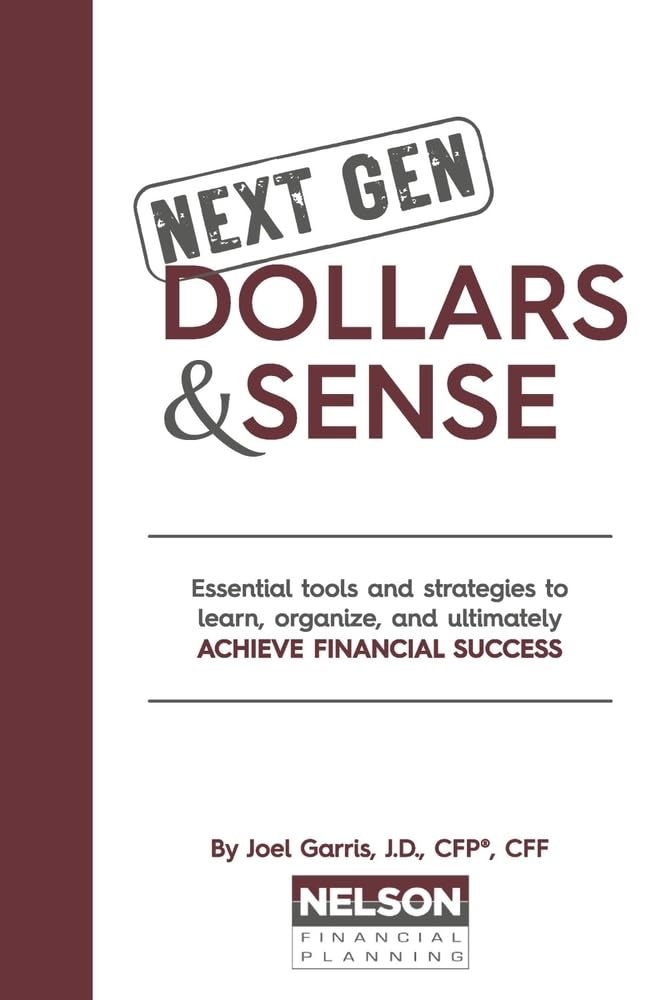
TAKE CONTROL OF YOUR FINANCES.
Unlock the secrets to financial success with Joel J. Garris’ insightful book, designed to equip you with the essential tools and strategies needed to take control of your financial future.
REQUEST YOUR FREE COPY OF OUR BOOK – NEXT GEN DOLLARS & SENSE
At Nelson Financial Planning, we can help you change your life with a successful financial plan that provides peace of mind for the future. We help clients of all ages and income levels maximize their retirement accounts using today’s best investment strategies. To learn more, please contact us online or call our Orlando FL financial planning office at 407-307-3061.
ABOUT JOEL GARRIS
Joel Garris · CFP® & Certified Financial Fiduciary™
Joel is a Certified Financial Planner and Certified Financial Fiduciary with more than 25 years of retirement planning experience. He is the founder and host of the Dollars & Sense podcast — one of the top 25 financial planning podcasts nationally — and the author of NextGen Dollars & Sense. Joel and the Nelson Financial Planning team have guided Central Florida families through every market cycle of the past four decades.

References:
- 8 Wonders1
- Bank Investments3
- Beating Inflation1
- Budget for Retirement5
- Corporate Transparency Act2
- Digital Currency1
- Energy Tax Credits1
- ESG Funds1
- Featured Blog0
- Financial Planning14
- Financial Success5
- Importance of Dividends1
- Investment Diversification1
- Investment Portfolio6
- Investment Strategy4
- IRA1
- Joel Garris1
- Nelson Financial Planning7
- Net Worth Improvement1
- Next Gen Dollars and Sense1
- One Big Beautiful Bill Act (OBBBA)1
- Pension Plans1
- Podcast Transcripts17
- Retirement “Secure” Act2
- Retirement Income Planning3
- Retirement Planning7
- Retirement Regrets5
- Social Security4
- Tax Liability3
- Tax Planning7
- Year-End Tax Changes3