




IRS Mistakes, Sports Betting Risks & Market Volatility: Invest Smarter in 2026

From IRS errors to gambling risks—how small decisions impact your financial future
Dollars & Sense Episode Summary
As tax season reaches its peak and the financial headlines continue to shift, this episode of Dollars & Sense brings together three critical conversations that impact nearly every investor: IRS mistakes, the rise of sports gambling, and the importance of disciplined investing during volatile markets.
“Most IRS headaches don’t come from fraud — they start with small mistakes that could have been avoided.”
With the April tax deadline just days away, Joel Garris and Rob Field focus on a topic that often gets overlooked — most IRS problems don’t come from fraud or major errors. Instead, they stem from small, seemingly harmless mistakes that trigger delays, penalties, and long, frustrating interactions with an understaffed and largely automated IRS system. From something as simple as changing the order of names on a joint return to failing to report non-taxable distributions, these details matter more than most people realize.
The conversation then shifts into a broader financial concern: the explosive growth of sports gambling. Driven by mobile apps and widespread accessibility, betting has become increasingly normalized — especially among younger generations. But the data tells a different story. The hosts break down the financial consequences tied to gambling, including reduced savings rates, increased debt, and long-term damage to retirement planning. The key distinction they emphasize is critical: betting is not investing. While investing builds ownership and long-term value, gambling operates on negative expected returns and short-term outcomes.
“Active betting is not investing — and it’s not going to be profitable for 99.9% of people.”
Finally, the episode ties these themes together through a discussion of recent market volatility. With Q1 impacted by geopolitical tensions, oil shocks, and ongoing economic uncertainty, investors are reminded why diversification and long-term discipline are essential. Rather than reacting emotionally to headlines, maintaining a balanced portfolio and regularly rebalancing positions helps investors navigate both downturns and recoveries effectively.
“Details matter — whether it’s your taxes, your investments, or your financial decisions.”
The overarching message is clear: details matter. Whether you’re filing taxes, managing investments, or making financial decisions, small actions can have significant consequences over time. This episode serves as both a warning and a guide — helping listeners avoid costly mistakes while reinforcing the foundational principles of smart financial planning.
10 Key Takeaways
- Small IRS mistakes can trigger delays, penalties, and long resolution times
- Filing an extension does not delay payment — interest and penalties may still apply
- Consistency in tax filings (like name order) is critical for IRS systems
- Non-taxable income (rollovers, HSA distributions) must still be reported
- Ignoring IRS letters can escalate minor issues into major problems
- Sports gambling has grown rapidly, but results in consistent financial losses for most people
- Betting and investing are fundamentally different — one builds wealth, the other erodes it
- Market volatility is normal — diversification helps reduce risk
- Emotional reactions to market swings can hurt long-term returns
- Rebalancing portfolios is essential to maintaining a proper investment strategy
Episode Chapters
- 00:00 – Easter Introduction & Tax Deadline Reminder
- 02:00 – IRS Extensions Explained: Filing vs Paying
- 03:00 – IRS Penalties & Why Delaying Can Cost You
- 05:00 – Common IRS Mistakes That Cause Problems
- 06:30 – Why Small Errors Turn Into Big IRS Issues
- 08:00 – Market Holiday Impact & Delayed Payments Explained
- 09:30 – Easter, Markets & Financial Timing Awareness
- 11:00 – Q1 Market Overview & Media Headlines vs Reality
- 13:00 – IRS Errors That Trigger Delays & Notices
- 15:00 – Reporting Mistakes: Income, Rollovers & Documentation
- 17:00 – Ignoring IRS Letters: What Happens Next
- 18:30 – Tax Software Issues & Missing Information Risks
- 20:00 – Rise of Sports Gambling & Financial Trends
- 21:30 – The Real Stats: Why Most Bettors Lose Money
- 23:00 – Financial Impact of Gambling on Savings & Debt
- 25:00 – Betting vs Investing: The Critical Difference
- 27:00 – Why Investing Works (And Gambling Doesn’t)
- 29:00 – Market Volatility, Oil Shock & Economic Signals
- 31:00 – Diversification & Long-Term Investment Strategy
- 33:00 – Rebalancing Portfolios & Avoiding Emotional Decisions
- 34:30 – Final Takeaways: Why Details Matter in Finance
Podcast Transcript
Podcast: Dollars & Sense
Episode Date: April 5, 2026
Speakers: Joel Garris, CERTIFIED FINANCIAL PLANNER® Professional, Certified Financial Fiduciary™ and Robert L. Field, CF2™, CFS, NSSA
00:00 – Opening, Tax Deadline & Extensions
00:00 Joel Garris, CF2™
Happy Easter. Here we are. Welcome to Dollars & Sense here on Easter morning, April 5th. Joining me on our Easter edition of Dollars & Sense, fellow Certified Financial Fiduciary™, Rob Field. Good morning, Rob. How are you?
Rob Field, CF2™
Morning, Joel. I’m doing well. Always glad to get a chance to join you on the show and share some information with our listeners.
Joel Garris, CF2™
We got a lot of information to share as we do each and every week on the program. Today being April 5th, that means we are 10 days out from a tax deadline. Rob, have you filed your taxes? Are you taking an extension or what are you doing?
Rob Field, CF2™
No, I filed my taxes, took care of it all, kind of stayed on top of that, know what my number is, got to give them a couple more bucks than I have withheld, but I’m planning ahead for that.
Joel Garris, CF2™
Yes, I will be on an extension for, I think, about the 20th or the 25th year in a row now. Warning for those that do take that route. You’ve got to take a shot at figuring out whether you owe or whether you’re getting a refund because the extension does not exempt you from the deadline to pay. It only exempts from the deadline to file.
Rob Field, CF2™
Right. And if you’re going to owe a large amount, it gives you a few more months to stop spending on dinner outside and put it in a little fund for the IRS.
Joel Garris, CF2™
Correct. But with that, though, it means that it comes with a penalty. So that, you got to be careful with that, because if you’re thinking the extension gets you time to make the payment without any cost, there is certainly a cost when you do that. So important to take a look at last year’s return, make sure you’re on track.
02:00 – IRS Extensions Explained: Filing vs Paying
01:59 Joel Garris
So what we’re going to talk about in the program is some of those, you know, sort of simple
IRS mistakes that people make and the trouble that they can get in if they make those simple mistakes.
Some of them are pretty straightforward that we’re going to talk about on the program.
02:16 Rob Field
Right.
I mean, we’re just, it’s that time of year.
We’re trying to be helpful. We get a lot of calls where people did something different, made something change, something didn’t make sense. And we’re just trying to prep them and help them be prepared for being a little more efficient.
02:31 Joel Garris
Yeah, because if you throw the IRS a little bit of a curveball, it can sometimes take a long time to help to try and unravel that in today’s world. And then of course, it also beyond Easter, it also is a final four weekend for college basketball. So we thought it would be interesting to talk a little sports as well on this week’s program, Rob.
03:00 – IRS Penalties & Why Delaying Can Cost You
02:58 Rob Field
Specifically betting on sports. It’s a huge industry that just growing dramatically year by year by year.
03:06 Joel Garris
Especially with all the mobile apps and those kinds of things that have really sprung up over the course of the past few years. And we’ll give you some practical tips on that as well.
Obviously, we want to wish everybody a happy Easter from a Christian perspective. It’s the celebration of Jesus’s resurrection from the dead, obviously a central event for the Christian faith. And it starts, I guess, Easter week. A lot of folks will kind of celebrate that.
Obviously, for us, we were in the office on Friday, but it was actually a market holiday.
03:42 Rob Field
Right. The market was closed, but I mean, we’re so deep into tax season and we’re still talking to our clients about what the markets are doing that, I mean, Friday was just a full day.
It was not a holiday by any means.
03:53 Joel Garris
Just a regular day. The only thing that folks have to be aware of is because it was a market holiday, right, then that does add an an extra day in the processing.
So if you were taking money out of your accounts or if you were expecting your regular income to drop, sort of around the 1st of the month, and then here we go with the weekend, you might be delayed a bit.
04:19 Rob Field
Right. We’re going to, you know, on Monday we’re going to get some calls and people are going to say, hey, it’s, you know, I normally have my money by this time.
It’s 3 days later than normal. And that’s Friday the holiday, Saturday, Sunday.
04:29 Joel Garris
Yeah, because you don’t think about that. Good Friday from a it’s funny, you have such a, you think about Easter and the commercialization of Easter, and, but, that is still a holiday that is observed by the stock market.
Stock market’s fully closed on this past Friday. What does Easter look like for you, Rob? What’s the rest of the day hold?
04:55 Rob Field
The last couple of years, I like to go to one of the churches for their sunrise service.
I think that’s kind of fun to do that. Gets me up, gets going.
05:00 – Common IRS Mistakes That Cause Problems
05:03 Rob Field
And then the last couple of years, I’ve taken a big group to a golf club that I’m a member of, and they have a huge Easter brunch.
Oh, nice. And so I got friends, family. My granddaughter, Maisie, comes. They do a couple of different… Easter egg hunts.
One’s for little kids so she can be a little more competitive. They got one for the big kids and you know how they are. They’re fast as can be. So yeah, we’ll do that. And then sometimes we’ll walk over and hit a few golf balls at the range and then relax with the family.
05:29 Joel Garris
That’s awesome. That’s awesome. Yeah, Easter egg hunts. Yeah, I’m kind of in that dead zone on the Easter egg hunt, right?
The kids are all too old for it. And no grandkids, but that must be fun with your grandkid and tracking down a few little Easter eggs. That’s cool.
05:48 Rob Field
Definitely.
05:49 Joel Garris
That’s very fun. Well, and certainly, you know, commercialization of Easter has certainly happened as it has with any other holiday in America.
You had some fun facts that you shared with me this past week, Rob.
What were the fun Easter facts?
06:06 Rob Field
We’re doing our research for the show and we’re looking at different things. I was like, oh, look at these fun things about Easter. And I do have to remember that it is a, you know, we are celebrating and being forgiven for our sins.
But it is a mass marketed production. They find, just like every other holiday, they find a way to really sell something during that time. And so I was just, thinking, oh, well, what’s the original Easter bunny?
Because that’s not really what Easter is about. But that came out about in 1680. It was in Germany. They called it, I think, something like Osterhaus, if I’m pronouncing it wrong.
06:30 – Why Small Errors Turn Into Big IRS Issues
06:39 Rob Field
And then by around the 18th century, immigrants from Germany who had come to the United States kind of brought it and then it kept going.
Now it’s all about the candy and the eggs and things like that. And so I was noticing there, I read a study, it said there’s roughly 90 million chocolate bunnies made every year. That’s always like the one gift everybody wants to give.
06:58 Joel Garris
Yeah, that’s like, that’s one for every American or something like that. And then there was another statistic.
07:06 Rob Field
Yeah, the one thing it always, you know, I always see people going, well, you know, it’s Easter already.
How does that work last year? Because it’s not like, Christmas is on December 25th, and then all these holidays, they’re on, July 4th is on July 4th, but Easter is this little mathematical, algebra equation where you got to say, okay, it’s a movable feast, so it’s held on the first Sunday after the first full moon following the vernal equinox, which is March 21st.
So once March 21st hits, then the next, all these other things have to fall into place, and then you come up with the formula. It doesn’t take a calculator, but you do have to look at your calendar.
07:41 Joel Garris
Well, but I remember last year, Easter was later in the month, I think, like April 21 or something like that. And then here we are, April 5th, Easter as well.
Of course, this past week also marked the end of the first quarter. So let’s talk a little bit about that, getting those first-quarter statements in the mail.
08:00 – Market Holiday Impact & Delayed Payments Explained
08:02 Joel Garris
Might want to, you know, maybe set them off to the side. But really, if you’ve got a diversified portfolio, it’s not really as bad as what the headlines or the media would suggest.
Rob, do you still get your statements in the mail or have you gone e-document?
08:22 Rob Field
I still get them in the mail. Part of me, what I like to do is I like to know what is the client getting and when are they getting it and what does it look like so that I can say, yes, I got mine too now.
I throw it to the side because I have them on file and I can look at them electronically. But I like to, I’m a paper guy. I still like to kind of hold it.
08:39 Joel Garris
I’m still, I’m still all of mine. And what 1/4 it was.
I mean, when you think about it, you know, it started with an oil, a little bit of an oil shock with the capture of the Venezuelan leader, ending with a much more significant oil shock with the war in Iran. And then in between that, you had a Supreme Court ruling that kind of ruled against the tariffs.
And then that has been a disruptor in terms of now businesses trying to figure out, oh, wait a minute, can I get a refund back on that? And then obviously the extension, the expansion of AI, and some of the fears that’s coming with that.
09:19 Rob Field
Right. And we know that fear sells. And so it’s not like this is suddenly something in the market we’ve never seen before. Maybe it has a different title, but the momentum is the same. Over multiple years, you’re going to have some market ups and some market downs.
09:30 – Easter, Markets & Financial Timing Awareness
09:33 Rob Field
And then boy, the media just jumps on the negative side of it.
09:37 Joel Garris
So important to be diversified. I think this is the key piece when we think about the performance for the first quarter. Look, if you had a cash fund or you had a conservative fund, you probably made a little bit of money. A balanced fund was probably flat or maybe made a little bit of money.
Really the only significant declines happen more in this growth stuff, this tech stuff that really kind of has been a big driver of the markets. We’re going to have some more thoughts on all of this when we return here on Dollars & Sense with Joel Garris and Rob Field of Nelson Financial Planning. days out from the IRS filing deadline, we wanted to talk through some of the things that we see people do that gets them into trouble with the IRS.
And we’re not talking about the big stuff, like the lying or the cheating or the fraud or any of that, because if you’re doing that, you know, God be with you, so to speak. Yeah, So, but this is just stuff that happens
And when we think about the IRS, it really matters to be responsive and to understand that when you have a problem with the IRS, it’s a real problem that you need to deal with.
11:02 Rob Field
Right
11:00 – Q1 Market Overview & Media Headlines vs Reality
11:02 Rob Field
I mean, when people hear IRS problems, obviously they perk up and set up still, but they’re thinking audits, they’re thinking of big, large tax mistakes.
But in reality, most of the IRS headaches that people are experiencing, it starts with just very small missteps, easy things they could have corrected.
11:20 Joel Garris
Yeah, things like delayed refunds, right?
I mean, I know we’ve had a lot, we’ve had a lot of frustration during the early days of COVID when folks were getting those refund checks and some were getting them and some weren’t.
And then you can get letters, you can get months of back-to-back, sort of back-and-forth type of correspondence from the IRS. Because, of course, the reality for the IRS is they’re pretty understaffed these days. And a lot of it is computer-generated.
And so it’s hard to kind of talk to a person, if you will, in that situation.
11:54 Rob Field
I mean, this time of year, their phones are getting hit hard. You know, everybody’s in the middle of doing tax season.
And so right now, the fact that they are understaffed is only going to make it worse. Response times are extremely slow, so if you’ve got a problem, you’re not going to fix it in 5 minutes and one phone call to the IRS.
No, that’s exactly right.
But once something gets flagged, once something’s amiss and the IRS is not seeing what you’re telling them versus what they know, then everything starts to move real slow and a problem’s brewing.
12:24 Joel Garris
Yeah, so we’re going to talk about some of the simple…
Sort of practical things that you can do to either stay off their radar, or if you did get on their radar, what you need to do, and these are some sort of everyday issues, things like name mismatches or missing information or ignored letters, things people that don’t quite realize that, Oh, this can create a problem.
12:48 Rob Field
Right. So we did our research because we help a lot with our clients and their taxes.
So we want to be on top of everything.
13:00 – IRS Errors That Trigger Delays & Notices
12:55 Rob Field
What we found out is a lot of these IRS problems, they’re not necessarily cheating or tax fraud.
That’s not what they’re looking for. Sometimes it’s just a mistake that we or the person who’s actually filing their taxes, or the, because a lot of people are doing their own taxes, and that’s right off the bat, that opens up a door for some concerns.
But yeah, it’s like you mentioned, it’s not these huge things. It’s little things that can be addressed.
13:20 Joel Garris
One of the biggest things is just changing, and you would think, wait a minute, there’s no way that this is an issue, but it actually really is. Changing the order of names on a joint tax return. You would say, wait a minute, that’s crazy that that’s an issue. Folks, it is an issue.
You don’t change the order of names on a joint tax return.
The IRS system tracks the primary tax paper and the spouse consistently. I’m sorry that that’s the way it is, but that’s the way it is. Switching the name of the order, switching the order of those names on the tax return is going to confuse the IRS, correct?
13:56 Rob Field
I mean, it’s as simple as that, and yet we see that problem a lot.
I mean, another one, in today’s society, we’re going electronic, if you’re not using direct deposit on your refunds, you’re opening yourself up for a problem. Because paper checks, they don’t want, IRS doesn’t want you to send them a check, and they don’t want to send you a check.
So if you want money to come to you, it’s got to be direct deposit.
14:18 Joel Garris
Well, and that’s certainly the case of just kind of what the system is that they’re going to. It’s so much easier to send out an electronic form of cash rather than an actual check. Another one is there’s a lot of income that is non-taxable but it still needs to be reported.
We see this with rollovers. We see this with Roth IRA distributions. We see this with college account distributions. Health savings account distributions are a big one, even though those are not taxed when you’re like, I don’t need to worry about putting this on the return.
Folks, it’s got to get on the return.
15:00 – Reporting Mistakes: Income, Rollovers & Documentation
15:01 Joel Garris
It’s those kinds of things that if you don’t put them on a return, they’re going to make you potentially subject to getting a letter from the IRS that says, hey, this wasn’t on the return. And here’s the thing with those letters, right, Rob?
I mean, when they send out a letter, they just assume it’s taxable. It’s up to you. The burden of proof is on you.
But if you are putting that information on your tax return right from the very beginning, then you can avoid all of that.
You’ve got to put that information on your return.
15:28 Rob Field
Which is the next common mistake people make is ignoring these letters they get from the IRS. IRS is telling you, we got a concern, we got to address it. If you ignore it, it’s not going to fix itself.
And if you don’t respond, you’re stuck. in the water.
Nothing is going to progress.
15:43 Joel Garris
It’s always kind of crazy when we hear people say, oh, I got a letter from the IRS. I’m like, oh, like, when was that? And oh, it was four months ago. I’m like, that’s way too long to let that letter sit.
Four days is probably too long before you actually read that letter and figure out, or at least attempt to start to put together a strategy. And then the other one, which comes up a lot, and again, you would think, man, these are simple things like why do these create issues?
But they create issues because the IRS is understaffed.
A lot of the correspondence from the IRS is computer generated and the computer is matching stuff up. And if it doesn’t match, the burden of proof is on you to explain it. And so when you mail documents to the IRS, You’ve got to have proof of delivery.
That burden of proof that you mailed them something is on you.
So make sure you’re doing like return receipt or something like that to make sure that you can provide that burden of proof that you actually sent the information into the IRS.
That’s very important.
16:59 Rob Field
Good point.
17:00 – Ignoring IRS Letters: What Happens Next
00:17:00 Rob Field
Another thing we see is every year there’s different versions of tax software you can use to prep your tax return.
And if you switch from one to another, you know, you got to kind of start from scratch and redo it again.
So you got to make sure that, you know, anything carries forward, whatever you were doing, whatever was on your previous returns or your previous electronic return carries over so that you’ve got, you know, if it’s losses or a cost basis or IRA distributions, other things that they don’t transfer automatically from software A to software B.
17:33 Joel Garris
Well, that’s one of the biggest reasons why, you know, when we’re onboarding a new client for our tax preparation service, which is a service that we offer exclusively for our clients at Nelson Financial Planning, we asked for two years of the past two years of tax returns.
And oftentimes people say, well, why do you need that? That’s A lot. I can’t really get a hold of it.
But that’s why, because there’s some, there’s a lot of information that carries forward from one year to the next, that is for sure.
18:04 Rob Field
Right.
And it’s when people rush, when they’re trying to do something quickly and they’re not paying attention, that’s where we see a lot of the mistakes.
18:10 Joel Garris
Yeah, and that’s where filing an extension.
If you’re unclear about something, something doesn’t make sense. Make sure you pay in your taxes by April 15th. But then filing the extension allows you to make sure that you’re doing and reporting things correctly.
We’re going to take a break here on Dollars & Sense with Joel Garris. and Rob Field of Nelson Financial Planning. We want to take a moment and certainly wish everyone a happy Easter.
18:30 – Tax Software Issues & Missing Information Risks
18:40 Joel Garris
This program, original air date is April 5th. It also happens to be the final four as well.
Sadly for Gator fans, long pushed out along with I think every other team here in Florida as well. But anyway, Final Four Weekend got us thinking about some of the activities that
are certainly a major part of our economy, certainly sports and sports industry, entertainment industries, all of those are major parts of our economy.
But specifically kind of the world of gambling and particularly as it relates to sports really has exploded a tremendous amount over the course of the past three years, Rob.
19:28 Rob Field
Right, we did a little research. We were kind of thinking in terms, again, it’s the final four. Everybody’s talking about this team plus, this team minus, and then it expands into parlays and betting on first quarter, and it’s just out of control.
And one of our concerns is that people are turning more and more to gambling on sports and maybe being neglectful on just good old-fashioned investing.
And so we looked at some stats and some things that we’re going to share that kind of explain what’s going on with the new trends in gambling that are not necessarily as positive as people would like to see.
20:00 – Rise of Sports Gambling & Financial Trends
00:20:02 Joel Garris
Well, and those trends, I mean, when you think about those trends,
00:20:05 Joel Garris
trends. I mean, there’s a clear intersection or overlay between how that impacts individual credit and how that works in terms of just saving and retirement, people’s perception of investing, and how they interact with
00:20:22 Joel Garris
just general investing for their retirement, particularly when you have the backdrop of a lot of this sort of flashy ways in which to bet and bet in so many different ways when it comes to sports these days.
00:20:38 Rob Field
Right. We kind of did our research and we came up with some numbers. There was kind of an analysis that looked at 700,000 different online gamblers and that’s where we’re really starting to see the activity is straight up online. That 4% might have made money from sports betting over a five-year period, but the vast majority of bettors, they’re losing money. And it’s really, 85 to 90% of people that bet don’t make money. And they lose money every year.
And so, what we’re looking at numbers, it’s like on an annual basis, people on an average are losing hundreds and hundreds of dollars every year. So, during our research, we said, Well, what are some things that kind of stood out? And we said, Well, how about the success rate? And then we realized that only 3% of regular bettors over a six-month period, are making money. And of that, only 1% are professionals.
Professionals seem to do a little bit better because they’re kind of more focused, but your average bettor is losing 8 to 10% per year. Average loss for every dollar somebody puts in, they’re losing about 7 1/2 cents. So it’s not like they lost 7 1/2 cents and they made it back. They’re losing 7 1/2 cents on every dollar that they bet.
21:30 – The Real Stats: Why Most Bettors Lose Money
21:46 Rob Field
Average spend, we got people, there are people who are really active. They don’t realize, well, it’s 100 here, 50 there. are, the average is over $3,000 a year for an active bettor of how much money they’re actually putting into bets, and they’re not winning. They’re losing that $3,000. Return on investment, a professional who’s as good as they can be at betting, still only anticipates a 3 to 4% return on investment. Even the professionals know this isn’t going to be a way to make large amounts of money. The people who are not astute at it, who gets kind of sucked into it, are losing hundreds and hundreds of dollars all the time.
22:22 Joel Garris
Yeah, I mean, and that, that’s some great stats. I mean, I think, there’s just some severe financial consequences being beyond, we’re not talking about even addiction. That’s a whole nother level. But the stats, when you look at states that legalized online betting, bankruptcy rates rose by 25 to 30% within three to four years of that capitalization.
Research says that for every dollar you spend on sports gambling, you put significantly less in investment accounts. Well, that makes sense. And then states with mobile betting, which is a big part, and mobile betting is legal here in Florida, have seen average credit scores fall and debt collection rates rise by about 8%.
23:00 – Financial Impact of Gambling on Savings & Debt
23:13 Joel Garris
And sadly, the impact is somewhat disproportional on young men between the ages of 18 and 35, where it’s almost become more of a gamification of sports and sort of that instantaneous rush that you get as you’re making these bets. And Rob, as you were saying, you can bet any way, 100 ways possible on a single, probably more than that, probably 1000 different ways.
23:42 Rob Field
Yeah, I mean, if you, I noticed the Super Bowl is always the one that picks up the strangest bet. You can, who’s going to win the coin flip? How long is the national anthem? And then, the very first play, is it going to be a run play, a pass play? Who’s going to get the first interception? How long will the game be? It’s out of control. And then the parlays, that’s the one that you and I are laughing at.
24:09 Joel Garris
Yeah, the bets that you wrap with other bets and then wrap with other bets with the hope that all of those bets are simultaneously going to pay off. That is the invention of the parlay by the gambling industry was perhaps the single most significant increase in their profitability over the course of the past decade.
24:30 Rob Field
Right, you’re just, the odds of picking the winner of a game are hard. And then if you said, okay, well, I’m going to increase, I have to get both games correct to win more money, which actually means the house is going to make more of your money back.
24:45 Joel Garris
So what are the key differences when we talk about, obviously betting versus investing? Let’s take a step and talk a little bit about some of the key differences that exist and why you shouldn’t be investing with a betting mindset.
25:00 – Betting vs Investing: The Critical Difference
25:01 Rob Field
Correct. We hear a lot of people saying, oh, well, you know, I’m gambling if I buy stocks. I’m gambling if I buy mutual funds. I don’t know what’s going to happen.
But if I, this team, I’ve studied the team, I know what they’re going to do, and we know that’s not, it’s not profitable for them. So there’s really four differences that we like to recognize if you’re going to compare betting to true investing. And so the first one is risk and return, right? So sports betting, it’s a negative expected return. We know that the odds are you’re not going to make money.
Meaning over time, the average bettor loses money. So that’s not investing, because investing, such as if you’re in stocks or if you were in mutual funds, historically, the market goes up. The investments go up, the bond market goes up. You make some money over time. Volatility, yes, but again, you’re not just losing money year after year after year. It’s not gambling. The ownership and value, when you’re gambling, you’re just simply betting on something, there’s no value there. When you buy an investment, especially a mutual fund, you’re now an owner of numerous stocks, numerous investments. So now you’re diversified and you’re participating in something that you’re investing in.
26:09 Joel Garris
And you’re placing a bet, you’re not getting to own that team. So I mean, they could not be any different when it comes to investing, where that’s actual ownership in that company or in that fund that then indirectly owns shares in hundreds of different companies.
26:28 Rob Field
Makes sense to us, right?
26:29 Joel Garris
Pretty significant differences, that is for sure.
26:32 Rob Field
Another one we popped on was the time horizon. For betting, it’s, you know, I’m going to get my return in hours or seconds. Whereas investing is a much longer term approach, but investing when done correctly actually generates some growth into the money that you’re doing. And then of course, the odds and the math. The odds are against you if you are betting. That’s why when you go to Vegas, they have all these beautiful hotels and beautiful casinos.
And they’ll give you a free room if you’ll come in and just keep spending your money. Whereas with investing, I mean, you’re buying something that has value in the future and history has shown it works out well. So it’s not gambling at all. You’re investing in your future and you’re not taking money out of your pocket that should be invested and putting it over into a type of situation in betting where you probably know you’re going to lose it.
27:00 – Why Investing Works (And Gambling Doesn’t)
27:20 Joel Garris
And I think the real key point and one of the reasons why we wanted to talk a little bit on this week’s show is that it’s impacting that young generation. And I think it’s turning them away from being saving money and being consistent. Some of those fundamental financial concepts that are important to achieving wealth over time. We’re going to take a break and continue the conversation here on Dollars & Sense with Joel Gers and Rob Field of Nelson Financial Planning. Rob, here we are, last segment of the program. We’ve covered an awful lot – starting out with, of course, it being Easter. So happy Easter to all of our listening audience. I guess we decided that for, I guess, for us and probably the common thread is it’s probably church and brunch for most people these days.
28:20 Rob Field
Church and brunch, two things I enjoy and I’ll be doing with family. So I think it’s a win-win-win.
28:25 Joel Garris
Same on this end as well. And then, of course, this past week marked the end of the first quarter. Hard to believe.
One quarter in the year 2026 down and three more to go. The reality is that it certainly had its share of headlines, particularly when we think about shocks to the oil market.
28:51 Rob Field
Right. I mean, it’s been an interesting week. I mean, obviously fun to talk about Easter. That’s a great uplifting event and a lot of fun for family. But in our business, as we look at what the markets are doing, our investments do get sort of influenced by the war in Iran and what’s going on with the oil and gas prices being higher.
29:00 – Market Volatility, Oil Shock & Economic Signals
29:11 Joel Garris
Certainly on a short-term basis. And when we look at the overall markets as a whole, and this is where we really want to draw a distinction between having a diversified portfolio, because I think what this first quarter showed, we talked a little bit about this in the opening segment, but I think I want to come back to it and talk a little bit more about this particular aspect, because the first quarter was a perfect example of why diversification matters. When you look at what the indexes did, the S&P 500 for the first quarter was down 4.6% for the first quarter. That comparatively was the worst quarter since 2022. So it had been a while since you’d seen sort of that negative quarter for those broader market indexes like the S&P 500.
And frankly, had it not been for what happened on Tuesday of this past week, which was nearly a 3% rally, the first quarter would have been looking a whole lot worse were it not for that final day of the first quarter that occurred on Tuesday.
30:15 Rob Field
Right. It’s a perfect example. We see it year after year after year. Something happens, the market reacts, especially when the market, like lately, it’s been hitting some all-time highs in the bigger picture. So it’s a little sensitive. It drops down with things related to the war. But then the second, the war maybe looks like it’s stable, or President Trump has said something that seems positive. We got 2.5% one day. The next day we had almost another 4%. The only way to get those, and unfortunately, some people got nervous and got out, and then the market makes its bump up. We saw that with tariffs last year. We saw it with COVID. You’ve got to invest in quality, buy and hold, and then you’ll be rewarded. But boy, I know it’s hard for people to fathom that.
31:00 – Diversification & Long-Term Investment Strategy
00:30:58 Joel Garris
Tuesday was just another reminder that many of the market’s very best days are in fact clustered around many of the market’s very worst days. It speaks to the inherent volatility of the markets themselves. And when you have volatility, volatility works both ways. And when there’s volatility sort of in the system, you can get these days where you see significant run-ups right after a day where there’s a significant decline.
31:27 Rob Field
Right. History has shown that. We hear a lot of people saying, oh, this is different. This is nothing like it was before. But it’s very similar, and history tells us the best way to address it.
31:40 Joel Garris
And again, the first quarter was a great reminder of the importance of diversification and making sure that you’ve got a balanced allocation. For us, that means that you’ve got some stuff that’s ultra-conservative. Maybe it’s cash, maybe it’s short-term bonds. Guess what? That had a positive return in the first quarter. Your cash, your short-term bonds, made a little bit of interest. So that’s good. If you had balanced funds, funds that are comprised of typically 60% stock, 40% bonds, very classic sort of investment allocation. Those funds were maybe flat since the beginning of the year, maybe even up a percentage or so. Your dividend-paying stocks were up a percentage or so. A lot of those dividend-paying stocks happen to be oil and gas, which goes back to the conversation about oil and gas. The big decliner was really the growth stuff, the tech stuff that had been a big driver of the overall market indexes.
32:36 Rob Field
Which seems in the short term a little concerning, except those are the stocks that had these multiple years of run-ups. So it always surprises me where people will see, okay, I’m showing you something that for the last two or three years has had great, great growth. And then just in the most recent times, it’s had a pullback, but you’re still up from the starting point. Everybody just says, oh, but it’s down. So thus, that’s bad. It’s got to go big picture.
33:00 – Rebalancing Portfolios & Avoiding Emotional Decisions
33:01 Joel Garris
Well, it also underscores the importance if you’ve been rebalancing on a regular basis, okay, throughout the course of last year, as you should be, then you would have taken some of that large growth, large tech stuff off the table. You would have put it into maybe a balanced fund or a large dividend-paying fund. That’s a key concept when it comes to not just diversification being consistent, but making sure that you are also rebalancing along the way. I think the first quarter was a great reminder of that as well. Also had some good reminders for our listening audience earlier in the program. We were talking about some of this IRS stuff. A lot of this IRS stuff, Rob, people just wind up getting into a quagmire that maybe they didn’t necessarily have to quite so much.
33:48 Rob Field
Right. I mean, as we pointed out, some of the mistakes that are made are, you know, it’s not intentional fraud or evasion or anything like that. It’s just something small that you simply could have remembered, like, you know, hey, paper checks, not really what the direction to go. If you’re changing tax software, different software provides different things. You need to carry it over. And if you’re trying to communicate with the IRS, you got to be patient. But when they send you something, do not ignore it.
34:15 Joel Garris
Right. No, that’s exactly right. And the crazy thing is always you got to keep the name straight on the joint return. Primary taxpayer is the primary taxpayer. And if you’re flip flopping them, that’s the kind of thing, which is crazy to think about that because like it’s this is 2026.
34:30 – Final Takeaways: Why Details Matter in Finance
34:31 Joel Garris
Like, can’t the computer know that if one year I go Joel and then Stephanie, and then the other year I go to Stephanie and Joel, that’s the same, but that doesn’t work that way. So the importance of being consistent when it comes to what you’re doing with the IRS, because those IRS systems, which are very computer-driven, rely heavily on that consistency, rely heavily on matching. It’s important to also make sure that when you’re doing your tax return, that you also include non-income items. And there’s a host of those that we see people sometimes forgetting.
35:11 Rob Field
Sure.
We’ve got to remember that the same 1099 information, anything you’re getting from a company, a copy’s going to the IRS. So if they don’t match up, you’re instantly going to raise a flag.
35:23 Joel Garris
No, that is for sure. And a lot of the things like rollovers or health savings account distributions, college account distributions, all of those, they’re not necessarily going to create additional tax burden, but you do have to go through that process of reporting them. And boy, that direct deposit issue, Rob, that’s an important one because that certainly speeds up refunds. It certainly also makes it easier if you owe to just have the IRS automatically debit out of your bank account.
36:00 Rob Field
Right, got to keep an accurate ACH information on file, make sure the IRS has it, update it if you change it.
Again, that’s the key thing is when you change something that might affect your taxes, you need to either adjust it in your tax software or the information you’re sharing with the IRS.
36:16 Joel Garris
At the end of the day, I think the takeaway on all of that is that, and really kind of the concept for throughout the show, is details matter. And whether it’s details when you’re dealing with the IRS, whether it’s details when you’re dealing with your investment portfolio, and whether it’s details involving the types of activities that you are engaging in, we’ve spent some time talking about the rise of sports gambling here on Final Four weekend as well, because there’s a direct corollary to sports gambling and reduced savings, reduced retirement, increased foreclosures. I mean, some of those stats are just pretty rough when you hear them.
37:01 Rob Field
Right. The bottom line is, you know, active betting is not investing and it’s not going to be profitable for
99.9% of the people who are trying it. If you think it’s fun, that’s great. But when it becomes non-fun or creating an issue, or you’re losing money, or it’s an addiction that you’re hiding from other people, you got to back off.
37:20 Joel Garris
Well, and the real concern there is what it means for future generations of people trying to save money for retirement. And so you’ve got to make sure that you’ve got the right proper perspective on it. I think that’s a very good point, Rob. Well, we’re going to wrap it up and get on out of here. If you’re interested in learning how we can help you make better decisions with your money, visit our website at nelsonfinancialplanning.com. There you can fill out that contact us form and get yourself set up for an absolutely free conversation with one of our Certified Financial Fiduciaries™ at Nelson Financial Planning. This is Joel Garrison, Rob Field of Nelson Financial Planning. Enjoy the rest of your Easter Sunday.
Next Steps
If you’d like help reviewing your financial plan, investment strategy, or retirement readiness, explore the resources available through Nelson Financial Planning or schedule a consultation to discuss your goals.
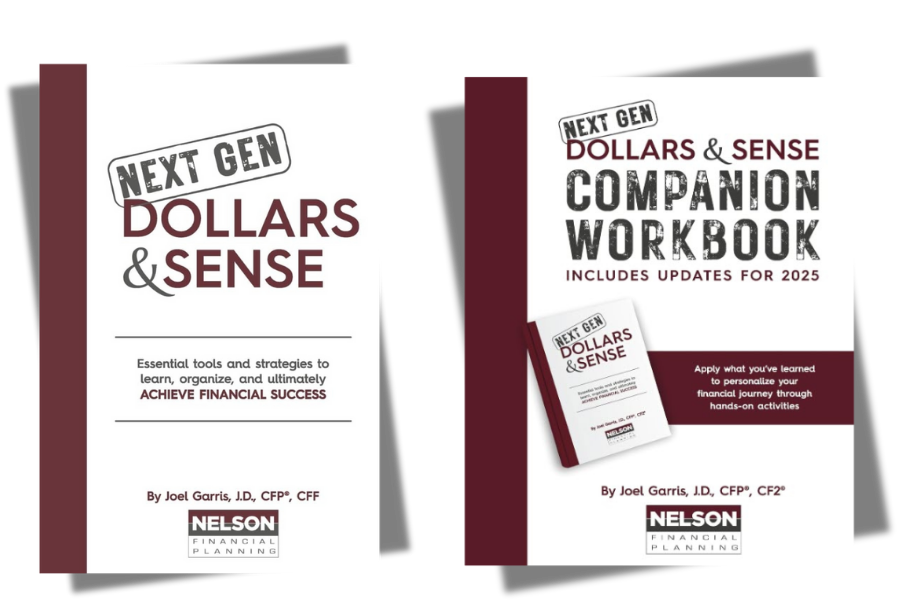
Unlock the secrets to financial success with Joel J. Garris’ insightful book, designed to equip you with the essential tools and strategies needed to take control of your financial future. Whether you’re just beginning your financial journey or approaching retirement, this book offers a comprehensive guide to help you build a solid financial plan that aligns with your goals.
REQUEST YOUR FREE COPY OF OUR BOOK & WORKBOOK!
- 8 Wonders1
- Bank Investments3
- Beating Inflation1
- Budget for Retirement5
- Corporate Transparency Act2
- Digital Currency1
- Energy Tax Credits1
- ESG Funds1
- Featured Blog0
- Financial Planning14
- Financial Success5
- Importance of Dividends1
- Investment Diversification1
- Investment Portfolio6
- Investment Strategy4
- IRA1
- Joel Garris1
- Nelson Financial Planning7
- Net Worth Improvement1
- Next Gen Dollars and Sense1
- One Big Beautiful Bill Act (OBBBA)1
- Pension Plans1
- Podcast Transcripts17
- Retirement “Secure” Act2
- Retirement Income Planning3
- Retirement Planning7
- Retirement Regrets5
- Social Security4
- Tax Liability3
- Tax Planning7
- Year-End Tax Changes3