




Young vs. Near-Retirement Investors: Why Investing Is a Marathon, Not a Sprint

A real-world look at investing decisions from early career through retirement
Dollars & Sense Episode Summary
Investing rarely fails because of a lack of options. It fails because people apply the wrong strategy at the wrong stage of life.
In this episode of Dollars & Sense, Rob Field,, CF2™, CFS, NSSA and Chet Cowart, CF2™, CRPC™ walk listeners through one of the most misunderstood realities in personal finance: your investing approach must evolve as you age, but your long-term objective stays the same.
“Investing is a marathon. If you try to sprint early, you’ll burn out before you ever reach retirement.”
Using a marathon analogy inspired by Joel Garris running a 26.2-mile race, this conversation breaks down why investing is not about sprinting for short-term performance – but about pacing, preparation, and endurance. Rob, who is closer to retirement, and Chet, who is firmly in the accumulation phase, compare how the same market environment can mean very different things depending on where you are in your financial journey.
Younger investors typically prioritize growth. Market volatility – even a sharp downturn – can be a buying opportunity when time is on your side. For someone decades away from retirement, compounding and consistency matter far more than short-term swings. In contrast, investors nearing retirement must think differently. Income generation, preservation of capital, and managing sequence-of-returns risk become central to long-term success.
“A 30% market drop is a buying opportunity for a young investor – but it can change retirement plans entirely for someone retiring this year.”
The discussion also dives into asset allocation – stocks versus bonds versus cash – and how that balance should shift gradually, not abruptly, over time. Rob and Chet explain why waiting until the final years before retirement to rebalance can introduce unnecessary risk, and why periodic reviews are essential as portfolios naturally drift.
Beyond portfolio construction, the episode highlights what many investors wish they had known earlier: the power of compounding, the danger of unmanaged debt, the importance of automating investments, and the psychological side of investing. Emotions, not markets, are often the biggest threat to long-term results. Staying invested during downturns, resisting the urge to time the market, and understanding your true risk tolerance can dramatically change outcomes.
“Most of our value comes from helping people control emotions, not picking investments.”
Listeners also learn how using a bucket strategy – short-term, mid-term, and long-term goals – can bring clarity and discipline to financial decisions. Each bucket serves a different purpose, requires a different allocation, and helps prevent long-term retirement funds from being tapped for short-term spending.
Whether you’re just starting out, mid-career, or approaching retirement, this episode reinforces one essential truth: successful investing is about time, goals, and tolerance – not chasing performance.
10 Key Takeaways
- Investing strategies must change as you move from accumulation to income
- Younger investors can tolerate volatility; retirees must manage sequence risk
- Asset allocation should evolve gradually—not right before retirement
- Income consistency matters more than average returns in retirement
- Compounding works best when money is left invested long-term
- Automating contributions helps investors stay disciplined
- Debt reduces both investable dollars and future retirement income
- Emotional decisions often hurt returns more than markets do
- The bucket system helps align money with specific goals
- Risk tolerance is personal and not determined by age alone
Episode Chapters
- 00:00 – Welcome to Dollars & Sense & the Marathon Analogy
- 02:45 – Young vs. Near-Retirement Investors: Same Goal, Different Paths
- 05:04 – Risk Tolerance and Market Volatility Across Age Groups
- 07:23 – Income Needs, the 4% Rule, and Portfolio Sustainability
- 10:12 – Asset Allocation: Stocks, Bonds, and Cash Over Time
- 14:23 – Rebalancing and Avoiding Late-Stage Allocation Mistakes
- 17:05 – Market Cycles, Corrections, and Investor Expectations
- 20:37 – What Investors Wish They Had Done Earlier
- 24:45 – Automating Investing and Paying Yourself First
- 27:06 – Psychology, Discipline, and Staying Invested
- 33:21 – The Bucket Strategy for Short-, Mid-, and Long-Term Goals
- 36:50 – Final Thoughts: Time, Goals, and Tolerance
Podcast Transcript
Podcast: Dollars & Sense
Episode Date: February 8, 2026
Speakers: Rob Field – Certified Financial Fiduciary™ (CF2™), Certified Fund Specialist (CFS), National Social Security Advisor (NSSA) and Chet Cowart – Certified Financial Fiduciary™ (CF2™), Chartered Retirement Planning Counselor (CRPC™)
00:00 – Welcome to Dollars & Sense & the Marathon Analogy
00:00:06 Rob Field
When it comes to investing, investors have a lot of options.
And not only do they have different options about what they can invest in, but what’s appropriate at a specific time in their investment cycle.
Today we’re going to take a look at different investment options, but also how they relate to different investors at different age times.
So welcome to Dollars & Sense, where we do help you make sense out of all of life’s decisions involving your dollars.
We are Central Florida’s longest running radio program, coming to you on a host of radio stations throughout Central Florida.
Also one of the top 25 financial planning podcasts on the worldwide web with over 47,000 downloads of our program.
So be sure to subscribe to our channel on your favorite social media podcast platform.
If you want a little help on finding the best one, go to our website, nelsonfinancialplanning.com, front page.
Up in the top right are a variety of icons you can click on, social media sites, including LinkedIn, YouTube, things like that.
Some of them you can hear us, some of them you can also see us.
All these shows are recorded, so I do remind you that if you miss a show, you can certainly go back and catch it from many, many years back.
My name is Rob Field Field. I am a Certified Financial Fiduciary™, also Certified Mutual Fund Specialist, and a National Social Security Advisor at Nelson Financial Planning, where we have a team of certified financial fiduciaries that stand ready to help you change your life with a successful and cost-effective financial plan that can produce superior investment results and provide you with peace of mind for the future.
As you’ll notice this week, Joel Garris is off, but I’m hosting the show along with my cohort in crime, Chet Cowart Cowart.
This is the first show that Chet Cowart and I have done together.
It’s kind of appropriate because I was talking for a moment about investment cycles and how, you and I, we’ve been at the same firm for about the same time, but we’re in slightly different time frames of when we’re going to retire.
02:04 – Young vs. Near-Retirement Investors: Same Goal, Different Paths
00:02:04 Chet Cowart
Absolutely. Yeah. No, I think this is a great first show because our topic is very fitting.
We’re going to go through, you know, like you said, some of the different products and investment goals that investors have, but how that changes over time because
Me and you, at the end of the day, we do have the same investment goal.
It’s to have the most money in retirement, get the best performance, have the most income generation in retirement.
But you are much closer to retirement than myself.
So I guess how we get there is a little bit different, at least how I’m doing it right now versus how you’re doing it.
00:02:43 Rob Field
Correct.
And that’s what we’re going to kind of break down and talk in more detail.
You know, it’s funny as a day ends and the market closes, you and I get together and we kind of powwow on what’s the market doing?
And how are the investments?
And you and I were invested in similar investments with the mutual funds that are provided through Nelson Financial Planning.
00:03:01 Chet Cowart
But then at the end of the conversation, it’s like, what’s important to you?
It’s like, well, I got a lot of years for the money to grow.
00:03:08 Rob Field
And I’m like, you know, I need this money to be stable and start thinking about generating income and taking some withdrawals.
It’s, from my end, it’s really, the long term, I would use the word marathon, and I’m going to go in a little more detail about why I like to use that word marathon.
You might find it a little more on the challenging side of, you know, what the big picture looks like, but you’re really just trying to get growth right now.
04:05 – Risk Tolerance and Market Volatility Across Age Groups
00:03:32 Chet Cowart
Yeah, no, absolutely. I mean, like you said, we talk every afternoon about kind of what’s happened throughout the day in the market and that sort of thing.
But I mean, I guess the biggest word or the biggest difference would be, I guess, risk tolerance at this point. What a young investor can handle volatility-wise, swing-wise, is a lot different than somebody nearing retirement.
What they would be comfortable with is, frankly, much, much different than what I would be comfortable with in terms of market swings.
00:04:00 Rob Field
Of course.
And so, I like to use the analogy, especially today, of the long-term investing is kind of like a marathon.
And I throw that out because our boss and the president of Nelson Financial Planning is actually running a marathon in St. Pete, Florida as we speak, as this show is being broadcast.
And so that’s what allowed you and I the opportunity to step in, fill in his shoes the best we could and talk about investing in our ways.
05:00 – Short-Term vs Mid-Term vs Long-Term Investing Phases
00:04:26 Rob Field
And since we sort of have an older investor such as myself and a slightly younger investor such as you, we thought, well, why don’t we just talk about the similarities and then some of the differences that investors would have as they’re making their decisions for the short-term, mid-term, and long-term, because my definition of short-term is pRob Fieldably still very short because I need to get more to the mid-term, long-term, where at retirement I need my money to work in a certain way, and my goals for pure growth have already, you know, hopefully I’ve established that early enough that that’s not my number one goal is to try to get the maximum growth over the next couple of years.
00:05:04 Chet Cowart
Right, yeah. I mean, it’s as simple as, you know, for someone like myself or anybody in my relative age bracket, you know, just as a hypothetical example, the market drops 30% in one year. That’s nothing more than a buying opportunity for someone like myself. Really not that big of a deal, not a huge concern, you know, in the short term when you’re looking 30, 40 years out in your investment timeline on your time horizon versus someone maybe planning on retiring at the end of the year. Well, that kind of swing can mean the difference between maybe not retiring on time anymore.
00:05:41 Rob Field
Oh, exactly. And we, you know, our client base is made-up of everybody from early 20s on up to we’ve got investors that have crossed 100. And each one has different goals.
Now, it’s funny, sometimes we’ll meet somebody who, maybe they’re in their 40s and they’re like, well, I need to start slowing down. I’m very scared about the market and I really want to just preserve what I have.
I’ve got other clients that are into their 90s that are telling us, hey, as long as I’m not taking out too much income, I’m happy for maximum growth.
So, you know, the goals that you set and how we address it and what we might do when we make our recommendations for how your portfolio would be structured is based on all of that. It’s a combination of what’s your investment objective, but what is your risk tolerance?
Because everybody, if we just ask come point blank. They’re going to tell us, well, you know, I want maximum growth and then I want maximum safety and then I want maximum income, all of which slightly conflict with each other.
We can find that happy medium. So sure, your investment objective may be lots and lots of growth, but your tolerance is, you know, can, if you want maximum growth, then you start looking at investments.
It might have a little volatility. Stock market has its ups and downs. Has a nice long-term track record. Now, for myself, I might say, well, yeah, sure, I buy into the fact that over the next 10 years, a mutual fund made-up of some high-quality mid-cap, large-cap companies could be very, very advantageous.
But at the flip side, I’m also like, well, I’m in a point where in probably 10 years, I want this thing to generate income. So thus, do I really have the tolerance level to go with an investment, pure investment objective?
So it’s all about phases, and it’s based on age, and it’s also, of course, based on risk tolerance. And then it’s based on goals. Is your goal to take out a large amount of income?
That may affect how your current portfolio is structured as you hit retirement, or is it I’m just going to take out the least I need?
I’m going to live off of a little smaller income flow, and if that were the case, then you could be a little more aggressive and get a little bit more growth.
07:43 – Understanding Market Averages & Income Consistency
00:07:43 Chet Cowart
Right. Yeah, and I think there’s certainly a balance to strike there, right?
Because what’s important to remember, I guess, I have this conversation with the clients every once in a while. We can take the, let’s take the 10% average per year example that sometimes is thrown around.
Maybe that’s a little bit high, but you hear that a lot online. You have to remember that let’s say we stretch over, we take a fund’s performance over the last 30 years and you see 10% on average. That doesn’t mean that it has earned 10% every year paid to you like a bond.
It means one year it earned 25%, the next year it was down 15%, et cetera, et cetera. And it averages to that 10% over time.
So you do have to remember, like, for example, what you just said about, you know, these companies in retirement may 10 years down the line generate this stream of return that you’re happy with when you’re generating income and you need income in retirement, I think consistency is more important than necessarily just gross performance on an average basis over a long period of time.
00:08:44 Rob Field
Yeah, that’s an excellent point. We, you know, we talk about that volatility of the market.
It’s your friend in the fact that sometimes you’re going to, you know, money going in, sometimes you get it at a discount, and then sometimes you get it when the market’s going up.
But overall, the market has those nice averages. And so when we back off, we say, okay, at some point as you near retirement, income becomes a big, big part of the goal. That’s what you’ve been saving the money for.
And if we can have investors understand that description, what you’re saying is, hey, if the market averages 8, 9, 10 over multiple years, but you’re up 21 year, but your average is 10, you’re going to have some negative years.
So you have to think in terms of my income flow needs to be something that I can sustain year after year after year. And so the 4% rule does work.
And we do preach that, and we hope that generates the kind of income somebody would want. But if you can keep your income in that range, and at the same time, still maintain the kind of growth, then you can have a growth portfolio, something made-up of equities, and still get the income that you need.
So again, it’s understanding the bigger picture, you know, in the short term, trying to invest, in the long term, respecting what the portfolio can generate.
All right, we’ll be back after this break. You are listening to Dollars & Sense. Appreciate you listening in.
10:12 – Asset Allocation: Stocks vs Bonds vs Cash Over Time
00:10:12 Chet Cowart
So in the last segment, we were kind of digging into general overview on the differences between how you would invest as a younger investor versus older.
We kind of stayed with the 10,000 foot sort of look at it. But we’re going to dive into some more detail in that in terms of things like allocation, stocks versus bonds versus cash, how much of that you would have
as a younger person versus how much you would have as an older person. So just in general, what are your thoughts on that, Rob Field?
00:10:45 Rob Field
Well, you know, it’s, as I mentioned, you know, just quickly before, I would love to have maximum growth with a lot of safety and then a great income stream and pure preservation.
And so, you know, that’s sort of the generic look.
But going into more specific, I’m a believer in the stock market for growth, and then utilizing that even to generate the income, if it means looking at a mutual fund that has dividends coming out, something like that.
00:11:14 Chet Cowart
Sure. Yeah, and I think just in general, a young person, maybe in their 20s, 30s, even 40s, in the accumulation phase, I’ll say, when it comes to stocks versus bonds versus cash, how much of which of each you would have.
Generally, if you’re, let’s say you’re investing into a Roth IRA and you’re looking down the barrel of 30 years until retirement, then there’s really no sense in having any bonds or cash at all in that scenario because you’re just going to get much better performance out of the equities market.
Aside from, of course, if you have a house fund, emergency fund, a car fund, things like that, those would be in cash, high yield savings, money market, that sort of thing.
But then, of course, as you get closer to retirement.
And not only does income become more important than you’re going to be taking income soon off of your portfolio, but also hedging against market decline becomes much more important when you’re, for example, five years or less from retirement.
00:12:16 Rob Field
Right. See, I say my goal is, you know, I’m entering a preservation stage, right? It’s like I believed in the stock market for many, many years, got some great growth, stayed diversified.
But in the back of my mind, I know that there will come a point where volatility could be a little disheartened.
And so I certainly want to start preserving, slowing down slightly, and then thinking in terms of, okay, now if I’m looking at income that I want versus a budget versus will I get a little social security versus all my investments, that enters my mind. You probably don’t touch upon those types of things topics as much, you’re pRob Fieldably thinking a little more aggressive and fun, right?
00:12:55 Chet Cowart
Yeah, I mean, I think it’s just the simple mental shift of, for me, if I see a giant market decline, that’s just a buying opportunity for me.
I mean, I see that as a good thing, maybe not necessarily for the stock market and the economy as a whole, but just for my personal investment journey. A market decline is nothing more than a buying opportunity versus if you were planning on retiring in six months, then a market decline could mean that you’re no longer retiring in six months.
00:13:26 Rob Field
Correct. If you’re sticking to that, if I’m saying, okay, I’m going to look at about a 4% rule and I pick it at a time when the market’s at an all-time high and that number is much larger, and then if the market has a pullback for a few years or
A lot of times people go into retirement and they have a lot of initial expenses.
They’re buying an RV or training or buying things or going places. And then suddenly the amount of money that you have to generate 4%, if it were to have a market pullback and you took out a sizable withdrawal, it’s a lower number.
And you got to be careful about that because we know that 4% works over time, but if you start at the high and then you start taking money out, it’s going to jeopardize that rule.
14:05 – Rebalancing, Reviews & Avoiding Late Adjustments
00:14:05 Chet Cowart
Yeah, no, and I think that goes back to the whole reason why shifting your allocation over time is important because as a young person, like we said, you want to be primarily in the equities market, but as you age periodically, you do want to rebalance, which we do for our clients very often.
That’s the purpose of our in-person meetings multiple times per year and our summer call-out program.
As well, as you get older, we don’t want to wait until six months before you retire to move 20 or 30% of your portfolio outside of the market. You want to do that over time, and we certainly advocate that for our clients.
00:14:44 Rob Field
Right. I mean, that’s one of the things we push for is a review at least once or twice a year. And in that, we’re not only talking about what you mentioned, which, you got to look at the portfolio. Is it getting heavy into one area?
Obviously, if the stock market outperforms the bond market over time, just through natural attrition, the stock portion is going to become a higher percentage than the bonds.
But at the same time, as you mentioned, as they get older, the percent of stocks that they want overall, let alone the attrition, they wanted that reduced and get more to the bond or the money market side, the more income generation.
So again, all these things are, even at your earlier stage of investing or my later stage, it’s all to be reviewed and it’s all needs to be addressed and checked and reviewed on your goals, if they’ve changed, and then your portfolio and how it’s changed.
15:35 – Market Cycles, Income Sustainability & Staying Grounded
00:15:35 Chet Cowart
And I think there’s also a balancing act that you sort of have to strike there as well in retirement, I mean, because while safety is paramount and income generation is paramount, you also need to have some portion in the market still, no matter how old you are, to keep up with your income needs.
Because if you put all of your money into a CD or a money market or most bonds for that matter, especially the highly rated bonds, they’re pRob Fieldably not going to be paying enough to keep up with the income that you want.
So there’s always a risk-reward balance that needs to be striked there. But yeah, income needs to be kept up with. And I have noticed the market over the last 10 years or so has been doing so maybe arguably tracking better than historical averages that a lot of people in retirement have been able to pull out.
Like I can think of many examples where I’ve seen people pulling out year after year, 8, 9% of their account and being able to keep up with it and still grow. And they’re having these great retirements, which is absolutely a beautiful thing.
But is that necessarily indicative of average performance?
Not necessarily. So we’ve been lucky in the past couple of years.
00:16:53 Rob Field
Right, yeah. Many investors are spoiled right now. The stock market has generated some nice returns, as it can over multiple years anyway, but it’s much higher than normal.
And I’ve noticed some people who have been maybe anti-stock or not as large a fan of stocks suddenly jumping on the bandwagon. And we have to remind them, don’t get spoiled.
This is not probably not something that has changed in the investment industry and going forward will always be like this. What goes up does come down.
Typically when it starts hitting these kind of highs and everybody’s on board, that’s when it usually follows with some type of a correction. Corrections aren’t bad. That’s just a short-term concern.
Again, if the correction occurred right when I retired, it may influence the amount of income I take. But if I’m prudent with the amount of income I take, even during a correction, again, that 4% rule will keep me below the average that’s going to accumulate and grow over the next couple of years.
So sometimes you have to be patient and understand the bigger picture. Easier said than done. People are very excited right now about what’s going on.
18:01 – Investment Psychology & Emotional Discipline
00:18:01 Chet Cowart
Yeah, no, I think that’s why it’s important, you know, to always stick to the fundamentals.
And that’s what we always advise our clients to do, because there’s the, what’s the saying, the market can stay irrational longer than you can stay solvent. You know, so, but I think over the long term, with anything in life, we always regress to the mean eventually. The market has been doing extremely well, and we have no reason to think that won’t continue.
But it’s the fundamentals of sticking to a healthy withdrawal rate and having a well-balanced portfolio that’s allocated correctly for your age bracket is certainly important.
00:18:36 Rob Field
Right, and those are, we mention these things to have people think about, not to put fear in them or make them worry or to be concerned that maybe they’re doing something incorrect.
It’s just to remind them. Let us listen to your concerns and the things that are changing in your life and the goals that you have and what you think is going to occur as you get closer to retirement.
And then we can help tweak the portfolio, design the portfolio. We love to talk to brand new prospects about utilizing what we do at the firm. There is no charge for that first meeting.
And again, our cost overall is very, very competitive. And so, if we’re talking about something that’s hitting close to home, certainly give us some thought and give us a call, whether you’re a client right now and you want to make sure that we’re all on the same page of what’s going to happen shortly, or if you’re a new listener and you’re starting to think, well, you know what?
I need to kind of improve my knowledge and ability to understand what’s going on.
Give us a call at Nelson Financial Planning.
We will be right back after this break.
19:49 – What Investors Wish They Knew Earlier: Savings & Compounding
00:19:49 Chet Cowart
We’ve been talking about the difference in investment strategy and strategies you may employ as a young investor versus an old investor.
We’re going to get more into that in the next two segments. I am Chet Cowart, Certified Financial Fiduciary™ here at Nelson Financial Planning, joined by Rob Field, Fellow Certified Financial Fiduciary™ at Nelson Financial Planning.
We’ve gone into some details and ideas on allocation, how that sort of thing will change over time as you get older and closer to retirement. And we’re going to dive into a little bit more of that here.
So what we thought, you and I, when we were putting together the show, we said we definitely thought it would be fun to talk about what people feel like at different stages of their investing.
What we also thought we would share is a lot of our clients, as we’re talking to them, and they’re like, oh gosh, I wish I had talked to you sooner, or gosh, now I’m starting to understand what I could have done. And so they a lot of times share with us, you know, I wish I hadn’t done this, or I wish I had done that.
And we thought, well, you know, as we’re talking about moving from a young investor to a retirement age type investor, we might share some of these thoughts and things that we heard where people wish they had done it different or had started something that they didn’t even know existed.
And so. It’s all about, we start off with savings, right?
So everybody wishes they had saved more and started saving sooner. But the other thing that we see a lot is people are saving and they’re not utilizing the compounding. They’re saying, okay, I’m throwing money in and then as it grows, I’m taking it out for things that I need.
And we’re more encouraged to show them, you save the money and that money will grow and the growth will compound and the compounding will compound on itself.
And you get this much larger growth effect by utilizing that.
00:21:39 Chet Cowart
Yeah, time in versus time in is the classic saying. And yeah, I mean, there’s certainly something to be said in regards to investing as a young person, the whole time value of money argument, right?
Because you know what, $1,000 in the market today is worth a lot more than $1,000 in the market 10 years from now.
And anybody that has any type of understanding of compound interest, it’s the whole, if you have $1,000 invested and you earn 10%, that’s $100 versus if you have $1,000,000 invested and you earn 10%, that’s $100,000.
So it’s the quickest that you can get or the quickest that you can get to those amounts, of course, but also the longest period of time that you can have money invested, you’re going to compound and compound and grow and grow. And that’s why it’s important to be in the market for a long period of time.
22:33 – Debt, Discipline & Paying Yourself First
00:22:33 Rob Field
Right. So we’re big fans of save when you can, reinvest dividends, capital gains as they come along.
Let it compound. Don’t try to pull out money if you don’t need to.
00:22:43 Chet Cowart
Right.
00:22:43 Rob Field
Other thing that we get clients talking to us a lot about is debt. They look back and think, boy, I accumulated a lot of debt.
I sort of just paid minimums. I never kind of got aggressive to paying it down. And we point out to them that the more debt you have, that’s more money going to paying just the interest on something you bought a long time ago.
That’s less money you can invest. And then down the road, if you’re then looking at your investment account to generate income, if you’ve got debt, that’s more money out of your budget that’s got to pay off the debt, less money that you can actually use for income to do fun things.
00:23:17 Chet Cowart
Yeah, no, and I think the debt conversation is certainly a little bit nuanced, of course, because, you know, there’s things like credit cards, high interest auto loans, things like that are certainly bad and are hurting you.
And then there are things like low interest home debt, which assuming that you’re not making yourself house poor and you can afford the payment on a monthly basis, easily without cutting too deeply into your cash flow, then those types of debt instruments can actually be wealth building tools.
So it’s certainly, it’s not necessarily black and white, but I think the general rule of avoiding debt is certainly one that will help a lot of people.
24:27 – Automating Investing & Accountability
00:24:27 Rob Field
Right, definitely. I mean, it’s, there are times when debt is okay, but when you let debt rule your life and you’re paying interest and payments on something that you bought years ago, it’s going to interfere with your overall investment goals.
00:24:41 Chet Cowart
Yep, if every payday, every dollar above what is required for rent and groceries goes to servicing credit card debt, then you don’t leave yourself much money for investing, right?
And the next thing we hear a lot is people truly being accountable and honest and flexible with their account, because you have to think in terms of the big picture.
It is a marathon. We’re going to go back and use that same marathon analogy that you’ve got to finish the race. You have got to get in there. You’ve got to be patient.
You have to understand that over time with the compounding that we discussed and with the reduction of debt and being flexible and understanding how the market works, you’ll get to your end result. But you’ve got to be honest with yourself.
You’ve got to be accountable as you move along. Now, one thing we think, you know, and we’ve seen clients wish they had done is to sort of automate the investing, just to sort of build it in and say, okay, I am going to, in my budget, I am going to allocate this amount of money to go towards investing.
And I’m not just going to willy-nilly at the end of the day, maybe add money to it. I’m going to automate it. I’m going to set it up so that it’s pulled out of my bank account and sent into the investments.
If you’ve got a 401k, have it scooped out of your income and do it automatically. And then sort of an out of sight right out of mind, and then it’s coming out of your budget.
Because I think what happens a lot of times is people will set their budget up, and the very last item is, well, whatever’s left over, then I’m going to invest that.
So if you automate it and say, well, at the first of the month, money comes out of my bank and it gets invested. You’re paying yourself first.
You’re at the top of your budget. And 99% of the time, most people can if they flip it that way, their budget still works. Maybe they don’t eat out as much. Maybe they don’t buy as many toys. But at the end, the investments grew because you paid yourself first.
26:44 – Investment Psychology & Staying Invested
00:26:44 Chet Cowart
Right. No, I love that phrase, pay yourself first. It certainly helped me.
Because if you treat investing within your, as a budget line item, you’re much more likely to adhere to that. If it’s thought of as sort of a non-negotiable versus the example you gave of whatever’s left at the end of the month, I will invest that.
I guess I would ask, how often is that really going to happen? Probably not.
So, treating it, paying yourself first, treating it as a non-negotiable line item in your budget is definitely the way to do it.
00:27:17 Rob Field
Right. We see clients talk to us a lot about income generation and being honest about how much they need and planning ahead. We also find out, general knowledge about investing.
A lot of people come in and they’re kind of telling us what they think and what they know or what their neighbor told them, and they don’t really understand everything that’s moving on.
And that’s part of our goal is to educate. So we certainly, we do our client dinners for our clients throughout the year, and we send out a lot of information that educates. And so I think knowledge is important.
Most people come to us and say, I wish I had known more or listened more or learned more. It’s not that hard. I mean, that’s what we’re here for.
00:28:01 Chet Cowart
Right, and psychology is so important because everything money-related is very emotional.
And just to have the ability to continue to invest and to not sell during market downturns, that can be a massive, massive difference in your ending account balance at the end of the day.
28:27 – Marathon Analogy & Bucket Strategy
00:28:27 Chet Cowart
So we’re going to take a short break here. This has been Rob Field Field and Chet Cowart Cowart of Nelson Financial Planning.
Don’t go away. We’ve got one more segment for you.
00:28:45 Rob Field
Joel Garris is off this week. We’ll be back next week, hopefully walking and feeling good. He’s running a marathon this weekend in St. Pete. 26.2 miles.
Again, that’s a long way to go, but he plans ahead. He trained for it, so he will do well. And as we want our investors to do, plan ahead, train well, and you will then also be hitting your goals.
I’m Rob Field Field with Nelson Financial Planning. Next to me is Chet Cowart Cowart, Nelson Financial Planning. We are glad to co-host this week. Hope you’re enjoying the show.
We’ve been talking a little bit about things that previous, our investors had shared with us that they wish maybe they had done different. And we were talking a little bit about the psychology.
I think that’s important in the fact that how people view investing, how they view themselves, and how honest are they with themselves. Because it’s a different story.
As you mentioned, the emotion sometimes overtakes all common sense.
00:29:42 Chet Cowart
Yeah, no, absolutely. I mean, we can talk all we want about, consistently investing time in the market, that sort of thing. And that’s all extremely important.
But at the end of the day, nothing, and we’ve both seen this many times, nothing will kill performance more than getting out at a bad time, trying to time the market, letting your emotions get the best of you when it comes to your investments and your retirement savings.
Now, easier said than done, I completely understand. And even for me and Rob Field, two people in the industry, money’s emotional for all of us. But to be able to combat that is very important. And I think that’s kind of an instrumental part of our job.
Of course, we’re here to help clients invest, but pRob Fieldably most of our value comes from talking people off of the ledge a lot of the times.
I mean, it really, it’s important to stay consistent, stay in, and remember your goals.
30:48 – Goals, Buckets & Managing Expectations
00:30:48 Rob Field
Right. I mean, we are, many, many times we are financial planners, but sometimes we’re kind of an investment psychologist.
And that’s what we’re here for. It’s the education portion of becoming successful in investing is not just being shown the investment and not just telling you, Hey, the more you save, the better you’ll be, but it’s to understand. your investment objective, and we can help you kind of make sure that investment objective is accurate for where you are in your time frame.
But it’s also, what’s your tolerance? I mean, as I mentioned before, I’ve got clients in their 40s who want nothing to do with the stock market. Money market returns will take care of it.
And I’ve got clients that are in their 90s that have experienced what the stock market can do. They understand the big term numbers. As long as their income is not too big, they can keep pulling it off.
And so there’s no right or wrong. Everybody’s unique. But you do need sometimes a little help, maybe a pat on the back to tell you you’re doing something well, or maybe a little nudge saying, if you were to maybe make this tweak, here’s how we think it would help.
So the psychology part plays a bigger role than I think a lot of people give it credit for.
00:31:52 Chet Cowart
Yeah, no, absolutely. And there’s a lot of ways that you can, you know, make savings and investing funds, kind of treating savings as a game, for example.
You know, so compared to exercise, it’s kind of fitting right now with Joel running the marathon.
And speaking of this whole young versus old, I’m the young one, but Joel can certainly run a marathon a lot better than I can. I’m not in that kind of shape.
So we will see. I’m curious to see when he comes in the office next week how well he’s doing.
00:32:24 Rob Field
How he’s feeling and if he’s limping.
00:32:26 Chet Cowart
I know how hard he’s feeling.
00:32:28 Rob Field
Yeah, I’d be moving very slow, very slow.
00:32:31 Chet Cowart
But, you know, comparing savings as to exercise, for example, you know, when you’re getting into shape, you start out slow and, of course, it is a marathon and retirement would be the end.
So it’s important to sort of think of it that way and stay consistent.
00:32:46 Rob Field
Yeah, I think of using the exercise analogy as you got to kind of keep doing it multiple times, right? If you work out once and then you don’t work out again for another month, it’s really not going to do a lot for you.
And if on the investing, you throw some money in and then you don’t put any more money in for another month, not as effective as if you consistently, once a week, once a month, put in a certain amount, and the same thing with exercise, right?
00:33:11 Chet Cowart
Yeah, no, I think of it as if you work out all week and you eat right, and then you have 5,000 calories every single day on Saturday and Sunday, you can very easily throw your week’s progress away, and you could look at it the same way with savings and investing, being very diligent throughout the week, and then you go and load up on a bunch of credit card debt Friday, Saturday, Sunday night, then that’s not exactly pushing you towards your goal.
00:33:38 Rob Field
Correct, yeah. So when we think of retirement, which everybody’s ultimate goal would be to get to retirement and to be in a place where you’re very comfortable and your investments can then work for you into retirement.
It’s a race, right? You start now. You got to finish the race. You got to get through it is a marathon.
I mean, if Joel were to go into the marathon and decide he’s going to try to sprint as fast as he can to get ahead of everybody, he pRob Fieldably would burn out and would not be able to finish the race.
And so investing is the same way. It’s not sprint right now and then it’s make a decision, make a budget, pay yourself, be consistent get good investment advice on the psychology side as well as the investment side.
00:34:21 Chet Cowart
Yeah, and you can think of goals as well in terms of sort of a bucket system, short, mid, and long-term goals. So short would be something like maybe you are saving for a car within the next year and you’re putting money into a money market, high yield savings, something like that.
Mid-term goal, maybe you want to buy a house in the next 5, six years, 10 years, and you’re putting money away towards that. And then long-term goals would be retirement accounts, things like that, longer term, you know, IRAs, 401ks, workplace retirement plans, that sort of thing.
So good to have goals for every different period of time and to be diligent and keep up with those.
00:35:05 Rob Field
Right, and with that bucket system, you want to make sure that you’re not pulling money out of the long-term retirement earmarked funds so that you can buy the car today.
Right. Because great, now you’ve got the car, car wears out. Now it’s time to do something different. Then you move into retirement and then you invaded the funds that should have been kept for the long term.
So the bucket system, and then that way when you make it a game, it’s like, hey, if this bucket gets to a certain point, then I can buy a new sofa or I will take a trip.
In the midterm, it’s like once I get to this point, that will cover sending my kid to college. And then my long term, I want to keep that as big as I can, because my goal is to have this much income in retirement.
So I need around this much investments to generate that income. So it’s good to kind of segregate them, keep them apart.
35:46 – Risk Tolerance & Managing Expectations
00:35:46 Chet Cowart
Yeah, and then each goal is also going to have a different investment allocation, right?
So A short-term goal would have, like that car example, would be high-yield savings, money market, cash equivalents, that sort of thing.
A mid-term goal, maybe we would use one of our balanced funds or something like that, part stock, part bond, a good mix of both.
And then for your long-term retirement goals, you’re looking at maybe more of a aggressively positioned allocation to, you know, with that long time horizon, you can certainly stomach a little bit more volatility just mathematically.
00:36:18 Rob Field
That’s a good point. Your investment objective with the different buckets is going to be different.
Length of time, how it’s invested, how much risk can you tolerate that.
So each bucket would have its own separate sort of allocation and be managed differently. That’s a very good point.
00:36:32 Chet Cowart
Yeah, and risk tolerance is an interesting thing as well because, of course, age is a huge determining factor in what your risk tolerance maybe should be, again, mathematically. But back to the whole how emotional finances are.
That’s not always the case, and it’s not always so black and white, right?
I mean, we both have seen plenty of young people that have a lower risk tolerance than some of our older clients, even in retirement. So it’s a very personal thing, and it’s not always as easy as just, oh, you’re 30, so you should be very aggressive, versus you’re 75, so you should be positioned a little bit less aggressively.
We may advocate for that, but at the end of the day, you have to be okay with it. You have to be.
00:37:14 Rob Field
Sure. And then you need to also understand your expectations.
Part of the education is based on each bucket and what it’s designed to do, the amount of growth it may get, the amount of volatility that it may suffer from, needs to be explained up front.
You need to have, we manage the expectations of our clients by explaining to them, this bucket is designed to do this, and thus we think these kind of investments will do it.
Here’s expected return. Here’s also expectation of what you may experience along the way.
00:37:45 Chet Cowart
Absolutely. So I mean, there’s been a lot of, there’s certainly a lot of differences, but also a lot of similarities between investing as a young person versus an old person. It’s maybe your current mix is different, but your end goal is likely the same.
So this has been Chet Cowart Cowart and Rob Field Field with Nelson Financial Planning.
Visit our website at nelsonfinancialplanning.com or give us a call if you have any questions about any of this, whether you are in your accumulation phase, saving for retirement, or you’re already there, we would be happy to help you. Thank you for listening.
Next Steps
If you’d like help reviewing your financial plan, investment strategy, or retirement readiness, explore the resources available through Nelson Financial Planning or schedule a consultation to discuss your goals.
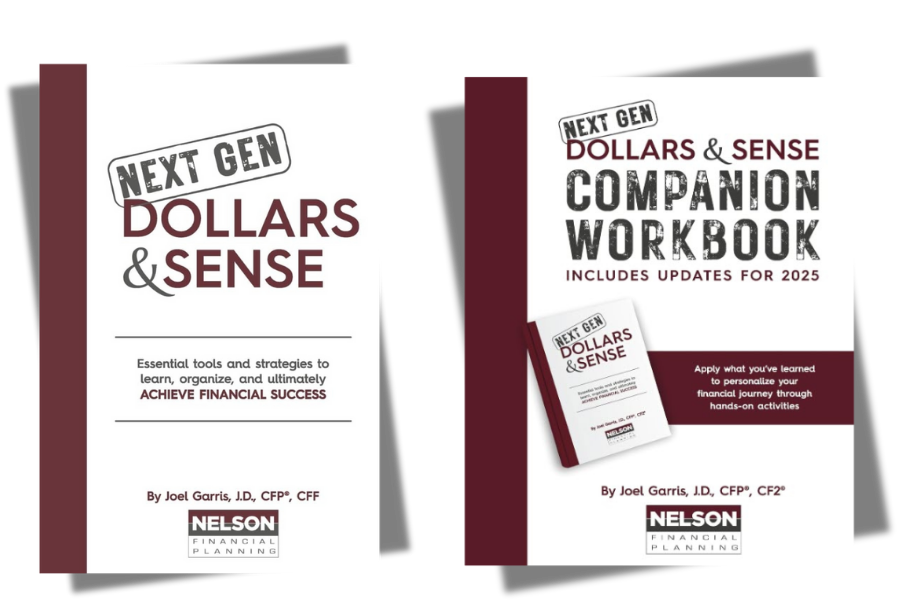
Unlock the secrets to financial success with Joel J. Garris’ insightful book, designed to equip you with the essential tools and strategies needed to take control of your financial future. Whether you’re just beginning your financial journey or approaching retirement, this book offers a comprehensive guide to help you build a solid financial plan that aligns with your goals.
REQUEST YOUR FREE COPY OF OUR BOOK & WORKBOOK!
- 8 Wonders1
- Bank Investments3
- Beating Inflation1
- Budget for Retirement5
- Corporate Transparency Act2
- Digital Currency1
- Energy Tax Credits1
- ESG Funds1
- Featured Blog0
- Financial Planning14
- Financial Success5
- Importance of Dividends1
- Investment Diversification1
- Investment Portfolio6
- Investment Strategy4
- IRA1
- Joel Garris1
- Nelson Financial Planning7
- Net Worth Improvement1
- Next Gen Dollars and Sense1
- One Big Beautiful Bill Act (OBBBA)1
- Pension Plans1
- Podcast Transcripts17
- Retirement “Secure” Act2
- Retirement Income Planning3
- Retirement Planning7
- Retirement Regrets5
- Social Security4
- Tax Liability3
- Tax Planning7
- Year-End Tax Changes3