




Rising IRS penalties, market corrections, and smarter portfolio strategies explained

How taxes, volatility, and diversification impact your financial future. Practical financial planning strategies to avoid costly mistakes in 2026.
Dollars & Sense Episode Summary
Tax season always brings a sense of urgency — but in today’s environment, it’s also bringing higher costs that many taxpayers don’t fully understand. In this episode of Dollars & Sense with Joel Garris, the conversation centers around a growing and often overlooked issue: rising IRS interest and penalties that are quietly increasing tax bills across the country. As interest rates have climbed over the past few years, the cost of underpaying taxes has become far more significant — especially for individuals with higher incomes or variable earnings.
Interest and penalties can quietly make your tax bill a whole lot more than what you think you owe.
Joel Garris breaks down exactly why this is happening and what taxpayers can do about it. Many people assume their tax bill is simply the amount owed at filing, but in reality, interest charges and underpayment penalties can add a substantial layer of additional cost. This is particularly relevant for those with non-W-2 income sources — such as self-employment earnings, capital gains, dividends, or retirement distributions — where taxes are not automatically withheld.
Beyond taxes, the episode expands into broader financial planning topics that are equally relevant in today’s uncertain environment. From market corrections driven by global events to shifting Federal Reserve expectations, Joel emphasizes the importance of understanding how headlines influence investor behavior. A 10% market correction, while alarming to some, is actually a normal occurrence that happens regularly. The key is not reacting emotionally, but instead maintaining a disciplined, long-term strategy.
Proper planning beats prediction any day of the week.
Another major focus of the episode is diversification — one of the most misunderstood concepts in investing. Many investors question why all of their money isn’t placed in the best-performing asset at any given time. Joel explains why this thinking can lead to increased risk and long-term underperformance. True diversification means accepting that different investments will perform differently at different times, and that balance is what ultimately helps portfolios weather both good markets and bad.
You don’t want everything performing the same — diversification means different results at different times.
The episode also touches on inflation, gas prices, the strength of the U.S. dollar, and the evolving global economic landscape. Joel provides valuable context around how these macroeconomic factors affect everyday investors and retirees, helping listeners separate emotional reactions from real financial impact.
Ultimately, this episode delivers a clear message: successful financial planning is not about predicting the future — it’s about preparing for it. Whether you’re managing taxes, navigating market volatility, or building a retirement income strategy, the goal is to create a plan that works through uncertainty, not one that reacts to it.
10 Key Takeaways
- IRS interest and penalties are rising due to higher interest rates
- Underpaying taxes throughout the year can trigger costly penalties
- Reviewing your tax return is critical to identifying hidden charges
- Estimated tax payments are essential for non-wage income earners
- Filing an extension does NOT extend your tax payment deadline
- Market corrections of 10%+ are normal and occur regularly
- Geopolitical events often have a short-term emotional impact but a limited long-term market impact
- Diversification reduces risk by balancing different asset performances
- Index funds can still carry concentration risk despite broad exposure
- Long-term financial planning is more effective than reacting to headlines
Episode Chapters
- 00:00 IRS Penalties Are Rising (What’s Happening?)
- 00:30 Why Diversification Feels Wrong (But Works)
- 03:00 Geopolitics & Market Reactions Explained
- 05:10 What a Market Correction REALLY Means
- 07:00 Inflation vs Reality (Gas Prices Breakdown)
- 09:00 AI, Economy & Future Growth
- 10:40 Federal Reserve & Rate Cut Expectations
- 12:30 The Truth About the U.S. Dollar
- 14:30 Election Year Volatility (What History Says)
- 16:30 IRS Interest & Penalties Breakdown
- 20:00 How to Avoid IRS Penalties (Action Steps)
- 24:00 Why Your Portfolio Isn’t Beating “The Market”
- 27:00 Index Funds & Hidden Concentration Risk
- 30:00 Key Takeaways for Investors
Podcast Transcript
Podcast: Dollars & Sense
Episode Date: March 29, 2026
Speakers: Joel Garris, CERTIFIED FINANCIAL PLANNER® Professional, Certified Financial Fiduciary™
IRS Penalties Are Rising (What’s Happening?)
00:00 Joel Garris, CFP
Did you pay interest or maybe even a penalty on how much you owed the IRS this year? We’re going to talk about that on this week’s program because it is a growing problem and probably one you want to avoid. So we’re going to talk about that, what it is, and most importantly, how to avoid that extra cost that layers in on top of what you owe to the folks at the IRS.
Why Diversification Feels Wrong (But Works)
00:30 Joel Garris, CFP
And then we’ll talk a little bit about the fascinating concept that is diversification and get into one of the questions that we hear somewhat regularly from folks is, well, I’ve got a bunch of different investments, but this one over here, that’s doing well. And maybe this one over here is not doing as well. And so we want everything to be in the one that is doing well and just ignore the one that’s not doing as well.
And so we’re going to talk about why it is important to make sure that you have different investments so that they can in fact perform differently at different periods of time, sort of the underlying concept of diversification. But when you hear that, it’s like, oh, that’s kind of contrary. It would be great if everything was in the thing that was performing the best, although that’s not really what you want.
So we’ll cover all of that on this week’s edition of Dollars & Sense, where we help you make sense out of all of life’s decisions involving your dollars. One of Central Florida’s longest-running radio programs, also a top 25 financial planning podcast out there on the World Wide Web.
To find us on your favorite podcast platform, just search for our program, Dollars & Sense with Joel Garris of Nelson Financial Planning, or go to our website at nelsonfinancialplanning.com. There, look for the icons in the radio show tab and click on those icons. You’ll get immediately connected. Once you do that, make sure that you subscribe and then that way you don’t have to go through that process again. Similarly, of course, the website is obviously a good way to learn a little bit more about what we do at Nelson Financial Planning in terms of helping people make better decisions with their money. My name is Joel Garris, CERTIFIED FINANCIAL PLANNER®, Certified Financial Fiduciary™ at Nelson Financial Planning.
So busy week at the office this past week. We had one of our regular quarterly educational events for our clients. These events are exclusive for clients at Nelson Financial Planning. And usually involves sort of a panel or a fireside chat format that includes me and usually a speaker from the industry. So that could be an economist or a portfolio manager or something along those lines. And we do that because for a lot of reasons, but first and foremost, we think that good financial habits involve making sure that you have a good education and understanding and perspective on what’s going on out there in the world at large.
Geopolitics & Market Reactions Explained
03:00 Joel Garris, CFP
And certainly, we had a host of topics that we talked with our clients at that meeting this past week. Obviously, it started with a conversation about Iran and the headlines out of that region. And the market’s response as well. Markets seem to kind of have a couple of days this past week where things were a little bit more stable, but prior to that, it had gotten into sort of that correction territory kind of range.
And all that means, just so you can appreciate what that term actually describes, is that means that the markets have had a decline of 10% or more from a previous high. So that’s the technical differentiation of a correction, a decline of 10% or more, which, by the way, occurs on average about every single year, just for perspective purposes. But we thought we would certainly made for those headlines, obviously made for a much fuller conversation at our educational event this past week. And chief, as we said, is the conversation about Iran. Obviously, nobody likes military conflicts. Nobody likes loss of life when it comes to a military conflict.
But on a historical basis, these types of geopolitical events, they certainly have sharp emotional impact, but they have relatively short market impact. And if we go back through history and over the past many decades, and we see these conflicts, the reality is that the market has a tendency to recover relatively quickly. Key takeaway, obviously, is that global tension not really a new concept, and the markets find themselves navigating and certainly have a history of navigating far worse environments than kind of the current situation.
What a Market Correction REALLY Means
05:10 Joel Garris, CFP
But clearly the markets are reacting, the notion of a 10% pullback, which as we said, relatively normal if you think about what goes on in the markets. The reality is that those do occur about once a year. And last year, for example, was a great reminder of how quickly that volatility can come into play and then just as quickly move onward.
During the course of last March, markets were declining close to 20%, which is defined as shifting to a bear market. That’s kind of the technical definition of what a bear market is, it means that there’s been a 20% or more decline in the markets. And that happened during the course of the month of March of last year. If you forgot what was going on then, it was all the tariff conversation. But then that conversation ended in just as quick the markets recovered and certainly wound up having a strong year for the year 2025. Again, a reminder that short-term volatility or don’t let that short-term volatility negate your long-term financial planning when it comes to achieving your goals and ultimately creating the right investment allocation that’s designed to work through all of the kinds of ups and downs and headlines that can occur.
Inflation vs Reality (Gas Prices Breakdown)
07:00 Joel Garris, CFP
Obviously, the situation I ran is spiking up the price of oil, correspondingly spiking up the price of gas as well. Which at its core is an inflationary issue. And that is certainly impacting households across the board. When you look at not just gas prices, but food, insurance, all of those kinds of things, certainly increasing at a pretty significant rate.
And, you know, when you think about these gas prices, I saw a statistic that helps to maybe put it into perspective. So when you drive by all these gas stations, because they’re like every block and they’ve got these signs and show you what the price of gas is. And I think generally people kind of use that as a psychological barometer because it’s constantly on every corner. But if you run the numbers on it, the actual impact of these higher gas prices, average impact is about $740 more for a year. Most households are probably not going to see that as a real impact in their pocketbook. But surely the psychological impact of seeing that gas price be a dollar higher versus where it was just like a month ago certainly is, I think, even more dramatic than the actual economic impact that those higher gas prices have. And it’s just another great example of how the headline creates much more of an emotional impact than the actual economic impact.
AI, Economy & Future Growth
09:00 Joel Garris, CFP
So interesting ways in which to think about that, when we think about, some of the, as we went through the conversation at the educational event this past week, obviously got into certain specific sectors, things like AI. We talked about AI being perhaps a tool, but also a tragedy, particularly if for those that are sort of in that younger age group that are just starting to get into the workforce AI, clearly having a much greater disrupting effect on those. Less so for more established employees or more established businesses that are starting to use it more as a productivity tool.
And then also talked a little bit about the Federal Reserve, interest rates, sort of how much those expectations have changed versus what the expectation was at the beginning of the year, where there was an expectation that the Federal Reserve was actually going to cut rates by like 5 different times. And now that expectation has certainly shifted quite a bit over the course of just the past few weeks. So we’ve got some more thoughts on that we wanted to share with our radio audience as a result of the client educational event we had this past week. So stay tuned for the break and we will continue on that topic. This is Joel Garris of Nelson Financial Planning here on Dollars & Sense.
On this program, we’re talking a little bit more and doing a little bit of a recap of our educational event that we held this past week for our clients. Covered a host of topics from Iran to the markets to AI, and got a few other things that we were going to share with you here in this part of the program.
Federal Reserve & Rate Cut Expectations
10:40 Joel Garris, CFP
We were talking a little bit before the break about the Federal Reserve and sort of how much those expectations in terms of the number of expected rate cuts for the course of this year has in fact shifted and shifted pretty dramatically. The expectation at the beginning of the year by many was that there were going to be 5 different rate cuts by the Federal Reserve during the course of the year. We sort of always had the contrary view that we didn’t think that there would be a need to do quite that much given sort of the stickiness of inflation. And at the end of the day, it looks like they are more on track for maybe two or three, having just recently announced the decision to hold rates steady, not this past week, but the week prior.
So, and I think what’s interesting about that, and we talked a little bit about this at the educational event, it’s one thing to have a forecast. It’s another thing when the forecast changes throughout the year. And I think this is the thing that people forget is that markets are constantly sort of repricing what those expectations are. And I think that’s all part of the natural cycle. But I think you also have to kind of be wary of kind of, oh, here’s the things that we expect to occur in the short term, because at the end of the day, are unlikely to kind of play out in the way that you think they’re going to happen. So part of the market’s purpose is to sort of take those expectations and constantly reprice those based on kind of the latest and greatest and newest information. So surely see that playing out with the Federal Reserve.
The Truth About the U.S. Dollar
12:30 Joel Garris, CFP
Also kind of see that play out with the value of the US dollar. I think there’s a lot of confusion on the strength of the dollar and what that means. At the heart of it, when we talk about the dollar getting weaker or stronger, it’s always relative to other currencies. So when we think about the dollar and what’s happened over the course of the past month or so, we actually see that the dollar is stronger than it was a month ago, but weaker in relative terms than it was a year ago. And all that means is that you can either buy more or less of that relative currency.
So if you think about the euro, right, and we’ve got the euro, which obviously is the currency for the European Union. So a year ago, right, your dollar could have bought you more euros versus now where it buys you less euros, right? Because a year ago, okay, the dollar was stronger than it was, than it is today. So in real sense, you know what that means? If you’re taking a trip to Europe this summer, probably going to cost you maybe 4, 5% more as a result of that relative valuation and translation of the dollar relative to those prices in EUR. And the reason why we kind of just talked through all of that is I think it helps to kind of understand what we’re talking about here. We’re not talking, when we’re talking about a weak dollar, we’re not talking about the institutions in America all of a sudden become weaker, although that often comes with that, argument often comes with that conversation about the dollar. What that ignores, though, is that there are reasons why during certain periods of time where a slightly weaker dollar actually does kind of have a shorter term economic boost. Now, got to be careful because in the long run, it can be inflationary.
But when we think about the economy of the US and its relative position in the world, let’s make no mistake about it. The relative economic position of the US and the world is in fact much stronger than it was just a few years ago. I want to give you this statistic and have you think a little bit about kind of how it sort of interplays with some of the headlines and some of the backdrops. When you hear about the relative dollar, the value, and oh, it’s weaker than it was, and then sort of by association translates to, oh, the American economy, well, that’s weaker. And when you look at the statistics, nothing could be further from the truth.
So here’s the stat. China. Okay, often said, the yuan, that’s becoming a much more used currency, and it’s going to replace the US dollar as the world’s global reserve currency. Yeah, okay, maybe not in our lifetime. So particularly when you hear this statistic.
So the Chinese economy has, in fact, been shrinking and shrinking quite a bit over the past few years. And I don’t think this gets much conversation because we’re all so, I guess, focused on kind of those US headlines, sort of that American-centric focus. In 2021, China, as a share of global economy, peaked at 18.5%. 2021, so that’s five years ago, kind of doing the math. At that point, it had grown to roughly 3/4 of the size of the US economy. There were headlines throughout that period of time that said that the Chinese economy gradually is on track to overtake the US economy. It’ll be bigger than the US economy. It’ll be the world’s biggest player. That was the story five years ago when Chinese economic growth had grown to being 18.5% of the global economic pie, which equated to roughly 3/4 of the size of the US economy.
Fast forward to today. Chinese share of the global economic pie has shrunk to 16.5%, and its economy is now less than two-thirds the size of the US economy. Does that sound like an economy that is growing and eventually going to surpass the US? Answer, not any time soon. So be careful when you hear these stories about the dollar and its relative position, and oh, it’s weaker versus where, look at the total economic position, the total economic strength of the U.S. And I think that’s kind of the thing that we forget and why we remain so optimistic about the future here in the U.S. is that the American economy is unique and the ingenuity and the opportunities that exist here in this country are truly unique. Let’s face it, they don’t exist in places like China that are autocratic governments where you can just as easily be thrown into jail as sure as somebody looking at you if you wind up on the wrong side of the fence.
Election Year Volatility (What History Says)
14:30 Joel Garris, CFP
One other thought, and we will wrap it up and shift topics, this is, in case you have forgotten, a midterm election year. And historically, midterm years do have a tendency to be more volatile. That’s not just math, but that’s also history. So here’s the stat. In midterm election years since 1945, the S&P 500’s median peak to trough decline has been 18%, with a decline of at least 10% occurring 70% of the time. Well, good news is we’ve already kind of hit that.
So check the box, not quite hit that, but very close. In those non-midterm years, so by comparison, non-midterm years, the median peak to trot decline has just been 10%, 10.2%, with a 10% decline occurring just 52% of the time. So midterm election years have a tendency to have a little bit higher volatility. It is in fact common, but it’s also temporary because, you know, there’ll be an election and then that will pass.
So bottom line, obviously real risks out there as well, but there’s also plenty of opportunities. And the key takeaways for investors is that make sure that you have proper planning, because proper planning beats prediction any day of the week. We’re going to take a break and continue here on Dollars & Sense with Joel Garris of Nelson Financial Planning.
IRS Interest & Penalties Breakdown
16:30 Joel Garris, CFP
The original air date of this show is March the 29th. Crunch time for many taxpayers. And so we wanted to talk about a little bit of emerging trend that is in fact costing taxpayers quite a bit more money than what it has in the past. And these are some things that can quietly make your tax bill a whole lot more. So when you do your taxes, you’ve got, obviously, okay, here’s how much I owe in taxes, and that’s the amount. But then what you can see happen is both IRS interest and penalties can then layer on top of the amount that you owe when you owe money if you’re filing taxes. And this is becoming more and more of an issue because in the past, when interest rates are low, then it was kind of negligible because the interest that the IRS charges is based on current prevailing rates. Well, rates have obviously come up quite a bit over the past two or three years. And at the end of the day, that cost has also increased accordingly, and what some of the stats are showing is that higher income taxpayers, right, because usually higher income taxpayers are going to have a larger tax bill are creating more and more of a burden for individuals because those IRS rules around sort of paying throughout the year are less forgiving than you think.
The concept is that you pay your taxes along the way during the course of the year, and then if you owe a bunch, then you didn’t pay enough along the way. And so there is a charge to that in the form of a penalty. And so the numbers are starting to kind of get noticeably bigger.
This is the most recent data point. Penalties for filers. So these are penalties for filers earning between 200,000 and 500,000 who failed to make timely estimated tax payments, surged to nearly $1.3 billion combined in the year 2024, about triple the amount from 2021, again, reflecting that increase in interest rates between 2021 2021, and 2024. And the number of affected filers increased by about 30% to nearly 3 million people.
So what’s going on? Two different concepts to understand here, folks.
First, interest. If you have an outstanding tax balance with the IRS, they will charge you interest. They’re not giving out an interest-free loan while they wait to collect your tax money. They are charging you interest if you owe them money, not unlike a bank.
The second sort of piece is penalties. The common penalty that the IRS is going to charge is an underpayment of estimated tax payments. Basically, you didn’t pay enough along the way, you didn’t do enough with your withholding on your paycheck, or you didn’t pay the estimated payments along the way. The impact, of course, is very real.
When we talk about the penalty itself increasing cumulatively to over $1.3 billion for taxpayers, that’s a pretty significant amount of money. And even if you can’t afford to pay the tax, if you’re paying it late or unevenly, you can also, it can often generate some extra cost. And where that’s particularly true and who that particularly impacts is people with sort of variable income. So if you get bonuses, if you get commissions, if you’ve got self-employment income or big capital gains, that’s where you can really start to have a much more significant impact on the amount of what that penalty is going to be.
How to Avoid IRS Penalties (Action Steps)
20:00 Joel Garris, CFP
So what are some of the things that you can do to avoid this, right? Because probably, if you owe a bunch of taxes, you probably don’t want to pay extra money because you owe taxes. You’d like to minimize those interest and penalty costs. And so we’ve got some things that you need to do now to really set yourself up so you’re not getting tripped up by this issue.
And the first involves actually looking at your completed tax return. Far too often, people complete their returns and they, pay what they owe and they don’t really look at what the components are that they owe.
Is it really a tax bill or is there some portion interest? Is there some portion penalty? And far too often, we drop it in a file cabinet or in today’s world, you throw it up on the cloud next to all those, you know, thousands of pictures of the kids that you’re never going to actually develop. and never to be retrieved or looked at again. And that’s not good because what you want to do is you want to take that completed tax return and see if that is happening. And if it’s happening, then you need to do things like adjusting your paycheck withholding. On your W-2, and that means that you lower your number of exemptions don’t increase them, lowering them increases the tax withholding, or maybe you wind up having to commit to pay some quarterly tax payments along the way in order to avoid that.
So, the first key piece to try and avoid this extra cost is actually look at your tax return and see whether you’re paying it or not. And then second of all, if you have sort of non-wage income, so it’s easy to increase your tax withholding on your W-2, but if you’ve got a bunch of capital gains or you’ve got, you know, other type of like self-employment income, then you’ve got to make a plan to pay estimated tax payments.
The key idea here is that you’re paying a certain amount along the way to avoid any kind of underpayment penalty. Key concept there is the safe harbor level of payments, which is tied to be 110% of last year’s tax liability. So if you’ve got that sort of non-wage income, capital gains, self-employment, whatever the case may be, then you probably are going to want to set up some type of a quarterly payment system. so that you’re paying in along the way as you should be in order to avoid the taxes and penalty.
The 3rd, and this is kind of a summarize of surprise, all of your taxes regardless are due April the 15th. It doesn’t matter whether you file an extension or not. If you file an extension, make sure that you have paid in enough to cover your tax bill, because if you go past the April 15th date and you still owe money, then there’s a pretty significant penalty that applies based on the amount of money that you owe. So if you can’t file your return on time, that’s okay. That’s, you know, they do give extensions. But you got to make sure that you pay all of the money that you owe. Otherwise, these interest and penalties are going to come into play.
And then lastly, make sure you’re kind of building taxes into your cash flow routine. This is a particularly important one for folks that are retired. And maybe you’re collecting money out of an IRA, you’re getting an RMD, collecting Social Security, maybe you’ve got some dividends, some capital gains. All of that then has to be understood in terms of what its total tax liability is and to make sure that you are withholding the right amount of taxes. Now, some things you can’t really withhold taxes on that easily or really at all. Things like dividends, things like capital gains, things like 1099 income, things like investment income, all of that you’re going to have to kind of do a comparative quarterly estimates in order to cover the tax liability on that.
So the reality is this, we’re in a much higher interest rate environment. So the IRS interest that gets charged is much more noticeable, and underpaying during the course of the year can certainly trigger some significant penalties. So make sure you’re taking the time to really work out a strategy to help avoid this additional cost when it comes to your taxes. With that, we’re going to take a break here on Dollars & Sense with Joel Garris of Nelson Financial Planning, continuing after these messages.
Why Your Portfolio Isn’t Beating “The Market”
24:00 Joel Garris, CFP
So talking about a pretty important topic in that last segment when it comes to interest and penalties that can add to the amount of taxes that you owe to the IRS. Seeing that as a much more significant issue than it has been in years past, if you think back to that statistic we shared, between 2021 and 2024, the amount of taxpayers who are impacted has tripled the amount that folks are paying in excess of nearly $1.3 billion, and that is for the year 2024. That is a lot of extra tax dollars that people are paying in.
So make sure you realize that interest accrues on any balance that you owe the IRS. And then if you don’t pay enough along the way in a timely, appropriate manner, then you’re also going to owe a penalty as well on that. So know that there are two components that could be increasing your tax bill. So what do you do about it? Well, first, as we said, make sure you take a look at your tax return. Don’t just put it in a file cabinet or throw it up in the cloud. Actually look at it and see whether there were any interest or penalty charges applicable to the extent that you owed money. If you did, then you’ve got to start to make some estimated payments or at the very least adjust your tax withholding. Maybe it’s on your Social Security, maybe it’s on how much you’re taking out of your required minimum distribution, all kinds of ways in which to adjust the tax withholding along the way, or as an addition to that, you could also make quarterly payments.
The reality is if you owe, the sooner you pay, the better off you will be, because obviously the interest component, the interest cost of that is time-based. And then make sure you’re paying in the proper amount, even if you decide to go on extension. Make sure that you’ve paid in a long along the way. Most importantly, I think this gets into the importance of when you’re creating, when you’re retiring, and creating a retirement income plan, that you’ve got to really think through what the tax withholding is going to be to make sure that you are covering your taxes along the way.
Because what happens when you retire, and people kind of miss this, is that you’re working, you’re working, you’re working. For the most part, most people’s income comes from a W-2, and then that W-2, that has tax withholding by its very nature. So every time you get your paycheck, a little sliver, or maybe a big sliver, that goes off to the IRS, and ultimately you wind up paying your taxes sort of along the way. But if you’re retired, then all of that kind of changes, because then you have to go through the process of affirmatively electing to do tax withholding. So whether that’s tax withholding on your Social Security, whether that’s tax withholding on income that you’re taking out of a retirement account, whether it’s having to pay quarterly taxes because you’re using dividends or capital gains or those kinds of things, you’ve got to make sure that that’s built into your retirement income plan and make sure that you are following that habit on a regular basis.
One of the biggest reasons why at Nelson Financial Planning, we actually do tax return preparation for our clients. It’s a service that we started over 2 decades ago, and it really does allow our clients to really get a much better handle on what their tax liability is going to be and make sure that they are meeting that along the way. So to avoid interest penalties and all of those kinds of things that can occur if you do owe a chunk of money to the IRS. So some very important concepts there, particularly as we are running up to the tax filing deadline.
Another important concept that we wanted to kind of talk about here in the last segment of the program is, and we do get this question a lot, people look at their investments and they often, easily pick out the one that’s doing the best and then easily pick out the one that is doing the worst. And they ask the question, well, how come I don’t have everything in this one over here that’s doing the best? And that’s a very normal question and very common question that we get.
And the reality is that that’s just kind of how it should be, right? I mean, you don’t want everything trending in the same direction. And I guess that’s one of the shortfalls of the concept of diversification, right? We always talk about diversification as the ability to reduce risk because I’m spreading things around in different asset classes. What that also means is that if stuff is spread around in different asset classes, then you’re not going to have the same performance. There’s going to be different things performing differently at different points in time. Some things are going to be doing well when other things are not doing as well. But that doesn’t mean that you sort of throw the baby out with the bathwater because if you do that and you put everything in the stuff that’s performing the best this past year, then you’re going to be very concentrated and not very well diversified.
And that diversification concept is crucially important because the market and the economy sort of ebbs and flows, right? Growth stuff, technology stuff has certainly been having a very good period of time, but there’s also times when dividends are equally important and provide a lot of your overall investment return. Now, reality is a dividend company generally is not going to be known for having its stock price go up over time because it’s more stable. And because of the stability of its business, that’s why it is paying out a dividend every three months on a regular basis. And so when you think about growth versus dividend, you can see where there’s clearly a difference in performance.
More globally, the same could be said for stocks versus bonds, right? Stocks in more years than not are going to have significantly better performance than bonds, that doesn’t mean then that you eliminate bonds altogether and go solely into stocks because, hey, they’re performing better this year. The reality is that you want to have a balanced portfolio because you don’t know what the future holds. You’re not going to be able to predict what’s going to happen next month, next year, or what have you. And so the point of having that diversification is that it allows you to use those different funds that are performing better during particularly tougher times, or funds that perform well when times are well. You want to be able to shift around which investments you’re able to use inside of a portfolio, so that means that you’ve got to make sure that you kind of have all of those different types of investments inside your portfolio. That’s the concept of diversification.
Of course, this also leads directly to another question that I think we hear a lot, and that is, well, if the market returned X, how come I didn’t get all of that with my portfolio? And again, that goes to the point of, well, you’re diversified. And so if the market’s doing X, and 20 or 30% of your portfolios and bonds, then there’s no way you’re ever going to do as well as the market. And the reality is that may, that doesn’t really make sense for people to do that because you’ve got to put a risk component into the conversation of what it means to come, what it means to come and create an investment allocation that’s ultimately going to work, not just in good times, but also bad times.
Index Funds & Hidden Concentration Risk
27:00 Joel Garris, CFP
Same thing can be said for index investing. And this is actually a conversation that we talked a bit this past week at our educational dinner meeting that we had for our clients this past week that we were talking about extensively earlier in the program, because that came up as well. And the notion of index investing, there’s a lot of concern over that right now because it has been very much momentum driven, very much driven by a small handful of companies that ultimately have done well, but at the end of the day, the market has wound up being much more concentrated in that small group of companies.
So you have to watch out for those kinds of things that could be happening inside your portfolio, particularly if it’s heavy on the index side of things. We’ve said this statistic before. We’ll say it again. If you look at the S&P 500, that’s 500 companies. The top 10 names in that 500 index make up over 40% of the portfolio. Does that sound like it’s as diversified as it could be? The answer should be no if you’ve got only 10 companies driving nearly half of the performance of that index. So watch the concentration that can also be occurring even in index funds. Again, it underscores the notion of why it’s so important to be diversified, to have different investments at different times that yes, in fact, we’ll be performing differently as well.
Key Takeaways for Investors
30:00 Joel Garris, CFP
With that, we’re going to wrap it on up and get on out of here. If you like what you heard or want to learn more about us or how we might be able to help you, visit our website at nelsonfinancialplanning.com. There you can schedule one of our absolutely free conversations. Just fill out the contact information and we’ll get you on the calendar this coming week.
My name is Joel Garris. I’m a CERTIFIED FINANCIAL PLANNER®, Certified Financial Fiduciary™ at Nelson Financial Planning. And thanks for listening to this week’s edition of Dollars & Sense.
If you want, I can do the next pass by cleaning the section breaks so each chapter starts at the exact best sentence boundary while still keeping all transcript wording intact.
Next Steps
If you’d like help reviewing your financial plan, investment strategy, or retirement readiness, explore the resources available through Nelson Financial Planning or schedule a consultation to discuss your goals.
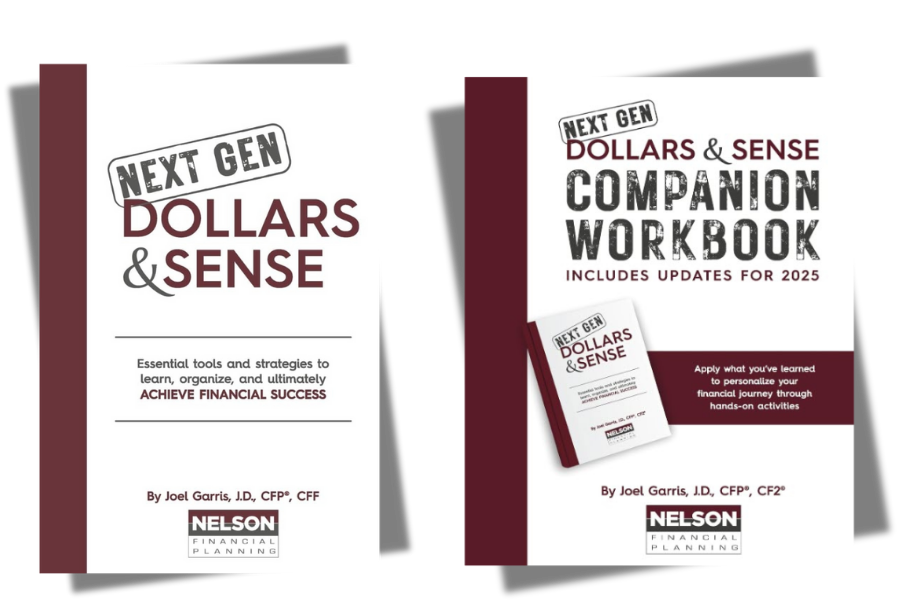
Unlock the secrets to financial success with Joel J. Garris’ insightful book, designed to equip you with the essential tools and strategies needed to take control of your financial future. Whether you’re just beginning your financial journey or approaching retirement, this book offers a comprehensive guide to help you build a solid financial plan that aligns with your goals.
REQUEST YOUR FREE COPY OF OUR BOOK & WORKBOOK!
- 8 Wonders1
- Bank Investments3
- Beating Inflation1
- Budget for Retirement5
- Corporate Transparency Act2
- Digital Currency1
- Energy Tax Credits1
- ESG Funds1
- Featured Blog0
- Financial Planning14
- Financial Success5
- Importance of Dividends1
- Investment Diversification1
- Investment Portfolio6
- Investment Strategy4
- IRA1
- Joel Garris1
- Nelson Financial Planning7
- Net Worth Improvement1
- Next Gen Dollars and Sense1
- One Big Beautiful Bill Act (OBBBA)1
- Pension Plans1
- Podcast Transcripts17
- Retirement “Secure” Act2
- Retirement Income Planning3
- Retirement Planning7
- Retirement Regrets5
- Social Security4
- Tax Liability3
- Tax Planning7
- Year-End Tax Changes3