




Emotional Investing, Social Media Pressure & the Truth About Financial Behavior
Understanding the behavioral psychology behind spending, saving, and investing — plus five practical tools you can use today.
Dollars & Sense Episode Summary
Money isn’t just math. It’s emotion. It’s behavior. It’s psychology.
In this episode of Dollars & Sense, Zach Keister, Certified Financial Fiduciary™ and Chartered Retirement Planning Counselor℠, and Christina Lamb, CF2™, IRS Enrolled Agent, explore the psychology of money — why intelligent, capable people still struggle with spending, saving, and investing.
If you’ve ever avoided opening your financial statements, stress-shopped after a difficult week, felt behind after scrolling social media, or panicked during a market downturn, this episode explains why. These aren’t character flaws. They’re predictable behavioral patterns rooted in cognitive biases like loss aversion, anchoring, and present bias.
“You’re not broken — you’re just stuck. And stuck is something you can work through.”
The conversation dives into how anxiety creates avoidance loops — particularly during tax season or market volatility — and how emotional overspending often becomes a short-term mood regulator. They also examine the powerful influence of social comparison in today’s social media environment and how bandwagon investing can derail long-term financial plans.
“Avoidance lowers anxiety in the moment — and that’s exactly why the brain keeps repeating it.”
This episode connects behavioral economics with real-life financial decision-making. Topics include:
- The anxiety-avoidance cycle in money management
- Emotional spending vs. guilt-driven underspending
- Generational “money scripts” and family financial culture
- Investment behavior during downturns
- Social media pressure and financial comparison
- The emotional side of retirement planning
“Money makes you more of what you already are. Character matters more than cash.”
Most importantly, Zach and Christina provide five practical tools to help you outsmart your natural wiring:
- Automate savings and bills
- Create short, consistent money rituals
- Reframe your internal money narrative
- Add friction to overspending habits
- Seek accountability through professional guidance
Whether you’re preparing for retirement, navigating investment volatility, or simply trying to feel more in control of your finances, this episode offers actionable behavioral strategies — not just financial theory.
Because improving your financial health isn’t about spreadsheets alone. It’s about understanding how your brain interacts with money — and learning how to work with it instead of against it.
10 Key Takeaways
- Financial struggles are often behavioral patterns — not personal failures.
- Loss aversion makes market downturns feel twice as painful as gains feel good.
- Avoidance temporarily reduces anxiety but reinforces negative money habits.
- Social media comparison fuels emotional spending and financial dissatisfaction.
- Emotional overspending is often a form of short-term self-soothing.
- Underspending can stem from generational money scripts or guilt.
- Bandwagon investing is driven by dopamine and social validation.
- Automation reduces decision fatigue and builds a financial structure.
- Small money rituals can rewire anxiety into clarity.
- Professional accountability provides emotional and financial stability.
Episode Chapters
- 00:00 – Introduction: The Psychology of Money & Financial Behavior
- 03:26 – Monopoly Study: How Power and Money Change Behavior
- 05:58 – Loss Aversion, Anchoring & Present Bias Explained
- 07:54 – The Anxiety-Avoidance Loop in Financial Planning
- 08:56 – Social Comparison & Social Media’s Financial Impact
- 10:43 – Emotional Overspending & Self-Soothing
- 14:17 – Guilt, Generational Money Scripts & Underspending
- 17:05 – Investment Behavior During Market Volatility
- 19:45 – Bandwagon Investing & Dopamine-Driven Decisions
- 21:55 – Emotional Momentum in Financial Planning
- 23:07 – 5 Practical Tools to Improve Your Financial Life
- 23:45 – Tool #1: Automate Everything
- 24:55 – Tool #2: Create Money Rituals
- 26:16 – Tool #3: Reframe Your Money Story
- 28:16 – Tool #4: Insert Friction to Control Overspending
- 29:58 – Tool #5: Professional Accountability & Fiduciary Support
- 32:00 – Final Recap & Closing Thoughts
Podcast Transcript
Podcast: Dollars & Sense
Episode Date: February 22, 2026
Speakers: Zach Keister, CF2™, CFS, CRPC™ and Christina Lamb, CF2™
00:00 – Introduction: The Psychology of Money & Financial Health
00:00:05 Zach Keister
I’m Zach Keister, Certified Financial Fiduciary™ and Chartered Retirement Planning Counselor℠. Here with me today on the program is the incomparable Christina Lamb, fellow Certified Financial Fiduciary™ and IRS Enrolled Agent. Very happy to be on the program with you today, Christina.
00:00:21 Christina Lamb
Always good to be here, Zach. And today’s theme hits really close to home. The psychology of money — not spreadsheets, but the human side. Why smart people do frustrating things with their dollars and how to course correct. Which reminds me of the trip that I made to the dentist this week. It was one of the first questions that came out of my hygienist’s mouth and she was like, are you flossing? And I pause and I kind of cringe a little bit because I really don’t like to floss. And I do make an effort to, but I certainly don’t do it as much as I should. And as you know, she’s going through the routine, I’m thinking, you know, I’m a financial planner and I sit here and I help people build strong financial health every day, but yet here I’m having a hard time with my flossing, which is aspirational at best. So as she’s telling me all this, I’m thinking to myself, you know, in a different context, but these small little things and the adjustments that you make today can cause either bigger problems or have better gratification later on in life. So for today’s show, we’re going to discuss how your financial health is and the psychology behind it.
00:01:37 Zach Keister
Yeah, and absolutely. I don’t know if you’ve ever heard this before, but I’ve met with some folks in the office that kind of compare, not us as a firm, but financial planners in general, as kind of similar as a trip to the dentist. And I would like to think we’re much friendlier than that during conversations.
00:01:56 Christina Lamb
Yeah. I mean, I’m not a huge fan of going to the dentist. I don’t know if it’s because of my flossing habits or what, but I am just not a big fan.
00:02:04 Zach Keister
I certainly don’t think you’re alone in that. I don’t necessarily know anybody in this world that particularly loves going to the dentist. Maybe somebody with perfect teeth, but… Anyway, so that is the program subject for today. We’re going to be talking about all things money and psychology.
As well, we’re going to give you 5 practical tips that you can use to improve your financial life. But I just want to get right out of the gate here on one item and just kind of think about the realization that if you are seeing yourself in one of these positions at the moment, just realize that you’re just kind of stuck.
You’re not broken. Something you can work through. You’re human, and we all go through these things at different points in life. As kind of you mentioned, this is our industry, and this is what we do every day, so we kind of lose that thought, if you will, right? This is all very normal to us and things we talk about all the time, and then we kind of have to pan back and go, well, not everybody deals with things that we do every day.
00:03:09 Christina Lamb
I think your financial health grows as you grow. So, if you’re younger, obviously your financial health is not going to be the best. You’re just getting started. But it’s creating those habits and working your way up to that stability and feeling comfortable. That’s what matters.
03:26 – Monopoly Study: How Money Changes Behavior
00:03:26 Zach Keister
Yeah, totally agree. Well, one of the items that we want to talk about real quick here is how money can have a large influence on your behavior. This was a little bit of research we did. It was a 2019 article from The Greater Good that did an experiment on a classic board game. I know you and I talked about when we were prepping for the show, we both love Monopoly.
00:03:48 Christina Lamb
Yes, big fan.
00:03:50 Zach Keister
Even though that always, and we talked about that, is always very difficult to get the rest of the family to join us in playing Monopoly. Maybe our families have just, you know, we’ve just won so many times, they’re just tired of playing it with us.
00:04:06 Christina Lamb
Might be, might be.
00:04:08 Zach Keister
Anyway, so in this study, they did a rigged Monopoly game where they gave one person kind of a stacked deck. And as that person continued to play through and continued to capitalize, if you will, and get more properties, they actually got more loud amongst the other players around them. And they kind of started to attribute their success to the decisions they were personally making rather than having the stacked deck that they did.
And that’s kind of crazy, right? Because that was fake money. That was a game. That wasn’t real life. So that can just show you how even a fake game can transition over into real life, right?
00:04:55 Christina Lamb
Absolutely. And I think some people have some issues with how they deal with money. And they’re not character flaws. It’s just, it’s a wiring issue. And people feel fear and guilt and shame and envy over money. And so one person who’s winning, you know, they’re loud and excited, but everybody else, they’re not feeling so well. They’re feeling, you know, I’m behind, I should have done better, maybe I’m embarrassed, and it triggers avoidance, and avoidance lowers…
When you avoid things, it lowers your anxiety, in which the brain learns, hey, I feel a little better. So it starts repeating that avoidance. And then you end up in the shame loop. And so that’s why folks don’t open up statements or say, I’ll get to it next month, and then the month turns into the year, and it goes on and on.
05:57 – Cognitive Biases: Loss Aversion, Anchoring, Present Bias
00:05:51 Zach Keister
Right, yeah, and that certainly can trickle down very, very easily. So I just want to talk about some additional items, some cognitive quirks, if you will, that can kind of trip up everybody, even some seasoned folks that have been doing this for kind of a long time.
One of those is loss aversion. And loss aversion is the fact that losses hurt about twice as much as gains do.
Another one would be anchoring, right? So say you’re getting ready to sell your house and you go on to one of the many websites that kind of gives you a number and says, well, you might be able to get this for your house.
Now, that becomes your base number that becomes the thought behind selling your house is based on that number, and any sway up or down is going to affect you one way or the other.
And lastly, present bias is the theory of we typically want now versus later. And I guess kind of example of that is I personally would rather have a donut right now than wait till the end of the week to have two donuts, right? It’s the overvalue of now compared to later. So a couple of biases in there, but these are predictable patterns, right? This is, again, back to the psychology. This is part of our makeup.
00:07:13 Christina Lamb
Yeah, you want to think of money as a relationship, a living, evolving relationship. You circle around, influencing, which will influence and react you to grow through over a lifetime. That framework takes you out of I’m bad with money and into, I’m in a relationship that I can improve, something you can work on.
Relationships change when we add awareness and better communications and healthier boundaries. And the same is true with our finances.
07:44 – Anxiety, Avoidance, and the “Shame Loop”
00:07:42 Zach Keister
Totally agree. Totally agree. Well, let’s put this in kind of concrete wording, if you will. So, and you touched on this a moment ago, Christina.
So here’s how this kind of works. You start to anticipate the discomfort. Say, well, we’re deep in the heart of tax season here. So let’s say it’s tax related. And you anticipate, oh, here we go. It’s time to file my taxes again.
So your anxiety begins to rise. That’s your body’s natural response to what it is calling an attack. And so you avoid it, right? You just say, oh, well, I’m not going to open it this week, maybe next week. And when you do that, your brain rewards that and says, okay, we got out of trouble’s way for now, and so your anxiety drops, but that can be kind of detrimental because that just continues on. There’s nothing to break that cycle, and you can continue down that path kind of for eternity, if you will, if you don’t break the cycle.
00:08:42 Christina Lamb
And I think taxes are a great example of that. A lot of people procrastinate on their taxes.
00:08:46 Zach Keister
Yes, they certainly, certainly do.
08:49 – Social Comparison and Social Media Pressure
00:08:49 Zach Keister
One other item real quick we want to talk about is the trap that is social comparison. And we tend to do that. I mean, in the landscape of social media today, this is super easy to do, to kind of compare where you are in your day-to-day life to somebody’s highlight reel, right?
People only post the most fantastic thing that they have going on, their vacation, their new car, their new house, what have you. So that is a huge trap to kind of be aware of. And it can cause envy, right? Envy in some folks and guilt in others.
09:32 – Segment Return and Recap
00:09:32 Zach Keister
Welcome back to this week’s edition of Dollars & Sense. We are so glad that you are joining the program this week. Before the break, we were talking about social comparison and how detrimental it can be.
And we kind of touched on how most folks will post their highlight reel on social media. They’re going on vacation, they bought a new car, they bought a new house, and this can really derail the psychology of your brain when you do this kind of comparison, and it can turn into both envy and/or guilt.
00:10:08 Christina Lamb
Yeah, so to recap what we’ve gone over so far and what you can take away from it, money, your money life is a relationship, and it should be looked as a relationship which is influenced by your emotions and your habits, your upbringing, your mental health, and the way you connect. So once you stop judging and start noticing, you can help change those bad habits that you might have.
10:43 – How Money Psychology Shows Up in Real Life
00:10:34 Zach Keister
Totally, absolutely, totally. So let’s take a little bit of time here and let’s talk about how money psychology shows up in real life. And there’s certainly many, many ways in which it does that. I know you talked about a little bit on the anxiety and avoidance loop.
00:10:51 Christina Lamb
Yeah, absolutely. So this is where psychology becomes practical because money behaviors don’t happen in a vacuum. They follow patterns. And once you recognize the pattern, you can interrupt it.
So if we start with like a big, one of the biggest issues is the anxiety avoidance loop. So if you think about facing your finances, your anxieties spike because you’re not comfortable with it. So then you avoid it.
And once you avoid it, your anxiety drops. And that drop ends up being a reward, which is the avoidance. So you avoid it time and time again, and the loop just keeps getting stronger and stronger. It explains why people are late on their taxes, which is the example Zach just used.
And it explains why your financial plan is something that I’ll do it this summer, or we’ll get to it later, or why people don’t open their statements. And the fear just keeps continuing and continuing as it gets worse because you think you’re behind.
00:11:56 Zach Keister
Totally, absolutely. And one of the reasons that avoidance feels so logical, if you will, is because of the loss aversion that we talked about in segment one. This loss feels like danger, right?
I feel like there’s danger here. And it’s not just investment related. This is relationship related. This can happen, you know, about talking to family or talking to spouse. But investment wise, it can have to do with spending or it can have to do with saving or even just kind of talking to the children.
00:12:27 Christina Lamb
Absolutely. So that brings us to a everyday behavior, which is emotional overspending. So this is where people overspend because spending gives them short-term emotional relief. So think of how people they shop potentially when they’re stressed or lonely, possibly bored or anxious, feeling left out, or as Zach brought up earlier, feeling less than because of what they’re seeing on social media.
So money can shift our emotional precipitations and our awareness. So those shifts influence how we self-soothe ourselves, and shopping becomes a momentary mood regulator.
00:13:10 Zach Keister
Absolutely. So I don’t know if you’ve seen this, but I’ve kind of seen this floating around on social media over the last couple of years. It’s kind of like a little bit of a joke, but it plays this out perfectly, where people will say, oh, you know, they’ll do a social media reel or a little video or something, and they’ll say, I had a tough week, time to break out the credit card and go on, go on a shopping spree or what have you. That seems to really be becoming a trend, if you will. And so that’s part of the psychology of money.
00:13:42 Christina Lamb
Yeah, I mean, I think that’s been around for a while. I know maybe on social media, but I think a lot of people cope with things, something they enjoy and shopping is fun to a lot of folks. I mean, I don’t know that I would say I would have a problem with it, but I certainly do enjoy going out and buying a new outfit, it makes you feel better. And, that’s understandable.
00:14:06 Zach Keister
Totally understandable. Well, kind of the flip side of that, I guess, would be underspending because of guilt or shame. And, we’ve seen this pop up before. For a lot of folks, this is kind of a generational thing, right? Where we’ve seen this underspending.
Maybe a generation grew up in some scarcity, a scarce time. And so now that they are in a better spot, it has become more difficult for them to enjoy the money. And we’ve had some of these conversations here at the office with folks, where now that they are in a better spot, they kind of feel guilty or worried about spending too much, even though they certainly have improved, improved their situation.
00:14:49 Christina Lamb
Yeah, and that guilt often comes from a family money script. We all grow up with some sort of money culture, whatever that may be. It’s a little different for all of us. Some families talk openly about money. Some treat it like it’s a secret and don’t ever want to talk about it. Some see it as power or danger. And some families even have like generational trauma around money, due to bankruptcy or a major loss. And, that legacy can shape how things go between generations and generations.
And then unraveling those influences from your past can be a huge part of your financial health and how you deal with it going forward. I mean, personally, my family was very open about money. It’s probably one of the reasons why I got into finances.
And also the reason I feel my dad kind of forced me into budgeting and kept track of like every little penny I spent. He’d make me pay him back for stamps and stuff when he used to have to like mail a check in to make your car payment. So, you know, it taught me to be responsible and understand all those little things that really add up.
00:16:02 Zach Keister
Probably a life lesson at the time. You maybe not appreciated fully, but now, you know, years later can think, oh, this is why dad made me do this.
00:16:11 Christina Lamb
Yeah, absolutely.
00:16:12 Zach Keister
This totally makes sense. One more comment on the social comparison I wanted to make was that folks don’t compare themselves downward. They always compare themselves upward.
So that is kind of a thing that will put you over the hill even more, right? Because you’re not looking at your friend who might be having a tough time. You’re looking at your friend who just got promoted or got a new job. And so that just makes the social comparison aspect even harder, right?
00:16:41 Christina Lamb
Definitely. I think social media plays a big role in that too with, only on social media are they doing, posting the biggest and the best. And, a lot of it’s staged and from the right angle, things of that nature. So it’s not really portraying what life actually looks like. It’s more of just the best moments.
17:05 – Investment Behaviors and Emotional Decision-Making
00:17:05 Zach Keister
Right. And so let’s kind of connect that to the investment behaviors. We’ve kind of touched on this a little bit in the first segment, but let’s kind of draw this all together here.
00:17:16 Christina Lamb
Yeah, so this is where everything we’ve talked about starts to collide. We have the loss aversion, which is fear during downturns. We have anchoring, you know, frustrations over portfolios, and when was the highest value in the past, present bias, waiting until you feel comfortable, and social comparison, chasing, you know, what everyone else claims that they’re doing. So we hear a lot of these things as we meet with clients in scenarios during our face-to-face meetings that we have with clients. And these are the types of pains they have over the years. So we want to tie that to like real life scenarios. So for example, a client sees their portfolio dropping, which loss aversion would scream, you’re losing money, you need to do something. When generally, 9 times out of the 10, the best advice is just to stay in the market. So, present bias would say, I’ll start investing again when I feel better, but better never comes and people wait and wait, and so they just go too long without investing. So, many of these biases can hit you at once, and there’s several of them that can be hitting you at the same time.
00:18:31 Zach Keister
That’s a very interesting point. Yeah, this could kind of cascade, if you will, right? You might not be subject to one, you might be subject to multiple of these and multiplication at the same time. Yeah, that’s a very, very good point. And kind of the real kicker of this is that the emotions, the storm of emotions will kind of tell you that something’s wrong, right? Not necessarily that there is something wrong. It’s just your emotions are telling you, the alarm bells are going off saying something is absolutely wrong here. And kind of your advice you had on that was staying the course, right?
00:19:10 Christina Lamb
Absolutely. I think if you’re feeling overwhelmed, that’s a huge indicator.
00:19:16 Zach Keister
Well, thanks for watching the program here. Stick with us. Don’t change the dial. We’ll be right back here on Dollars & Sense.
19:30 – Bandwagon Investing and Social Pressure
00:19:30 Zach Keister
Welcome back to Dollars & Sense. On this week’s program, we are talking all about how your brain interacts with money.
00:19:39 Christina Lamb
Absolutely. So moving on, there is another behavior pattern that we want to talk about, which is bandwagon investing. And this is where everyone is talking about it effect. People want to feel included. They want the thrill. They want to avoid feeling foolish because they missed out on whatever the newest financial trend might be. Dopamine spikes and people start to feel excited and socially validated. I mean, I think this is huge in social media.
00:20:11 Zach Keister
Yeah, absolutely. And we’ve seen this for years, right? But it might change. The thing might change, but it’s always the same song and dance where, oh, well, it’s gone up a whole bunch, so now I want to get into it, which is kind of the opposite.
00:20:25 Christina Lamb
Yeah, it’s not what you’re supposed to do.
00:20:29 Zach Keister
But the pressure on social media just makes it so difficult. It’s so tempting, right?
00:20:34 Christina Lamb
Well, they make it seem so easy. Everything on social media is easy, and it applies to everyone when it’s generally a very small scope of the population.
20:44 – Money, Relationships, and Character
00:20:44 Zach Keister
So kind of going back to the monopoly example we gave earlier in the show, some kind of comments on that is, we’ve seen this before where folks, as they accumulate more wealth, the research kind of shows that they’ve become a little less in tune to what’s happening emotionally around them. And some of the ways that can happen is couples kind of start to disagree on purchases, or parents have a difficult time setting expectations with their children, and even interpersonal, inner-family issues of, say, siblings might start to judge each other, or parents might start to judge their children. Just a lot of not good things that could happen. There’s actually a really good Bob Proctor quote on this is, money makes you more of what you already are.
00:21:38 Christina Lamb
And you know, that’s true. It’s true. And that’s why character matters more than cash, for example, because money simply funds the values that you already have.
00:21:49 Zach Keister
Yep, absolutely agree with that.
21:52 – Emotional Momentum in Financial Planning
00:21:52 Zach Keister
So let’s talk about kind of the momentum here, right? Not market momentum, emotional momentum.
00:21:59 Christina Lamb
Yes. So if someone feels empowered or clear or confident with their finances, they tend to make good decisions. They save more, they invest more consciously, they communicate better, set boundaries, things like that.
But if someone feels afraid or ashamed, maybe overwhelmed or behind, their decisions become reactive. They’re hesitant, they overspend, they under-invest, and they avoid things. This is why emotional planning is an important part of financial planning. If you get your emotions and your psychologies aligned, then the numbers will follow.
00:22:39 Zach Keister
Yeah, and that makes total sense, right? So many folks that are heading into retirement think, okay, let’s figure this all out, right? What are my numbers gonna be? What is the income going to need every month? What does my health insurance look like? What does Social Security look like? And all that stuff.
But kind of skip out a lot of times on the emotional side of things, which is a huge, huge part of it. Well, let’s transition a little bit. Let’s get practical on this. We’re going to give you 5 practical tools that you can use to outsmart your natural wiring, your old money scripts, and kind of get a healthy your financial relationship overall.
00:23:21 Christina Lamb
All right, sounds good.
23:24 – Tool #1: Automate Everything You Can
00:23:24 Zach Keister
So if you have any trouble finding the program, head on over to our website, nelsonfinancialplanning.com. Click on the logo that looks most familiar to you, and you will instantly get connected over to our podcast. So let’s dive on in here with tool number one, which is automate everything that you can, right? We talked about this, prepping for the show, Christina, on the things that you and I personally automate.
00:23:50 Christina Lamb
Yeah, I am a huge fan of automation for myself, especially for our younger investors. I think it helps you start a habit, which is important.
00:24:02 Zach Keister
Yeah, it certainly is. It’s kind of the old set it and forget it rule, right? Some of those things you can do with that is your retirement plan, savings, your bills. I know we talked about personally, we set up a lot of bills on auto pay and kind of just helps take it out of the brain or at least push it toward the back of the brain. You no longer have to have that forefront thinking, well, what am I, you know, how’s my bills going to shake out this month?
00:24:30 Christina Lamb
So I look at automation as a compassion for your future self. It takes away the decision-making friction that might be involved in any of the shame loops. And so you don’t rely on the discipline, you rely on the structure. And the structure is what wins in your personal finances.
00:24:48 Zach Keister
Totally, totally agree.
24:55 – Tool #2: Money Rituals
00:24:52 Christina Lamb
I was just gonna say that leads us to our next tool. Which is money rituals.
00:24:55 Zach Keister
Yes, it does. Money rituals. Tool #2, money rituals.
00:25:01 Christina Lamb
So this tool leans straight into the insights about avoidance and anxiety. People avoid money because they feel emotional discomfort that it brings. But if you turn your finances into a self-check ritual, you shrink the fear dramatically. So for example, you could set a 15-minute ritual, which maybe you do once a month, which includes looking at your checking and your credit card balances, glancing at your investments, check any upcoming bills, do something like functional, like move some money into savings, and just update one small thing. But just this one thing will help rewire your brain from money equals a threat or a shame to money equals clarity.
00:25:52 Zach Keister
I think that one small thing is the key point here, right? If you try and overhaul your whole system, you’re just going to get discouraged and overwhelmed and just walk away from the whole thing. I think it’s all too much. So if you just kind of start out with one item, like you mentioned, automate $25 to go to your future, to your savings, right? That can kind of get the ball rolling.
26:16 – Tool #3: Reframe the Story You Tell Yourself
00:26:16 Zach Keister
So let’s move on here. Tool #3 is reframing the story that you tell yourself. Now, wow, this is huge, right? This can come across in all sorts of psychology, not just money, but particularly pertaining to your money. The stories you might be telling yourself is I’m behind, I never learned how to do this money thing, I’m bad with money, I can’t get ahead.
All things that oddly enough social media could influence you to do as well. So kind of like you talked about, opening the statements and sitting down and forcing yourself to say, okay, it’s time. I’m going to take care of this and I’m going to reframe my own story that I’ve been telling myself all these years.
00:26:59 Christina Lamb
Right. And that’s because money affects behavior. It affects your empathy and your perception, including how we judge ourselves. And most of us can probably say we’re all our biggest critic. So what you need to do is you reframe the story. So instead of saying I’m behind, say I’m getting started and that’s what matters.
I took the first step. Or say, instead of saying, I avoid this kind of stuff, say, I’m learning new tools and now I’m getting started. So that’s how you reframe and maybe have like a little bit of emotional CPR with your finances and help restore that psychology and oxygen into your system.
00:27:44 Zach Keister
So this cognitive reframing, I kind of talked about how this psychology comes up in many facets of life, not just finances, but it’s actually one of the most evidence-backed therapies and coaching and what have you to help. So when you set your new narrative, you’re setting yourself up for success and more likely to have a successful go the next time around when you tell yourself these things.
28:12 – Tool #4: Add Friction to Overspending, Remove It From Good Habits
00:28:12 Zach Keister
So tool #4 is insert friction where you overspend and remove it where you underspend.
00:28:21 Christina Lamb
Yeah, so here’s one of the biggest techniques from behavioral economics. If you want to stop doing something, you want to make it harder. If you want to start doing something, you make it easier. So for example, if you overspend, maybe remove the credit cards from your favorite websites or from your browser. Make it to where you have to put your password in. Don’t let the computer remember it. And one of my personal favorites is wait 24 hours before you make a purchase. I mean, I know we’re all guilty of being on like Amazon and putting something in your cart because it looked cool or saw it on social media and they thought it was the best thing in the world. So, just waiting 24 hours and looking at it the next day, I mean, that could make a huge impact.
00:29:18 Zach Keister
Absolutely, it can. Real quick, your tool #5 is to get professional help. So that’s kind of what we’re here for. Give us a phone call, 407-629-6477.
29:35 – Tool #5: Get Professional Support and Accountability
00:29:35 Zach Keister
Welcome back to this week’s edition in Dollars & Sense. On the program, we are talking all things involving psychology and your money and your interaction with money. We were kind of rolling through the five practical tips that you can do to improve your financial scenario.
00:29:54 Christina Lamb
Yeah, absolutely. And we were on tip #5. Get a partner for accountability or professional support. So this is where meetings with a fiduciary, a financial planner, is so powerful. It’s not just the math, it’s the psychological relief. So not carrying the load all alone, getting unbiased guidance, breaking the avoidance cycles, you know, shaming yourself, seeing progress, things like that.
It’s basically just having someone to talk to about your finances, that is educated on the topic. So I would encourage any of you, if that is something you want, that’s exactly what we do here every day at Nelson Financial Planning. So if you are interested in a consultation, you can head over to our website or call our office at 407-629-6477 and bring your concerns and we’ll help you build a plan going forward to help keep your emotions, your financial emotions, that is, in check.
00:31:03 Zach Keister
And you kind of touched on that for a moment there, Christina. Kind of just the accountability aspect alone can be absolutely huge. And having somebody you can kind of turn to and say, well, I’m not super sure about this. What do you think? What do you think about this is super helpful.
00:31:21 Christina Lamb
I mean, if any of us who have ever experienced any form of therapy, I mean, going in and talking to someone that is sort of unrelated to you or not your friend, I mean, it really does something, I think, for your soul and for your mental capacity to see things in a different light. We get used to our community that we’re in and our family that we’re in, and they all see things a certain way. But having somebody that’s not biased to those things can really be helpful.
00:31:48 Zach Keister
Yeah, absolutely. Kind of that unbiased opinion, if you will.
00:31:52 Christina Lamb
Absolutely.
00:31:53 Zach Keister
No fight in the game, just interested in helping out.
31:57 – Final Recap: The 5 Tools
00:31:57 Zach Keister
So let’s do a little bit of a recap here, right? We’ve covered a lot of different topics. We’ve covered a lot of different biases. And let’s run back through these tools here as well. So again, tool number one, as we talked about, was automate absolutely everything and anything that you can.
We talked about how that might just be setting an automated budget, that might be setting up automatic savings to your savings account or your investment account. This was kind of really all just about getting it out of the front of your brain, right?
00:32:32 Christina Lamb
Yep, and then we discussed creating money tiny rituals. So this is replacing avoidance with small, consistent rituals like checking your balance, updating a number, reviewing bills. Tiny wins rewire your brain for clarity.
00:32:48 Zach Keister
Yeah, and we really hit that the most important part of that was just getting started, right? The fact of just a small move can get the momentum going and get you going in the right direction and kind of help set the positive path going forward.
00:33:05 Christina Lamb
Yep. And so our third tool was reframe your money story. This is where reframing reduces shame and increases agency.
00:33:15 Zach Keister
Yeah, absolutely. And we covered that a little bit as well. Kind of the stories that you tell yourself, well, that kind of becomes the life that you have, right? Anytime you tell yourself, well, I’m not good with this, or I’ve never tried this, or I’m bad at this, kind of most likely you might fall into that trap. So that tool is all about reframing how you think about things and what you tell yourself, which can be pretty helpful just in general in life, right? Not just necessarily money related, but just kind of life in general. So be careful about the stories that you tell yourself, because that is probably how your life is going to go.
00:33:56 Christina Lamb
That’s true. So tool #4 was adding friction to overspending, removing friction from good habits. This encourages healthy spending and savings. So we want to reduce overspending by maybe deleting our credit cards from our browsers, requiring passwords, and the infamous 24-hour rule. Don’t, you know, buy stuff right away, especially, you know, big purchases. I think it’s good to think about those things and make sure it’s definitely what you want.
00:34:27 Zach Keister
Yeah, you kind of touched on your 24-hour rule. What is your 24-hour rule that you use? Your Amazon 24-hour rule or your online purchase 24-hour rule.
00:34:37 Christina Lamb
Yeah, so I mean, I just, if it’s not something I need, and I mean truly need, then I make it sit in my cart for 24 hours and just figure out, you know, is it something I really want? And I actually utilize this with my son too, you know, because it makes them learn just seeing something, doesn’t that whole instant gratification, just because you saw it and you think you want it, do you really need it? Do you really want to spend that much money on it? That sort of thing.
00:35:06 Zach Keister
Totally understandable. I imagine that’s probably saved you some money over the years, right?
00:35:11 Christina Lamb
Yes, definitely. Well, he has his own job now, so it’s his responsibility. But for random stuff like that, but.
00:35:20 Zach Keister
That’s a great property to kind of instill, right? Yeah, the waiting, the do I really want it, do I really need it, and some of these online websites are getting really good at trying to get you to buy right then and there, right?
00:35:36 Christina Lamb
Yeah, and I hate when they like, you’re looking at something and then like the next day it’s like in an ad on the side of your browser page. Like that just drives me crazy. Not only is it creepy, but it’s like encouraging you to buy, buy, buy.
00:35:50 Zach Keister
It’s all right there at any moment. And then, you know, on some of these websites, they will have these little built-in calendars or counters, if you will, that say, this deal is only good for the next 5 hours or what have you before it goes to regular price. But I personally, I’ve gone back onto the website a week later and it’s magically still the same price. I’m kind of crazy how that works out. So that might be a good tip for you to try out as a listener. Try out Christina’s wonderful 24-hour rule of saying, well, I don’t know if it’s really mine. I think a lot of people.
00:36:28 Christina Lamb
We’ll coin it as yours, I guess.
00:36:31 Zach Keister
But give it a shot. Either way. If you’re online shopping and you’re particularly in a busy season of the year, say, I’m sure you used this at Christmas, didn’t you? At Christmas time to come in.
00:36:45 Christina Lamb
I’m a very big list person. So no, there are very specific items that I buy for people. I generally don’t just like randomly look around and find something. I mean, I do if I don’t know what to get you, but generally I’m like, I’m a planner. Big surprise.
00:37:01 Zach Keister
Surprised, run the full list. Okay. Well, that’s a good way to kind of avoid some traps, if you will.
00:37:08 Christina Lamb
Yeah, so, yep, so you want to automate the good habits, like the systematic investments or automating your bills, things like that. Schedule reminders. And use an automatic yes for essentials, but make sure you understand what essentials are. That new outfit is not an essential. Or if you saw it on social media, that is not an essential.
00:37:32 Zach Keister
I don’t know. That outfit might be contrary to opinion. It might be essential. You never know.
00:37:38 Christina Lamb
No, nope, nope, nope.
00:37:41 Zach Keister
Never needed it, I guess.
00:37:44 Christina Lamb
Unless if you have no clothes.
00:37:45 Zach Keister
Well, okay. And you certainly, yep, probably want to make that an automatic yes. It’s kind of interesting how this tool kind of follows in line with the prior tool of when you automate the savings, that creates less friction, right? So like you mentioned, you want to have less friction for things that are positive or things you want to go on. Again, that kind of just takes it out of the front of your brain.
You don’t have to manually go through and take care of that. Although, you know, at least on a personal basis, I thoroughly enjoy actively putting that in, right? Actively putting into a retirement account or what have you. That little bit of physicality kind of feels good, but I know everybody is not necessarily that way. And then kind of the last tool we got into a little bit is get some help, right? Get some professional help.
00:38:40 Christina Lamb
Money is emotional, so you want to make sure you’re making good choices. And, you know, sometimes it’s good to have, you know, a partner to talk to, a spouse or a loved one, or if those are sort of clashing with each other, a financial fiduciary, ourselves here at Nelson Financial Planning, or any fiduciary, that you can talk through your finances with and get an unbiased opinion.
00:39:07 Zach Keister
Absolutely. Yeah, very, very good to have. Well, we certainly have enjoyed having you on the program this week. Thank you for joining us. I am Zach Keister here with Christina Lamb of Nelson Financial planning.
Next Steps
If you’d like help reviewing your financial plan, investment strategy, or retirement readiness, explore the resources available through Nelson Financial Planning or schedule a consultation to discuss your goals.
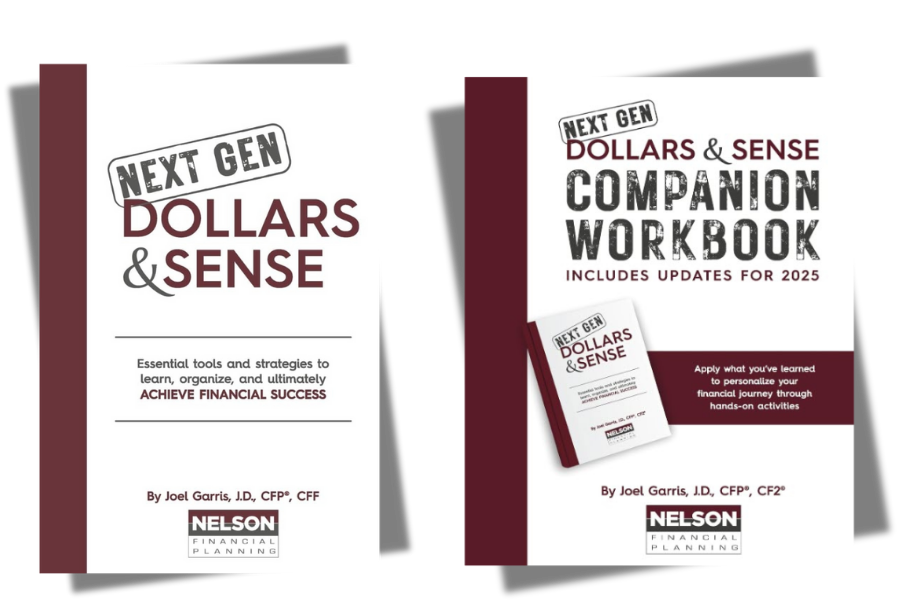
Unlock the secrets to financial success with Joel J. Garris’ insightful book, designed to equip you with the essential tools and strategies needed to take control of your financial future. Whether you’re just beginning your financial journey or approaching retirement, this book offers a comprehensive guide to help you build a solid financial plan that aligns with your goals.
REQUEST YOUR FREE COPY OF OUR BOOK & WORKBOOK!
- 8 Wonders1
- Bank Investments3
- Beating Inflation1
- Budget for Retirement5
- Corporate Transparency Act2
- Digital Currency1
- Energy Tax Credits1
- ESG Funds1
- Featured Blog0
- Financial Planning13
- Financial Success4
- Importance of Dividends2
- Investment Portfolio5
- Investment Strategy3
- IRA1
- Joel Garris1
- Nelson Financial Planning7
- Net Worth Improvement1
- Next Gen Dollars and Sense1
- One Big Beautiful Bill Act (OBBBA)1
- Pension Plans1
- Podcast Transcripts10
- Retirement “Secure” Act2
- Retirement Income Planning3
- Retirement Planning7
- Retirement Regrets5
- Social Security4
- Tax Liability3
- Tax Planning7
- Year-End Tax Changes3